Why David Eddie’s cool

Where to, Your Highness?

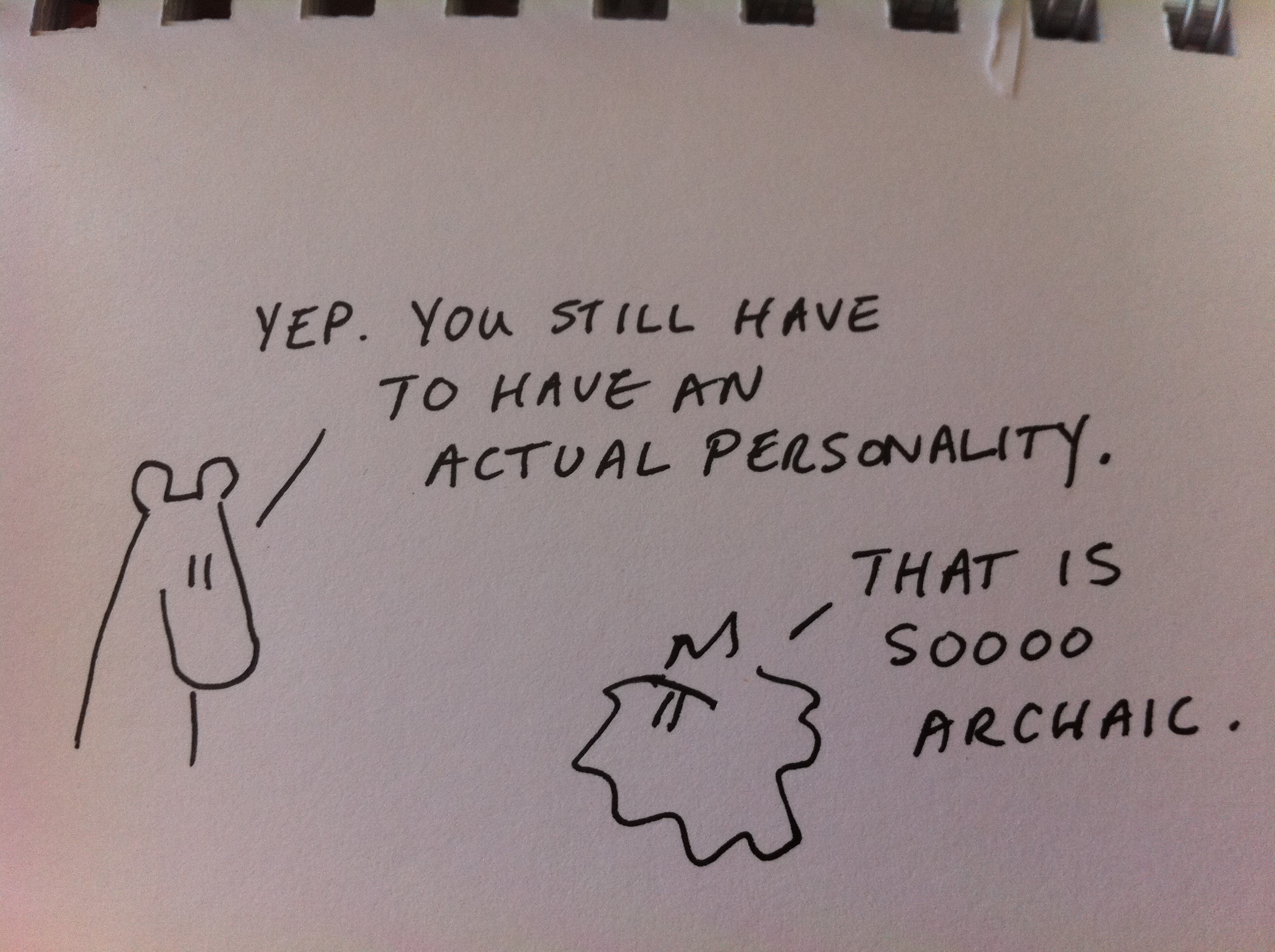
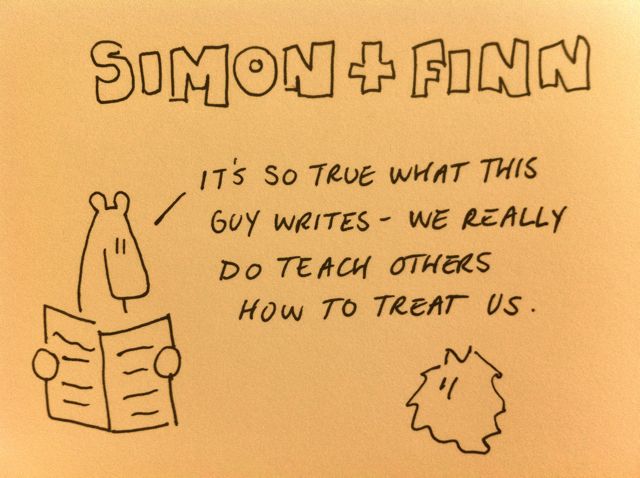
So, I happen to think that the advice columnist from the Globe & Mail – David Eddie – is a pretty top-notch writer (yes, I’m admitting I read advice columns, ok moving on!!).  Not only that though, he generally gives good advice – warmhearted, empathetic, yet also cuts to the chase when someone’s not being a class act.

For example, last week Mr. Eddie posted a little spiel by somebody who was upset their sister rudely canceled on attending a family dinner party.  The hostess was upset given the amount of work hosting can entail, yet was unsure of how (or if) to convey her displeasure.  Mr. Eddie’s response to this dire social conundrum?  “Well, you know, we advice columnists are always counselling people to take the calm, rational route, adopt the long view, be the better person, and la la la.  But in this case, I think you should let your sister have it, right between the eyes.”

Ha, ha!  Way to go, Mr. Eddie!

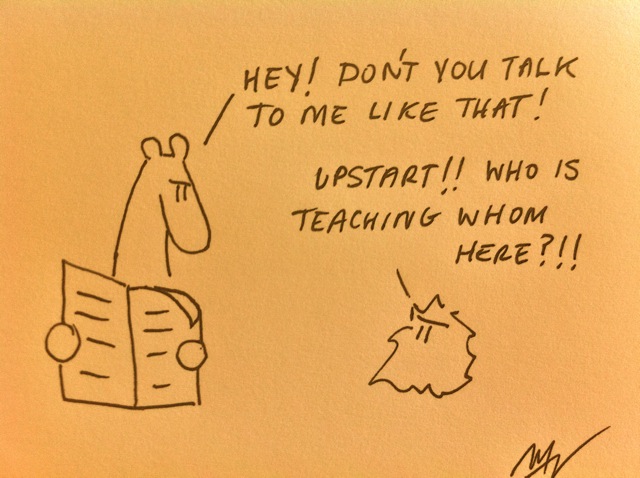
But then, he blew the whole kind of trite-advice-on-social-mores thing to a whole other philosophical ballpark by going on to quote: “We teach people how to treat us”.  That pulled me up short.  Now when it comes to small fry things like getting mad at dinner party cancellations and such, of course there are a lot of people that wouldn’t be fazed one whit and go on with their lives (as many of the G&M comments pointed out). However, to me anyway, the quote supersedes its arguably shallow origins because it’s one of those deeper truths – we do teach other people how to treat us.  And that’s the bigger lesson he’s delicately imparting, whether we’re talking about little things or far bigger ones..

So, next time I’m ranting about why so-and-so did or didn’t do x or y, I’m going to take a little look in the proverbial mirror first (but just a short one, as ranting is fun!)
Why is email addictive?

Alllooo? Where's my email?

A while back, the bloggers at MindHacks posted a theory as to why email is so addictive. (i.e. “I must hit the ‘get mail’ button at least a hundred times a day. Sometimes, if I don’t have any new mail, I hit it again immediately, just to check. I interrupt my work to check my mail even when I know that I’m not going to find anything interesting and that I should just concentrate on what I am supposed to be doing….”)

Ok, that sounds way too familiar for my liking!

Now, although there are varying theories as to why email can be an incredibly addictive pursuit (for some), MindHacks base their conjecture on the principles of operant conditioning, which is the theory that what we do and how we act depends on the rewards and punishments resulting from what we did last time around.

The salient angle here lies with the concept of intermittent or variable reinforcement, which occurs when we receive rewards only some of the time for performing certain behaviours.  What’s curious is that intermittent reinforcement has actually been shown to be the most effective way to ensure repeated behaviour.  Loosely translated, if a kid gets a candy only some of the time, that kid is more likely to repeat the potential candy-resulting behaviour than a kid that gets rewarded all of the time (i.e. mucho candy, all day long).

Why, you ask?  Well, because the kid is never sure as to whether the reward is coming or not, not only do they get used to performing the behaviour without reward, they also take longer to stop the behaviour even if the reward is removed!  Sort of a cruel but effective trick really.

Now, in the context of email, the authors suggest that a possible “reward” could be when one gets an email from a friend, or a funny joke, or some kind of fun distraction, like say a blog of some kind :).  As you never know when one of those bundles of joy will be in your inbox, we hit send/receive ad nauseum..  And thus, because the infinite ‘next time’ just might be the occasion that produces sweet reward, so hope springs eternal and off we dash after that elusive – oh hang on sec – I just got an email!!

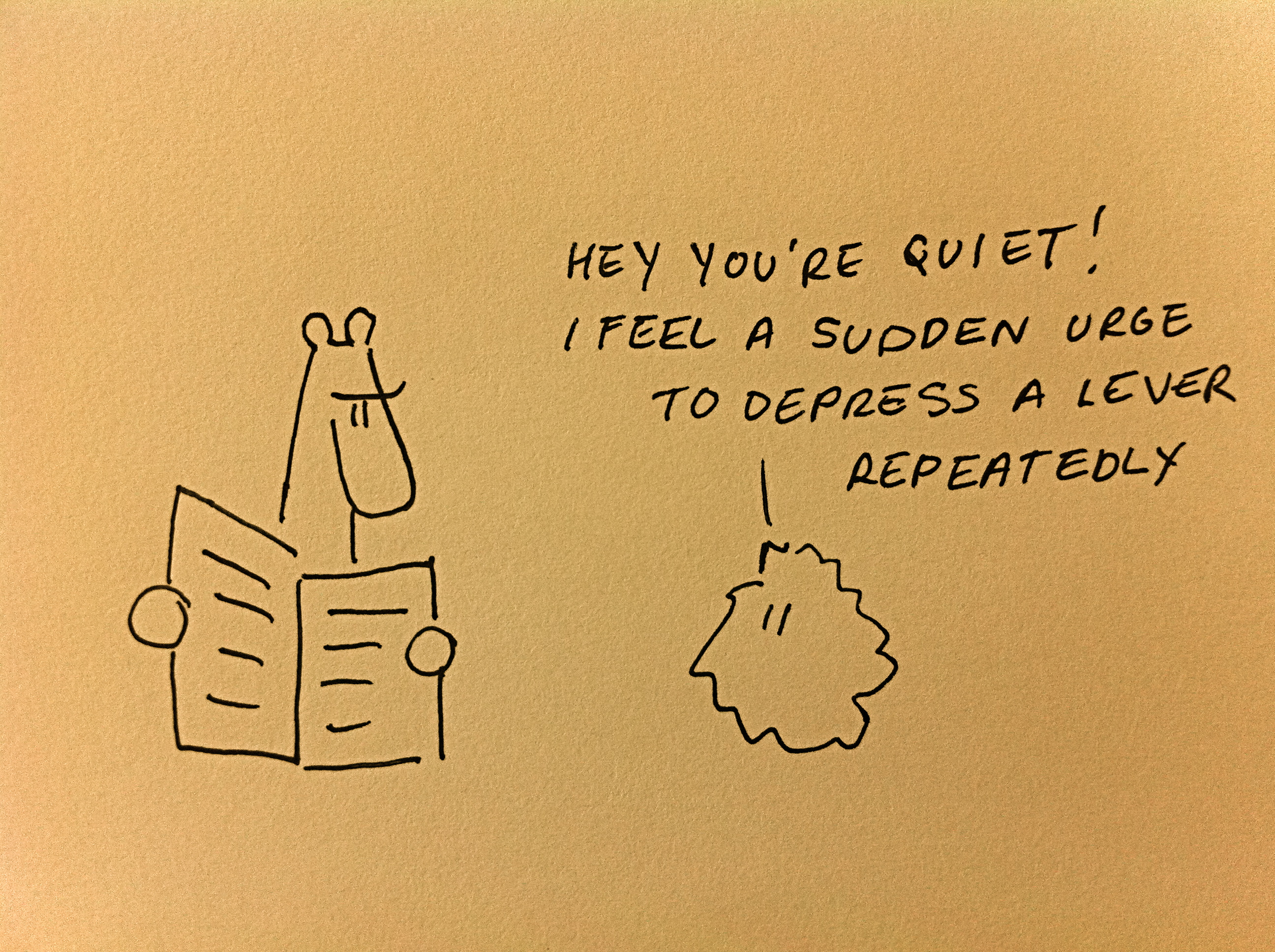
P.S.  One of the classic examples of experimentation in this area is the so-called Skinner box – which may recall Psych101 for some.  The Skinner Box in its most basic iteration is in effect an operant conditioning chamber.  In one particular experiment, rats were given food pellet rewards when they pushed a lever in the chamber.  True to the tenets of intermittent reward, rats that were given food pellets only once in a while (as opposed to rats given pellets every single time they depressed the lever), went ballistic on the lever, pushing it as many times as they possibly could, in the faint hope that this time the pellet cometh!

Too much of a good thing?

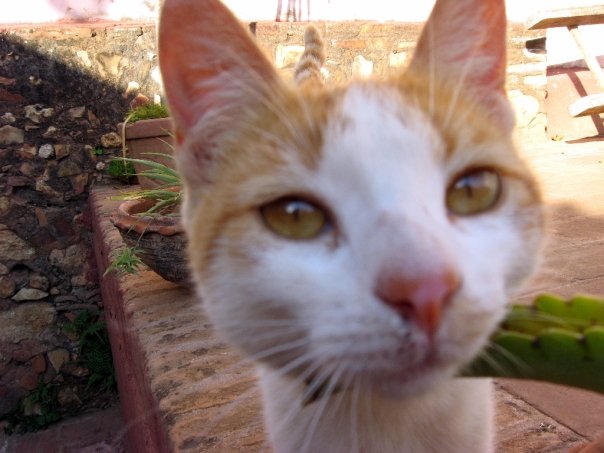
I'd like the orange one please...

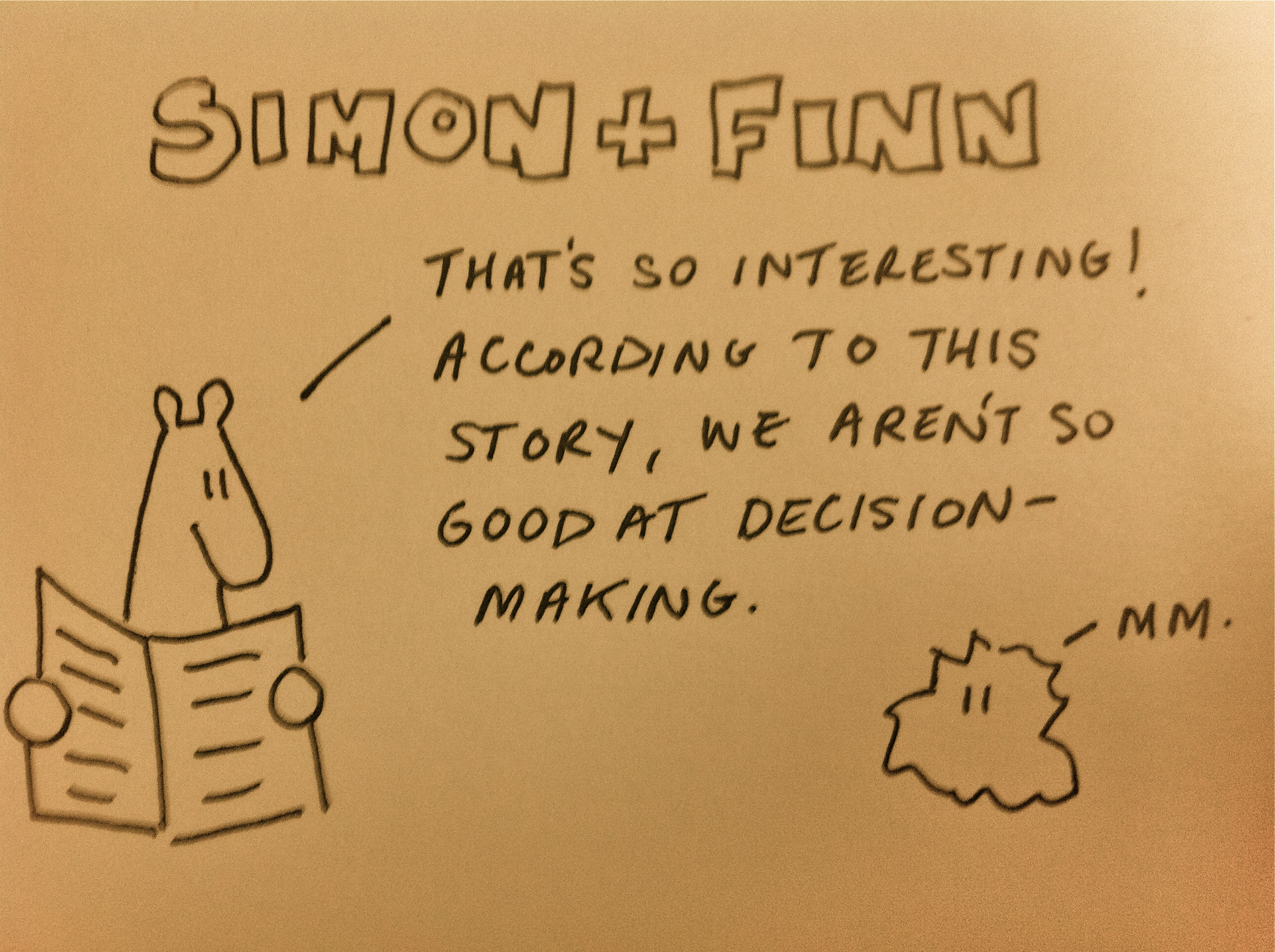
“These are momentous times for the British potato crisp.”  And that’s the delectable start to “The tyranny of choice: You choose”, a great article that touches on the behaviourial science behind making choices in a world where – doggone it all! –  there are just too many options.

The basic premise to the piece is that the sheer exhaustive number of possibilities that the average North American has at their disposal makes choosing just one, well, paralyzing.  Witness the typical stroll in Shopper’s Drug Mart looking for say… toothpaste.  Who hasn’t been stricken dumb by the options, mouth agape?  i.e. Tartar control!  Whitening!  Natural!  Organic!  Natural AND organic!  With fluoride!  Without fluoride!  Bourbon-flavoured!  Anti-calculus!  (I must have been using this last one my whole life judging by my math grades).

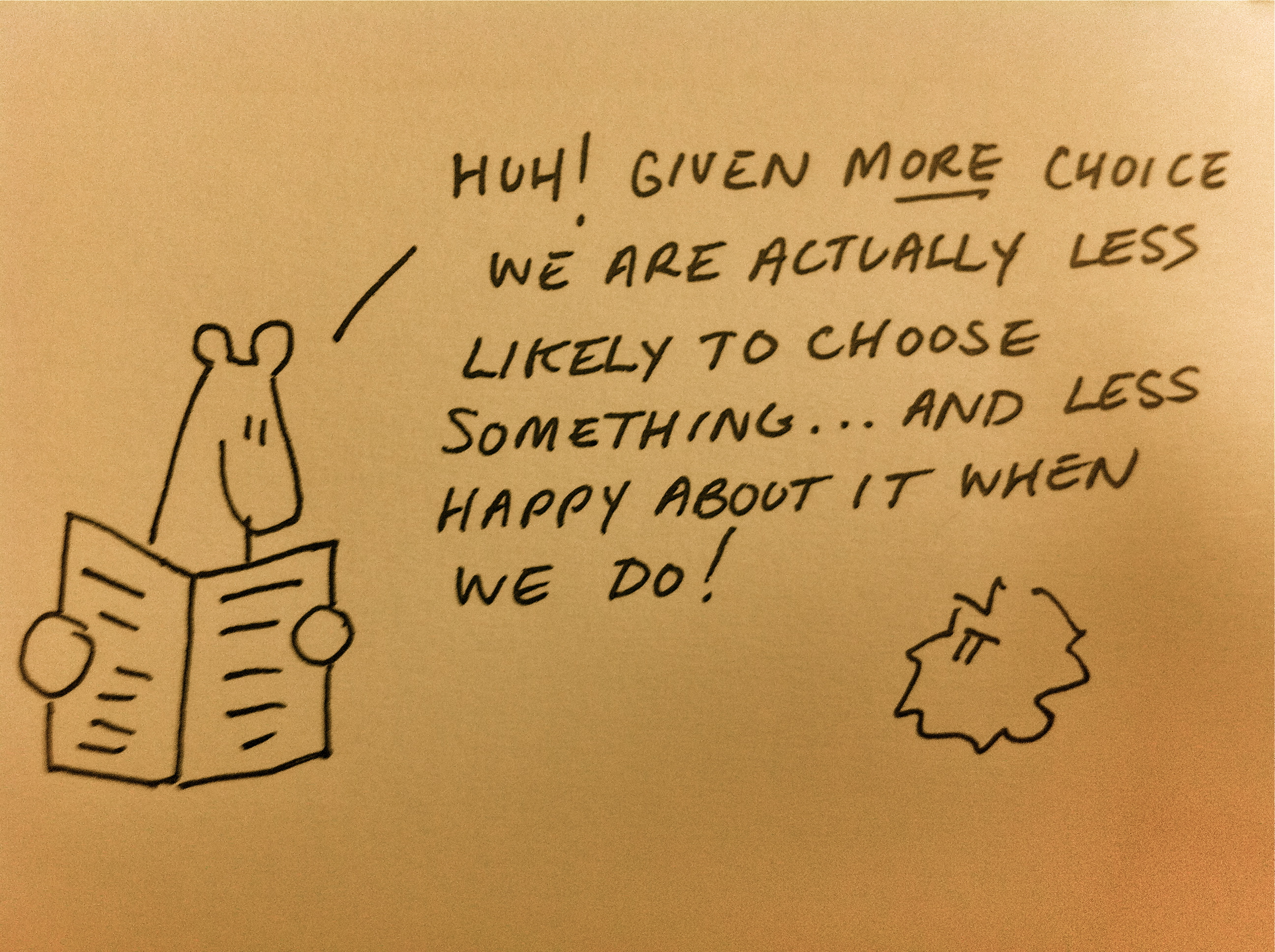
The funny thing is that sometimes, providing more choice can result in no choice at all. A Californian study showed that shoppers, faced with multiple varieties of a product, were much less likely to make a purchase when the number of varieties increased. Moreover, other examples show increased satisfaction when choice was made from smaller selection samples – this was particularly shocking given the sample in question was chocolate.

What does this all mean?  Essentially, too much choice reduces us to a state of torpor, where we’re rendered immobilized and anxiety-ridden all at the same time.  Basically, while some choice is good, this doesn’t mean that more choice is actually better, as expressed by Barry Schwartz in his TED treatise “The Paradox of Choice”.

Psychologically speaking, it seems we’re better wired for a simpler and perhaps more binary type of existence, as opposed to the infinite decision tree that confronts us upon walking out the front door, wallet in hand.  As per one commenter on the site: “I am constantly stressed about taking the wrong choices in life. I wish I had been born a peasant in the middle ages. Tend your field, get married, have kids and die. No social mobility, no options. Easier life. Voila.”

P.S.  The idea of choice overload can be traced back to Aristotle, Ortega, and the French philosopher Jean Buridan, who theorized that an organism faced with the choice of two equally tempting options, such as a donkey between two piles of delicious hay, would delay the choice.  This is sometimes referred to as the problem of “Buridan’s ass”, as the ass, not able to choose between the two, supposedly dies of hunger.  Poor little not so bright guy – he must’ve been using anti-calculus toothpaste too.

Facebook Timeline and the quantified self

Right there with you, every step of the way

By now, most Facebook users know about the widespread introduction of Timeline, which is an adaptation of the site to share more of its users life through infographics.  Basically the site now takes all the personal data dropped into the Facebook void and knits this into a lifeline that reads like a cross between an illustrated story and an annual report.

The format is largely credited to Nick Felton, the design-uber genius who rose to fame by charting a year of his life in annual report style.  Felton’s approach is impactful, visually appealing, and somewhat provocative as it essentially quantifies life by the numbers, and the supposition is that the numbers you choose to quantify add up to the totality of your life (or, at least the totality of it you want to show publicly).  For example, Felton’s 2011 annual report contains randomness ranging from the number of hours spent at work (2,567.5), to the number of alcoholic beverages consumed (806), to the number of teeth lost by his cat (1).

In a sense, this “quantified-self movement” is somewhat iterative, as one has to ask how many of Felton’s 2,567.5 work hours were spent quantifying those very work hours. (A 1,000?  Perhaps 2,000?)  And how many of those hours were spent quantifying hours spent quantifying?  And so on..

Stepping back, this never-ending virtual solipsism is a pretty bizarre ride we’re on.  It’s as though you were to find yourself standing in between two mirrors, and, turn around as you might, you can’t quite catch a good look at the smaller versions of yourself stretching out into infinity.

P.S. The Walrus recently penned a piece on Facebook’s new Timeline format which has some interesting thoughts.

i.e. “Yet to call the sudden regurgitation of years of photos, messages, contacts, and comments disconcerting is an understatement. All along, Facebook has been tracking your data, waiting for this moment to arrive. Because it’s not just your Facebook life that Timeline captures: the first date is not, as you might expect, the day you joined; it’s the day you were born. A site best known for disseminating awkward party photos is now imagining itself at the foot of your mother’s bed at the moment of your delivery, diligently taking notes…

Rather than downplaying the mountain of data it has collected, Facebook put it on display. Look, it says, look at how much we’ve learned about one another. We’ve come a long way, you and I. Look at what we’ve built together. You wouldn’t walk away from that, now, would you?”

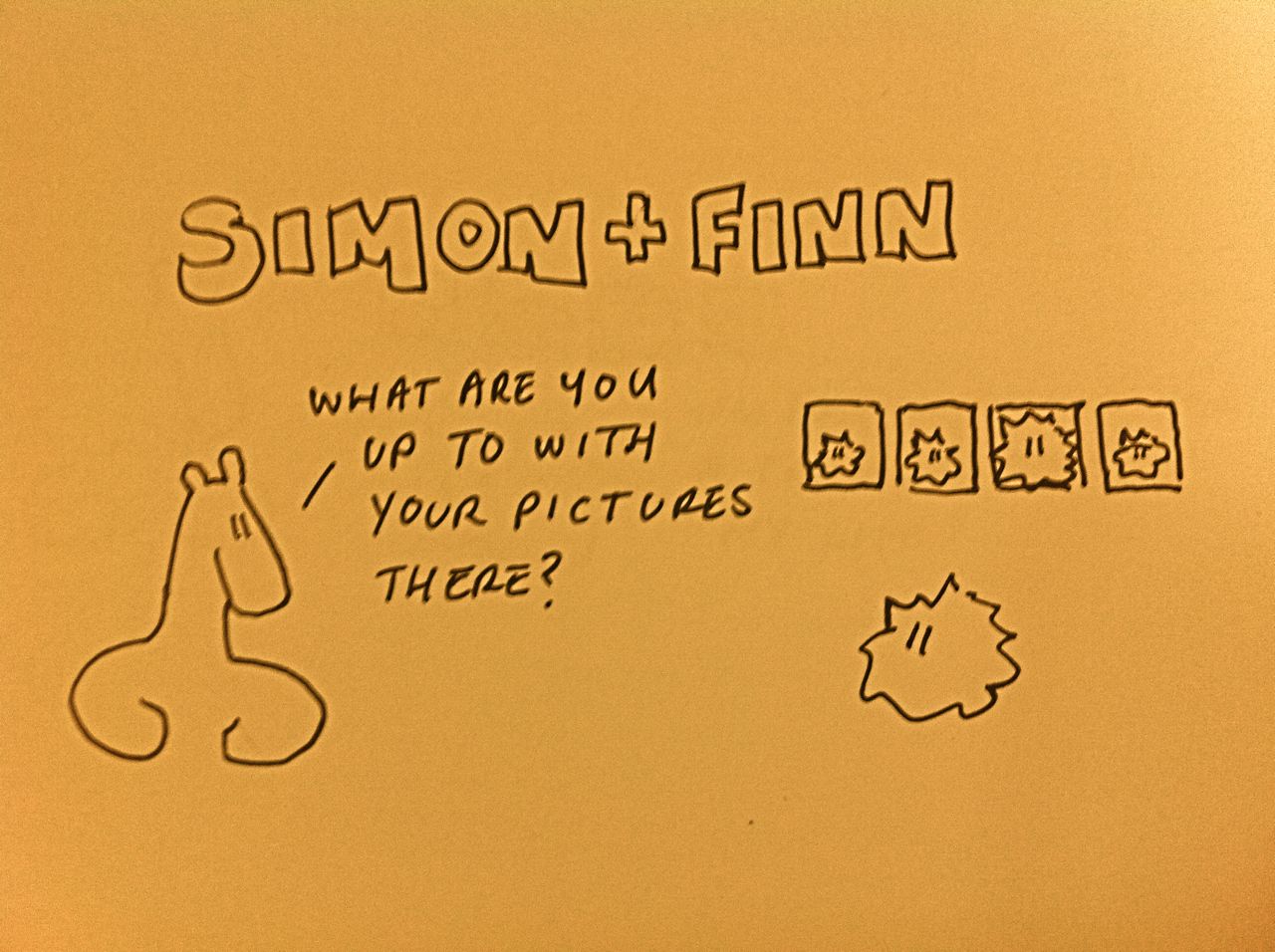
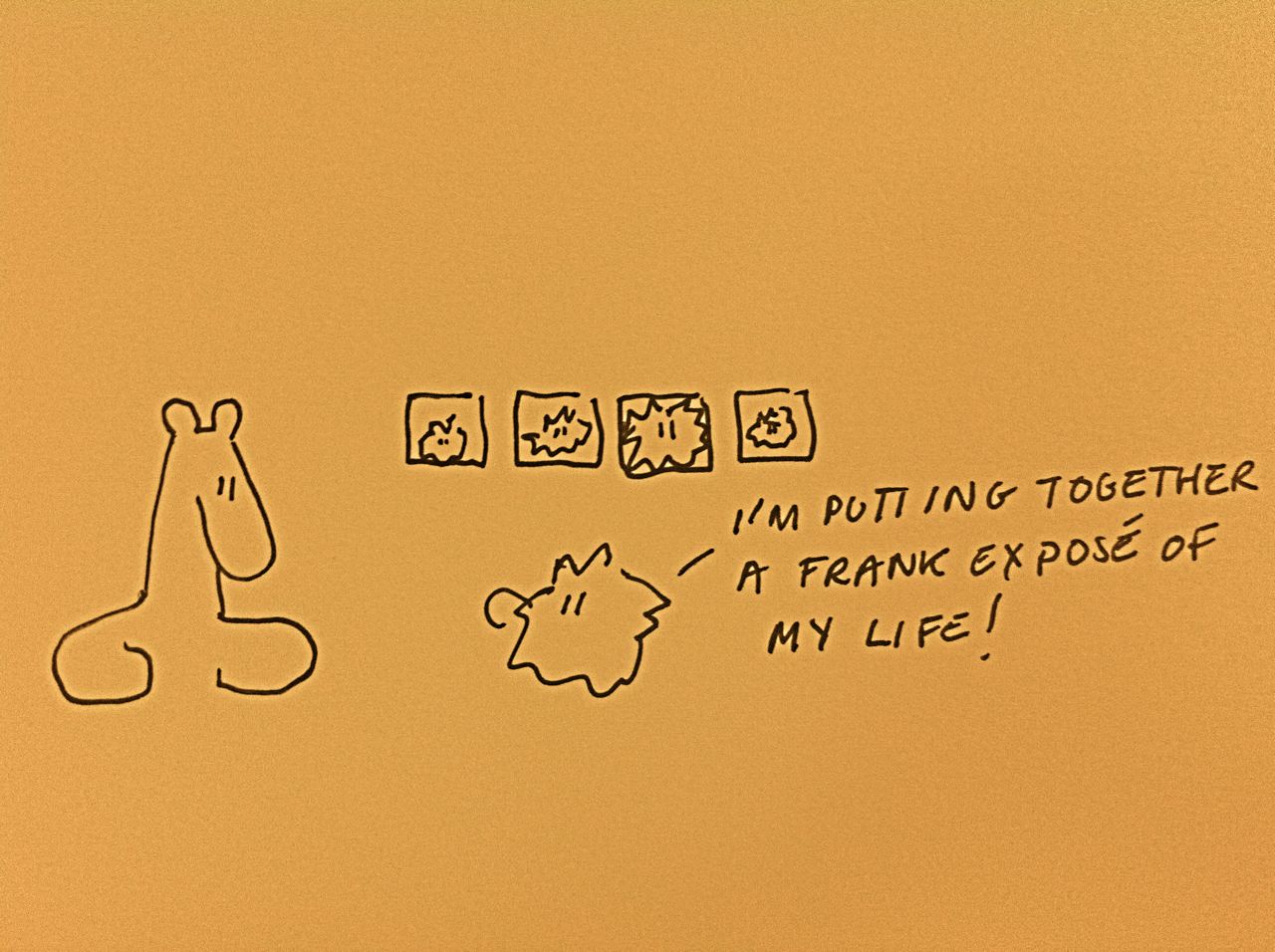
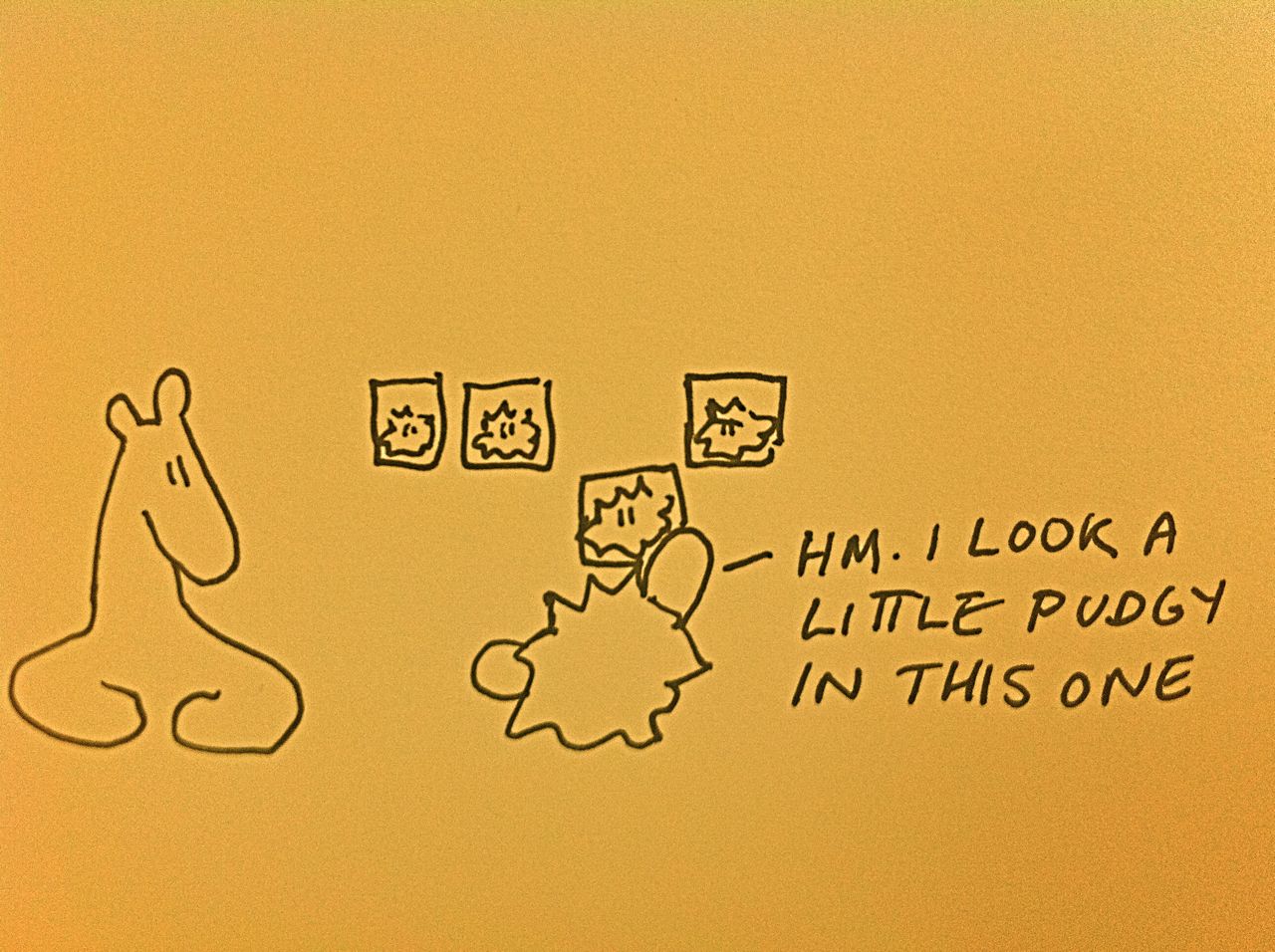
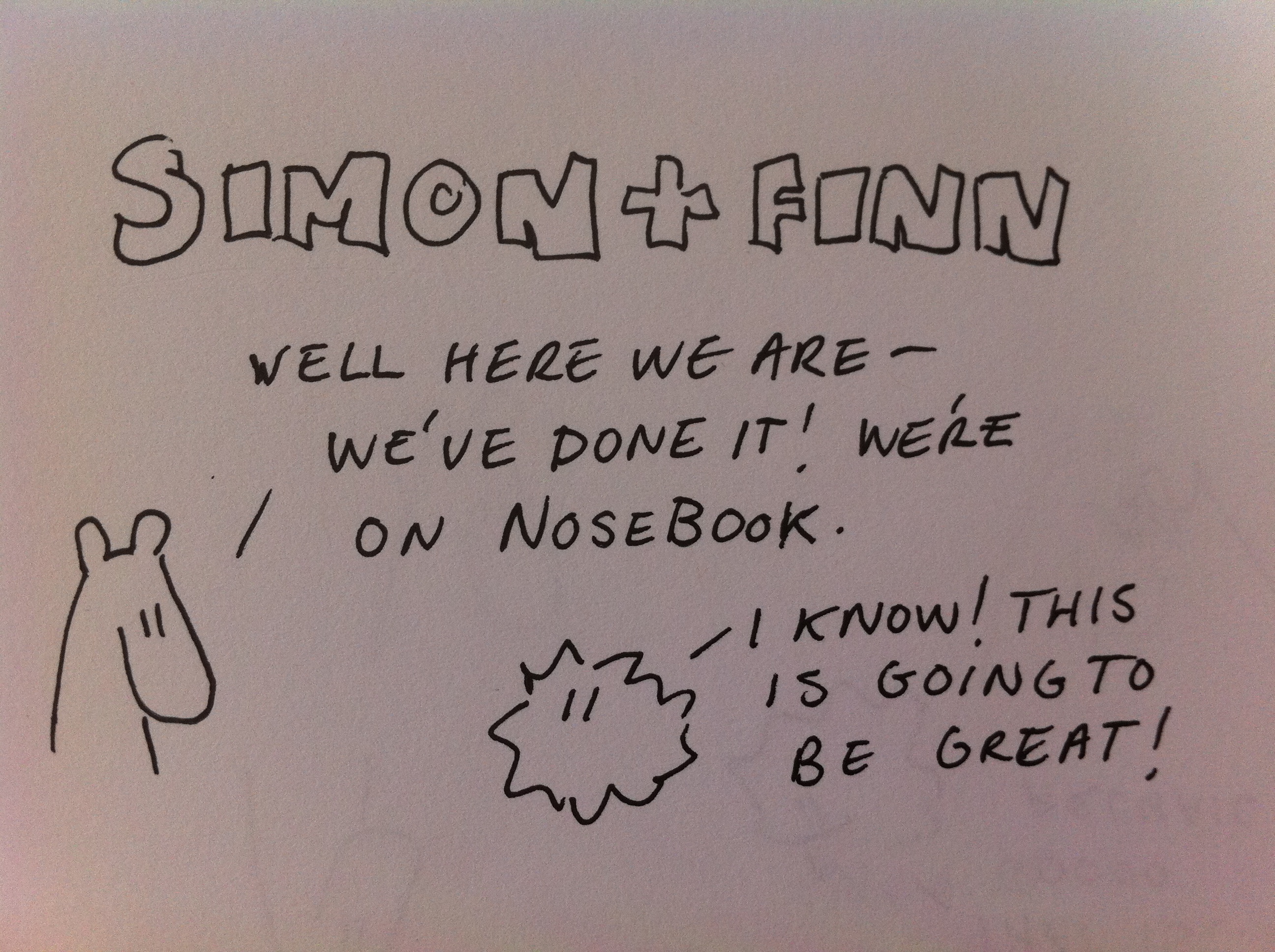
Simon and Finn visit Face..er I mean, NoseBook

Beware the Conversation Weasel

I'm way too cute for it not to be all about me.

In 2011, The Art of Manliness published a sweet piece on Conversational Narcissism.  It’s an interesting read, and the tenets will be familiar to many i.e. “Last month I met up with an old friend I hadn’t seen in forever…. Having both read and written about how to be an effective and charismatic conversationalist, I followed the old dictum of listening more than talking and asking the other person engaging questions about themselves. This is supposed to charm your conversation partner. I guess it worked because my friend talked about himself for an hour straight and didn’t ask me a single question.

Sound a little familiar?  What’s neat about the article is that sociologist Charles Derber (whose book The Pursuit of Attention inspires much of the piece) has deconstructed some of the ways people masterfully – and subtly – monopolize the conversation back to ego numero uno.

Take the following two examples:

Example 1:

James:   I’m thinking about buying a new car.
Rob:      Oh yeah?  What models have you looked at?

Example 2:

James:    I’m thinking about buying a new car.
Rob:        Oh yeah?  I’m thinking about buying a new car too.
James:    Really?
Rob:        Yup, I just test drove a Mustang yesterday and it was awesome.

Woah!!  Did you catch that weaselly move in Example 2?  Rob, henceforth “Conversation Weasel”, has sneakily moved the attention away from James and placed it squarely on himself, in a verbal strategy Derber calls “shift-response” (as opposed to the polite and engaging “support-response” demonstrated in Example 1).  The post goes on to elaborate on a number of fascinating ways Conversation Weasel can leave the listener high and dry while running away madly with the conversation football.

The author offers a nice little insight into the why of this, by stating: “In a time where a lot of the old social supports people relied upon have disappeared, people have become starved for attention. They bring this hunger to their conversations, which they see as competitions in which the winner is able to keep the attention on themselves as much as possible. And this is turning the skill of conversation-making into a lost art.”

P.S. This whole discussion seems rather evocative of the conch shell symbolism in William Golding’s Lord of the Flies. In this book, a group of shipwrecked boys decide that “he who holds the conch” has the authority to speak without interruption, and that anyone within the group has the right to the conch.  The conch in this case helps to ensure a degree of egalitarianism and collectivism to how group decisions are discussed and made.  However, as the story unfolds, group structure breaks down, the rules of engagement disintegrate, the conch is shattered, and anarchy reigns supreme.

Now.. I’m not saying that Conversation Weasel sets out to create anarchy, but it’s mighty tricky to build something together when we’re all grabbing for the conch.

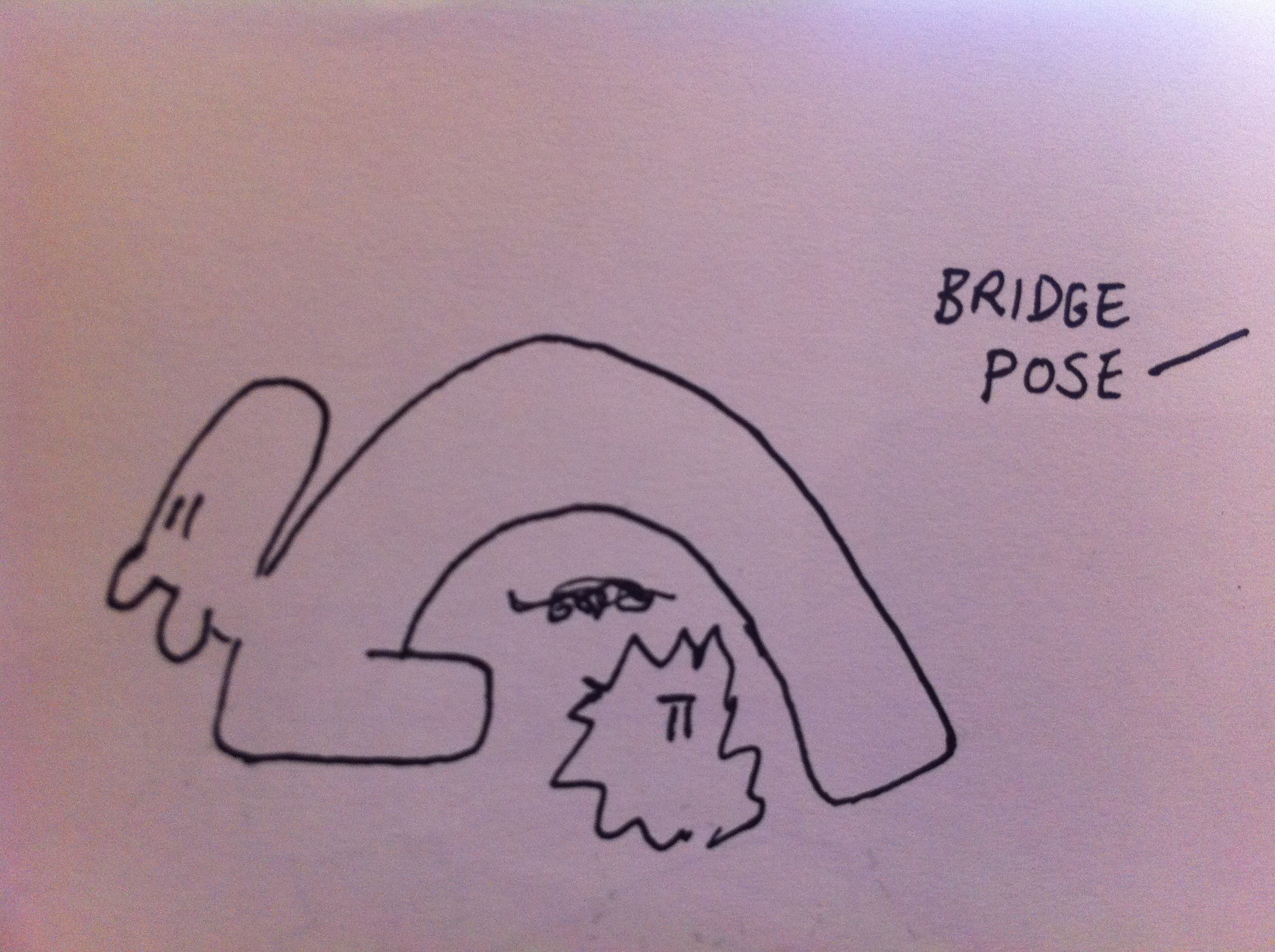
Yoga is Scary

So I tried yoga a few weeks ago.

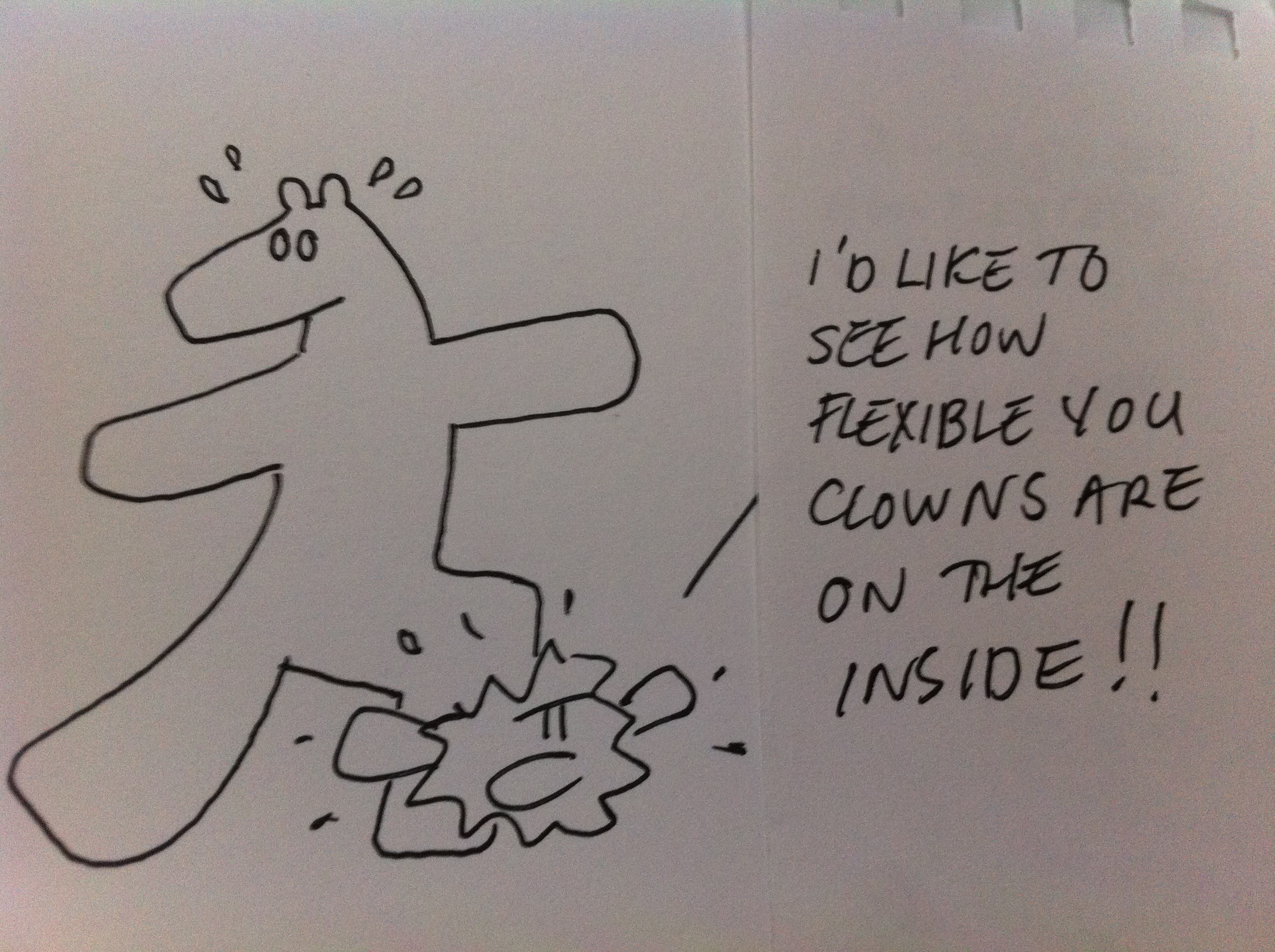
It seemed like a good idea at the time, you know, get more bendy.  All was going well, until the call for backwards-facing-cobra or something to that effect.  Unfortunately what I heard was something more like upside-down-manatee, or ungulate-grazing-in-reverse. As my neck hasn’t been the same since, evidently I wasn’t either of those two mammals in a past life.

More importantly, has anyone else noticed how grumpy some yoga aficionados look when you spot them doing ‘normal’ stuff like taking out the garbage?  One would think serenity would prevail..

Mark my words, there’s something afoot.