Why is email addictive?

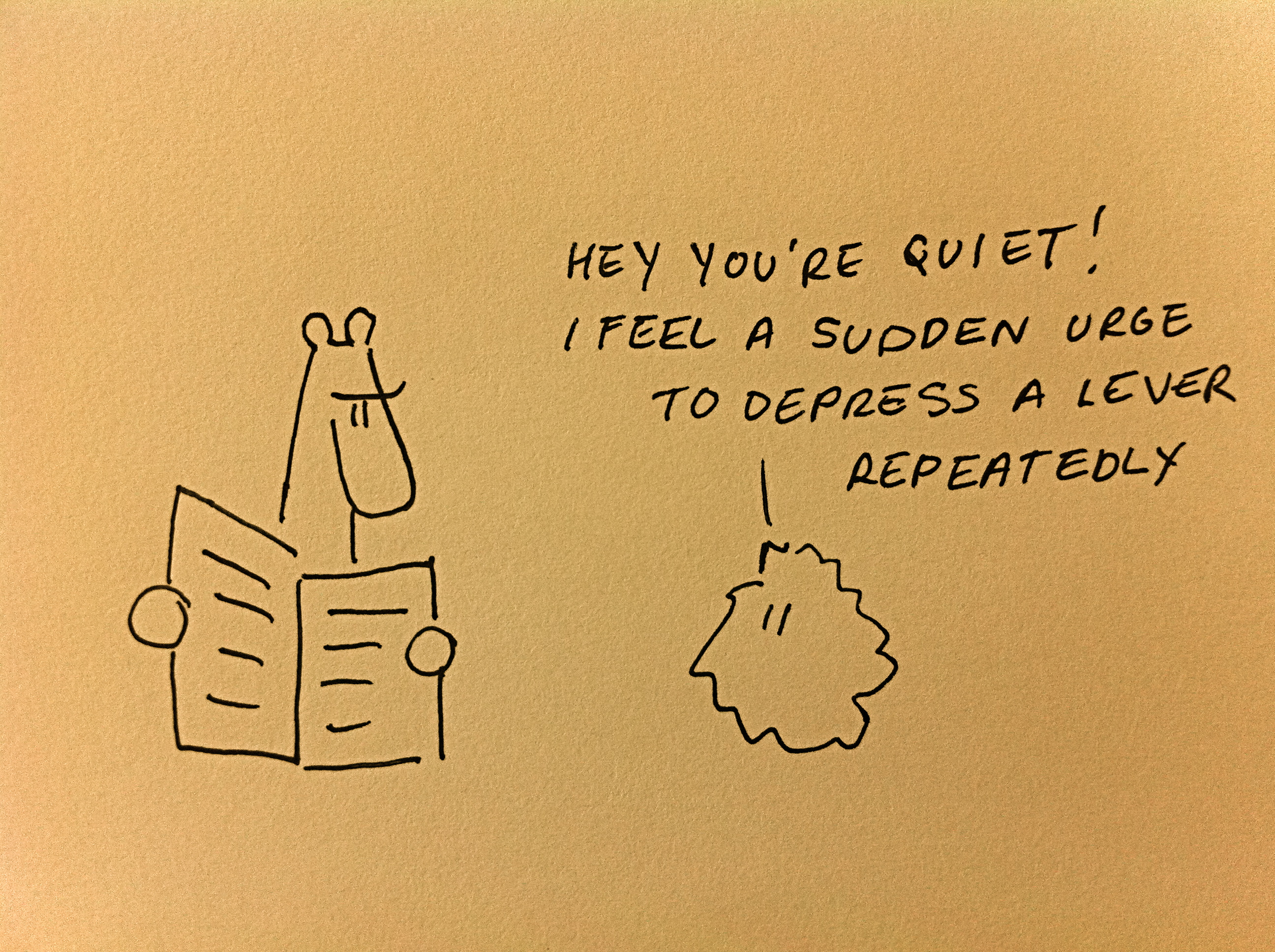
Alllooo? Where's my email?

A while back, the bloggers at MindHacks posted a theory as to why email is so addictive. (i.e. “I must hit the ‘get mail’ button at least a hundred times a day. Sometimes, if I don’t have any new mail, I hit it again immediately, just to check. I interrupt my work to check my mail even when I know that I’m not going to find anything interesting and that I should just concentrate on what I am supposed to be doing….”)

Ok, that sounds way too familiar for my liking!

Now, although there are varying theories as to why email can be an incredibly addictive pursuit (for some), MindHacks base their conjecture on the principles of operant conditioning, which is the theory that what we do and how we act depends on the rewards and punishments resulting from what we did last time around.

The salient angle here lies with the concept of intermittent or variable reinforcement, which occurs when we receive rewards only some of the time for performing certain behaviours.  What’s curious is that intermittent reinforcement has actually been shown to be the most effective way to ensure repeated behaviour.  Loosely translated, if a kid gets a candy only some of the time, that kid is more likely to repeat the potential candy-resulting behaviour than a kid that gets rewarded all of the time (i.e. mucho candy, all day long).

Why, you ask?  Well, because the kid is never sure as to whether the reward is coming or not, not only do they get used to performing the behaviour without reward, they also take longer to stop the behaviour even if the reward is removed!  Sort of a cruel but effective trick really.

Now, in the context of email, the authors suggest that a possible “reward” could be when one gets an email from a friend, or a funny joke, or some kind of fun distraction, like say a blog of some kind :).  As you never know when one of those bundles of joy will be in your inbox, we hit send/receive ad nauseum..  And thus, because the infinite ‘next time’ just might be the occasion that produces sweet reward, so hope springs eternal and off we dash after that elusive – oh hang on sec – I just got an email!!

P.S.  One of the classic examples of experimentation in this area is the so-called Skinner box – which may recall Psych101 for some.  The Skinner Box in its most basic iteration is in effect an operant conditioning chamber.  In one particular experiment, rats were given food pellet rewards when they pushed a lever in the chamber.  True to the tenets of intermittent reward, rats that were given food pellets only once in a while (as opposed to rats given pellets every single time they depressed the lever), went ballistic on the lever, pushing it as many times as they possibly could, in the faint hope that this time the pellet cometh!
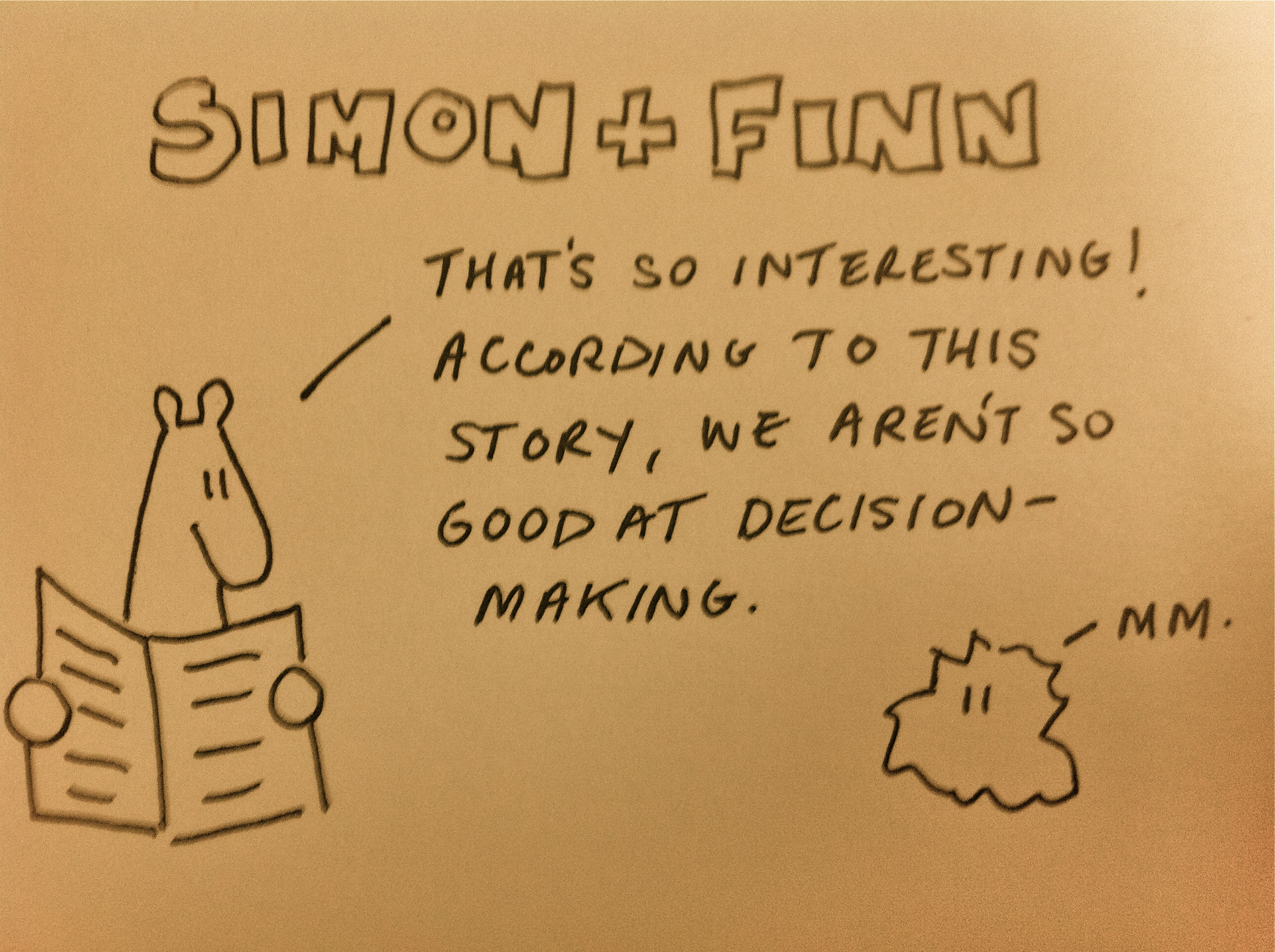
Too much of a good thing?

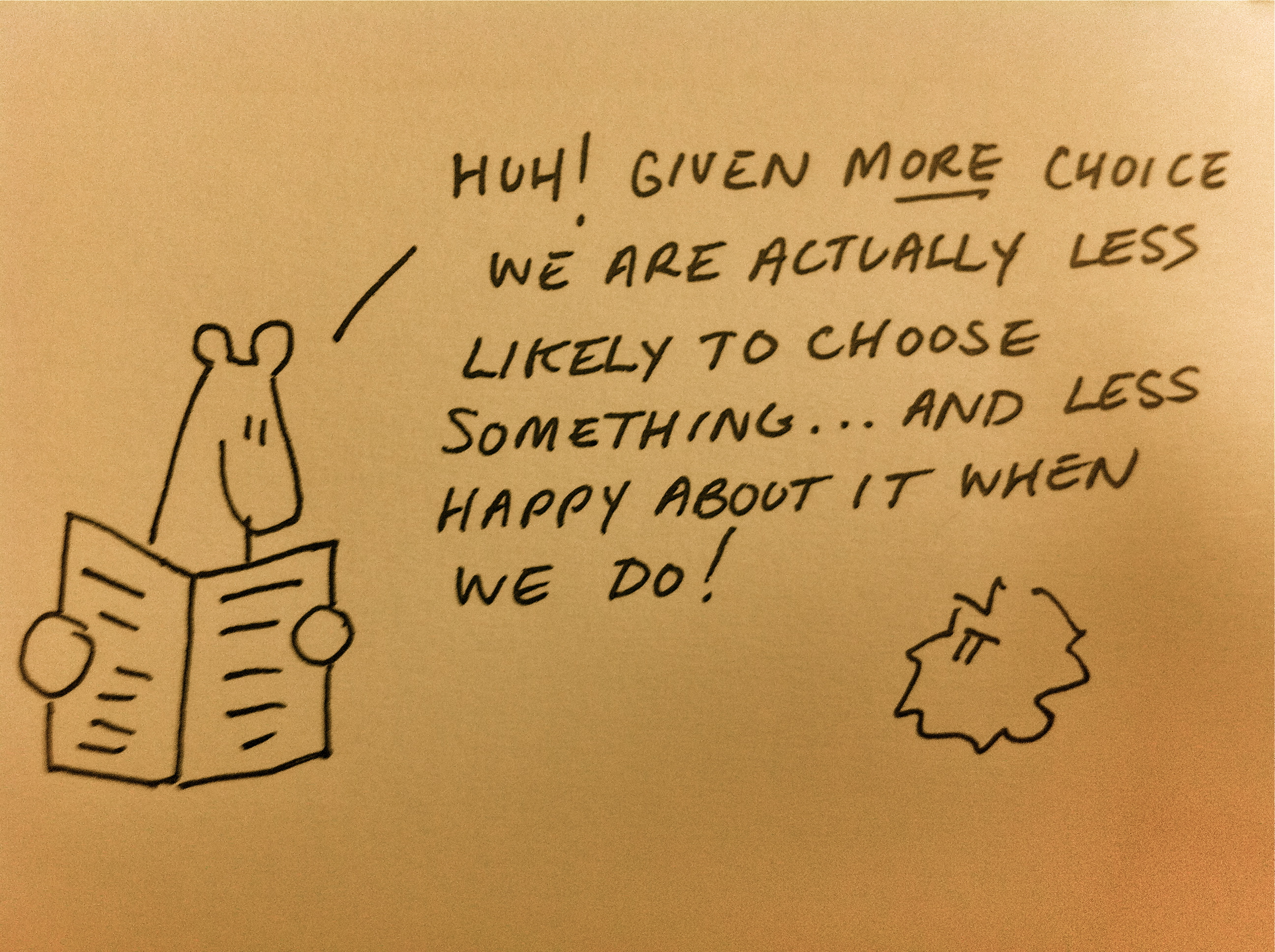
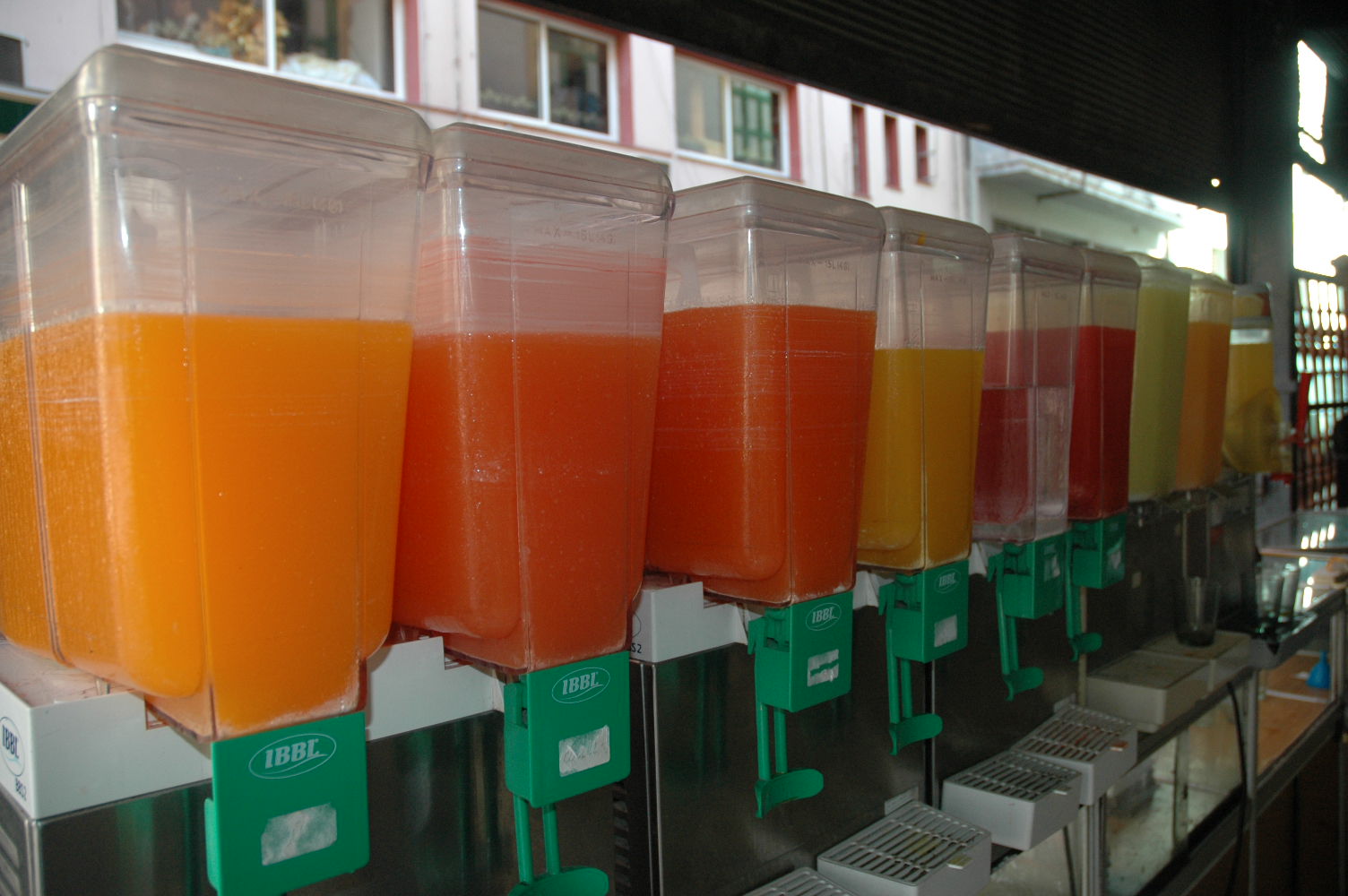
I'd like the orange one please...

“These are momentous times for the British potato crisp.”  And that’s the delectable start to “The tyranny of choice: You choose”, a great article that touches on the behaviourial science behind making choices in a world where – doggone it all! –  there are just too many options.
The basic premise to the piece is that the sheer exhaustive number of possibilities that the average North American has at their disposal makes choosing just one, well, paralyzing.  Witness the typical stroll in Shopper’s Drug Mart looking for say… toothpaste.  Who hasn’t been stricken dumb by the options, mouth agape?  i.e. Tartar control!  Whitening!  Natural!  Organic!  Natural AND organic!  With fluoride!  Without fluoride!  Bourbon-flavoured!  Anti-calculus!  (I must have been using this last one my whole life judging by my math grades).

The funny thing is that sometimes, providing more choice can result in no choice at all. A Californian study showed that shoppers, faced with multiple varieties of a product, were much less likely to make a purchase when the number of varieties increased. Moreover, other examples show increased satisfaction when choice was made from smaller selection samples – this was particularly shocking given the sample in question was chocolate.

What does this all mean?  Essentially, too much choice reduces us to a state of torpor, where we’re rendered immobilized and anxiety-ridden all at the same time.  Basically, while some choice is good, this doesn’t mean that more choice is actually better, as expressed by Barry Schwartz in his TED treatise “The Paradox of Choice”.

Psychologically speaking, it seems we’re better wired for a simpler and perhaps more binary type of existence, as opposed to the infinite decision tree that confronts us upon walking out the front door, wallet in hand.  As per one commenter on the site: “I am constantly stressed about taking the wrong choices in life. I wish I had been born a peasant in the middle ages. Tend your field, get married, have kids and die. No social mobility, no options. Easier life. Voila.”

P.S.  The idea of choice overload can be traced back to Aristotle, Ortega, and the French philosopher Jean Buridan, who theorized that an organism faced with the choice of two equally tempting options, such as a donkey between two piles of delicious hay, would delay the choice.  This is sometimes referred to as the problem of “Buridan’s ass”, as the ass, not able to choose between the two, supposedly dies of hunger.  Poor little not so bright guy – he must’ve been using anti-calculus toothpaste too.

Facebook Timeline and the quantified self

Right there with you, every step of the way

By now, most Facebook users know about the widespread introduction of Timeline, which is an adaptation of the site to share more of its users life through infographics.  Basically the site now takes all the personal data dropped into the Facebook void and knits this into a lifeline that reads like a cross between an illustrated story and an annual report.

The format is largely credited to Nick Felton, the design-uber genius who rose to fame by charting a year of his life in annual report style.  Felton’s approach is impactful, visually appealing, and somewhat provocative as it essentially quantifies life by the numbers, and the supposition is that the numbers you choose to quantify add up to the totality of your life (or, at least the totality of it you want to show publicly).  For example, Felton’s 2011 annual report contains randomness ranging from the number of hours spent at work (2,567.5), to the number of alcoholic beverages consumed (806), to the number of teeth lost by his cat (1).

In a sense, this “quantified-self movement” is somewhat iterative, as one has to ask how many of Felton’s 2,567.5 work hours were spent quantifying those very work hours. (A 1,000?  Perhaps 2,000?)  And how many of those hours were spent quantifying hours spent quantifying?  And so on..

Stepping back, this never-ending virtual solipsism is a pretty bizarre ride we’re on.  It’s as though you were to find yourself standing in between two mirrors, and, turn around as you might, you can’t quite catch a good look at the smaller versions of yourself stretching out into infinity.

P.S. The Walrus recently penned a piece on Facebook’s new Timeline format which has some interesting thoughts.

i.e. “Yet to call the sudden regurgitation of years of photos, messages, contacts, and comments disconcerting is an understatement. All along, Facebook has been tracking your data, waiting for this moment to arrive. Because it’s not just your Facebook life that Timeline captures: the first date is not, as you might expect, the day you joined; it’s the day you were born. A site best known for disseminating awkward party photos is now imagining itself at the foot of your mother’s bed at the moment of your delivery, diligently taking notes…

Rather than downplaying the mountain of data it has collected, Facebook put it on display. Look, it says, look at how much we’ve learned about one another. We’ve come a long way, you and I. Look at what we’ve built together. You wouldn’t walk away from that, now, would you?”

André the seal gets fishing permit, whales wait patiently

Opening up our thinking

A while back in Scotland, a wee seal named André was awarded a fishing permit by the Loch Lomond Angling Improvement Association.  Fortified with his new permit and passport sized picture, André was now legally allowed to fish to his stomach’s content until October 31st, 2003.  The Association’s reason for its generous donation?  “André has been committing a poaching offense by eating all our salmon. He has already cost us thousands of pounds in fish and through loss of permit sales, so the least we could do until he is caught is to make it legal.”

Too funny.

In a letter to his newest member, Mr Brady, the Association Chair at the time, wrote: “We have decided to issue you with a fishing permit for the season. This will allow you to fish in Loch Lomond and the River Leven. Last year some of your friends (two otters) moved into the River Endrick, so you may wish to visit them and (unfortunately for us) share a salmon or two with them.”

What’s particularly interesting about this one though, is that eleven years later The Economist, stalwart economic orator that it is, has taken the unusual step to publish a proposal by the American Association for the Advancement of Science (AAAS).  The proposal?  That whales and dolphins, based on their degree of intelligence and self-awareness, are “persons” too and as such should be accorded these rights.

According to the proponents, this idea – that is, what we call a person – does not necessarily need to be human.  Instead, in philosophy, a “person is a being with special characteristics who deserves special treatment as a result of those characteristics.” Based on this premise, cetaceans do indeed count as “persons” and therefore have moral rights as appropriate to their species.

Although the proponents have cautiously and understandably left some wiggle room here, i.e. “as appropriate to their species”, it’s interesting – and perhaps testament to our moral development – that these conversations are occurring at the level of AAAS and being picked up by The Economist, no less.

P.S. A couple of tongue-in-cheek commentators on the Economist article thought that perhaps the whales would take offence to being called people.  Still others indicated that perhaps immigration might become an interesting issue.. i.e. “the Grey Whale crosses from Mexico into US waters early each year without any documentation. Then the entire population spends months eating American molluscs and having sex in American waters until returning to Mexico (again without bothering to get their passports stamped) where each winter the next generation of illegal immigrants is born. If we recognize whales as equal to people we may have to (at last) develop an immigration policy that treats Mexicans (and others from the South) as human beings!”

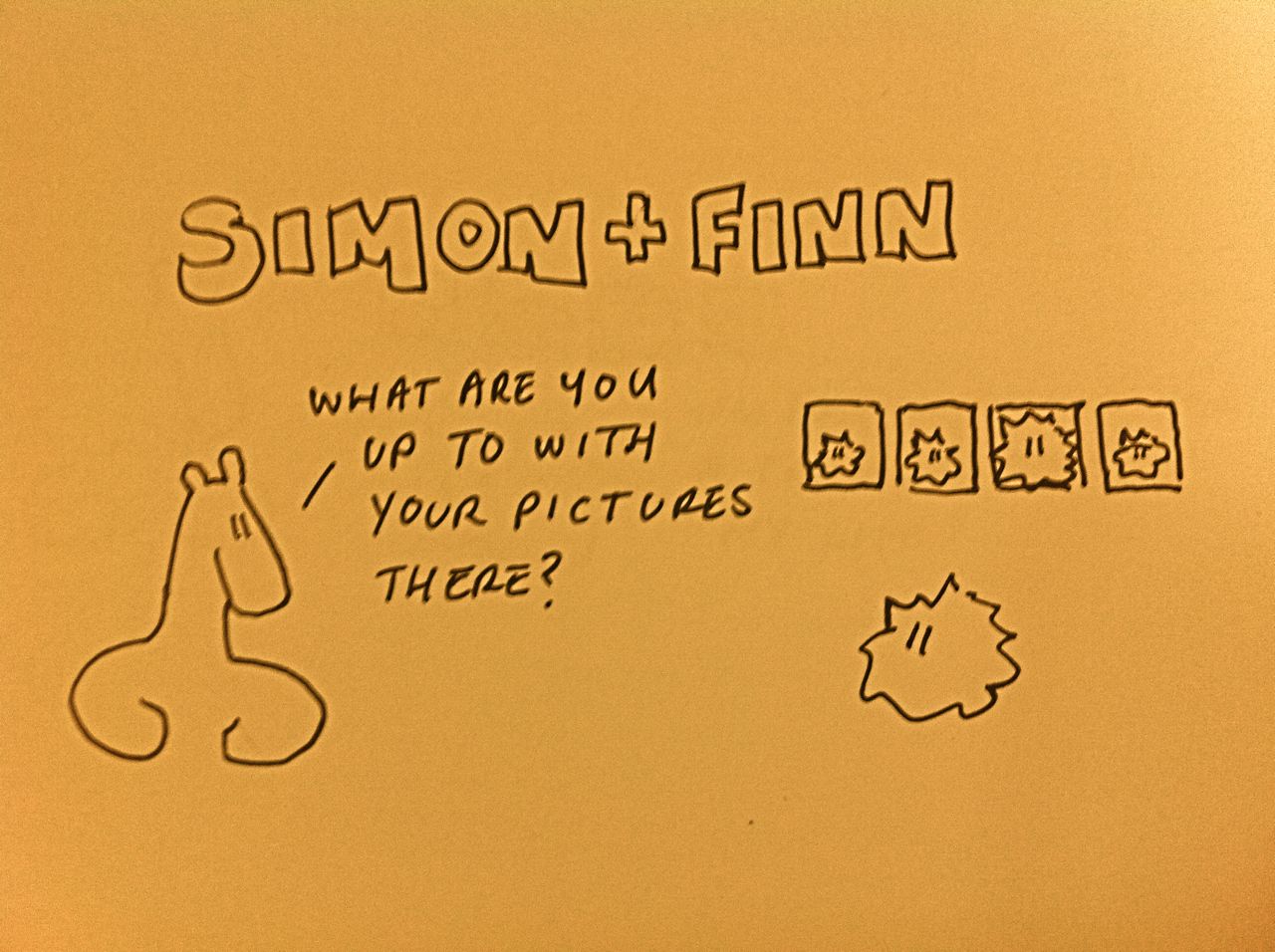
Simon and Finn visit Face..er I mean, NoseBook

Canada and the Arctic Grail

Sheesh how far do I have to go to get ice around here

In 2007, a chap by the name of McKenzie Funk published a nice piece in Harper’s, “The Coming Fight for the Melting North”.  It’s a gorgeous piece of writing on what’s happening in the Arctic given the melting ice and the subsequent opening up of transportation routes and resources (you need a subscription to see the article, but summaries can be viewed here, here, and here).

Basically Funk does a bang up job describing the intricacies of the maneuvering for territory occurring up in the Arctic.  It’s a pretty huge deal given the commercial, military, and resource value of that area (i.e. the U.S.G.S. estimates the area holds up to 25% of the world’s undiscovered oil, and whoever controls the shipping up there is going to be set).

This means that who owns what and whose territory ends where is of increasing interest. How much interest?  Well, with its expanded holdings the United States could potentially grow by 4.1 million square miles to become the world’s largest country (and acquire $1.3 trillion worth of resources to boot).  That’s… quite a bit.

Funk goes on to say that with the Arctic ice melting, “experts foresee numerous conflicts between the five nations whose borders meet there. Russia, Canada, Denmark, Norway, and the United States all have borders along the Arctic, and all of them have already begun research into what swathes of territory their continental shelves entitle them to claim“.  As you can imagine this has made Canada a little nervous, as suddenly its continuing entitlement to its northern coastline and waters has become somewhat more nebulous.

Although it’s tricky to predict how this will all play out and there’s been renewed interest in collaboration of late, two things stand out a bit:

  1. Despite the continuing debate about whether climate change is real, there is a very real jockeying for position predicated on melting ice floes; and,
  2. Given what’s at stake in an increasingly constrained world, if push comes to shove there’s likely going to be a lot of shoving.

Beware the Conversation Weasel

I'm way too cute for it not to be all about me.

In 2011, The Art of Manliness published a sweet piece on Conversational Narcissism.  It’s an interesting read, and the tenets will be familiar to many i.e. “Last month I met up with an old friend I hadn’t seen in forever…. Having both read and written about how to be an effective and charismatic conversationalist, I followed the old dictum of listening more than talking and asking the other person engaging questions about themselves. This is supposed to charm your conversation partner. I guess it worked because my friend talked about himself for an hour straight and didn’t ask me a single question.

Sound a little familiar?  What’s neat about the article is that sociologist Charles Derber (whose book The Pursuit of Attention inspires much of the piece) has deconstructed some of the ways people masterfully – and subtly – monopolize the conversation back to ego numero uno.

Take the following two examples:

Example 1:

James:   I’m thinking about buying a new car.
Rob:      Oh yeah?  What models have you looked at?

Example 2:

James:    I’m thinking about buying a new car.
Rob:        Oh yeah?  I’m thinking about buying a new car too.
James:    Really?
Rob:        Yup, I just test drove a Mustang yesterday and it was awesome.

Woah!!  Did you catch that weaselly move in Example 2?  Rob, henceforth “Conversation Weasel”, has sneakily moved the attention away from James and placed it squarely on himself, in a verbal strategy Derber calls “shift-response” (as opposed to the polite and engaging “support-response” demonstrated in Example 1).  The post goes on to elaborate on a number of fascinating ways Conversation Weasel can leave the listener high and dry while running away madly with the conversation football.

The author offers a nice little insight into the why of this, by stating: “In a time where a lot of the old social supports people relied upon have disappeared, people have become starved for attention. They bring this hunger to their conversations, which they see as competitions in which the winner is able to keep the attention on themselves as much as possible. And this is turning the skill of conversation-making into a lost art.”

P.S. This whole discussion seems rather evocative of the conch shell symbolism in William Golding’s Lord of the Flies. In this book, a group of shipwrecked boys decide that “he who holds the conch” has the authority to speak without interruption, and that anyone within the group has the right to the conch.  The conch in this case helps to ensure a degree of egalitarianism and collectivism to how group decisions are discussed and made.  However, as the story unfolds, group structure breaks down, the rules of engagement disintegrate, the conch is shattered, and anarchy reigns supreme.

Now.. I’m not saying that Conversation Weasel sets out to create anarchy, but it’s mighty tricky to build something together when we’re all grabbing for the conch.

Pandas: Available in black, white, and shades of grey

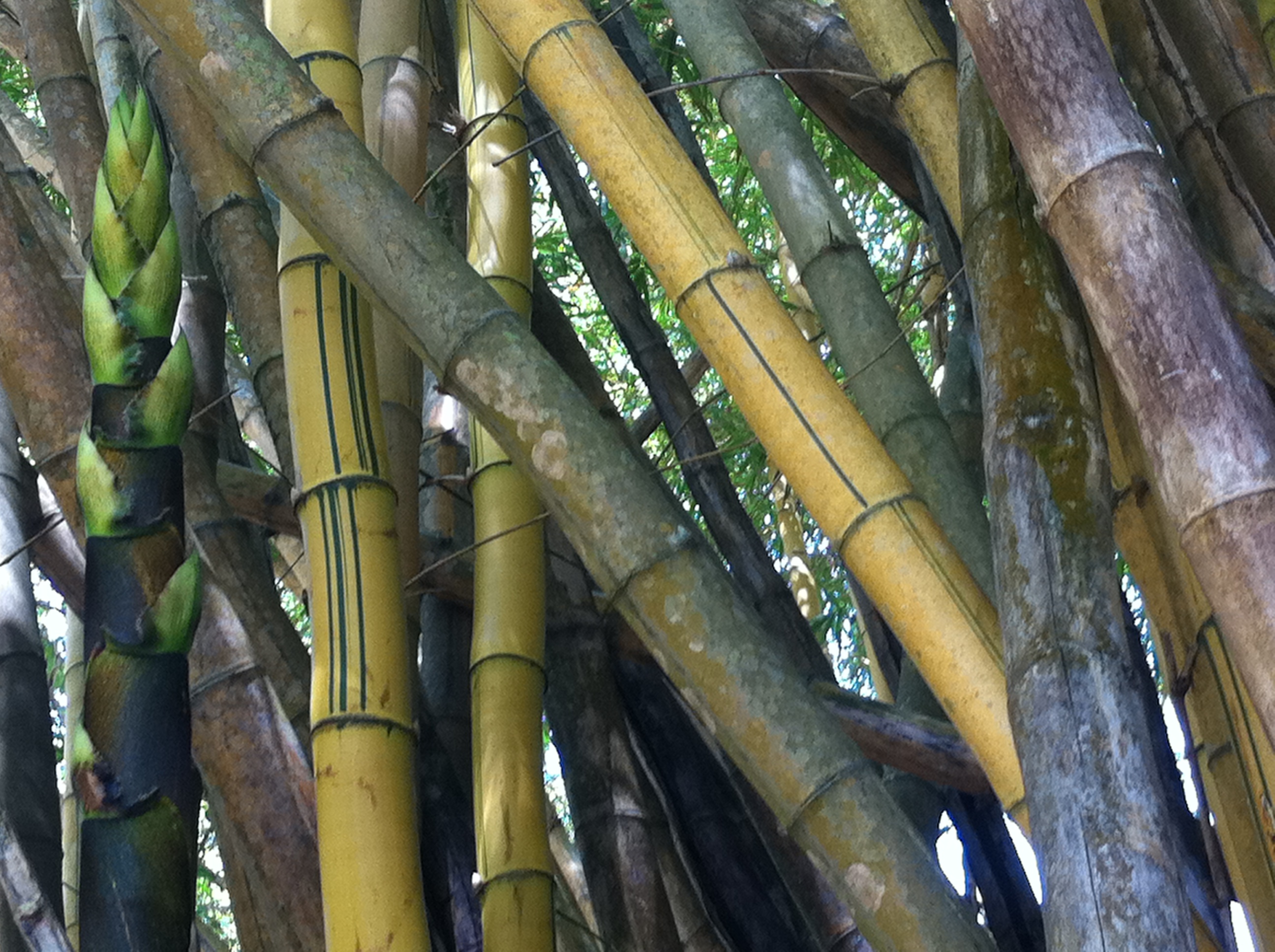
Low cal diet: A curious taste for bamboo

BlogTO recently posted about the two cute pandas coming to the Toronto zoo on a five-year loan (Wouldn’t it be better if the pandas just stayed home?). The gist of that post was: (1) why spend all that money on pandas when there are so many other native species that could use the funding; (2) some feel the zoo is overly optimistic about how much revenue the pandas will bring in given their ~$1 million/yr price tag (never mind the $200K price tag for imported bamboo!) and (3) to recognize international goodwill between China and other countries via live bear currency seems a little strange (a.k.a. the bizarre emergence of panda diplomacy).

In this complicated world, it seems like the more one looks into something, the less black and white it is – unlike our furry subject, ironically.  Consider a few brief aspects (to do with pandas, less so with international diplomacy):

  • So few:  At one point the panda came very close to extinction and the species is still one of the rarest on the planet. I had no idea that there are only an estimated 1,500 to 3,000 pandas left in the wild, and about 240 to 333 in zoos (estimates vary depending on source).  That’s not a lot of pandas is it?
  • Two day window: Despite the huge difficulty in mating pandas in captivity as well as in the wild (the female is only in estrous for two days a year), zoos have been successful in increasing the population of captive pandas from 150 to 333.
  • Panda “loans” can help:  Loans of giant pandas between China and other countries — panda diplomacy — costs hosting countries up to $1M U.S.D. a year.  In some cases a portion of these loan fees are directed to conservation efforts for the giant panda and its habitat.
  • Who decides?  Some conservationists have controversially expressed that the giant panda is too expensive to save and that funds would be better spent on protecting “less expensive” animals and their habitat.   Giant pandas are considered unlikely to thrive in the wild due to habitat decline and their proclivity for massive amounts of low-calorie bamboo. Arguments for concentrating on our own backyard (i.e. own local species and habitat) are convincing.
  • Someone’s got to lead the charge:  Yet, others argue that the panda is a keystone species – and, as a flagship icon of wildlife conservation – does enormous amounts for the protection of habitat and other less known species that similarly depend on this habitat, as well as the conservation movement in general.

And there’s a lot more where that came from. It’s a complicated world out there, and it’s sure not getting any simpler.  However, there is one aspect in which many agree, and that is that the future chances of these animals flourishing in the wild is slim (for example, in the wild breeding pandas need about 30km2 of land to support them – but most populations are now isolated in narrow 1.2km-wide fragments).  This means that regardless of how well we succeed at captive breeding, without immediate broader scale and significant habitat protection, the only place we’re going to be seeing some of these animals in the future is behind bars – and that goes for a lot more species than just pandas.

At this pace of development, many of our global brethren are purring, whirring, walking, and running full-tilt into an animated parody of Sabre-Tooth Tiger and Woolly Mammoth exhibits…. and no matter what side of the exhibit you’re on there’s something terribly sad about that.

Ant Pompeii

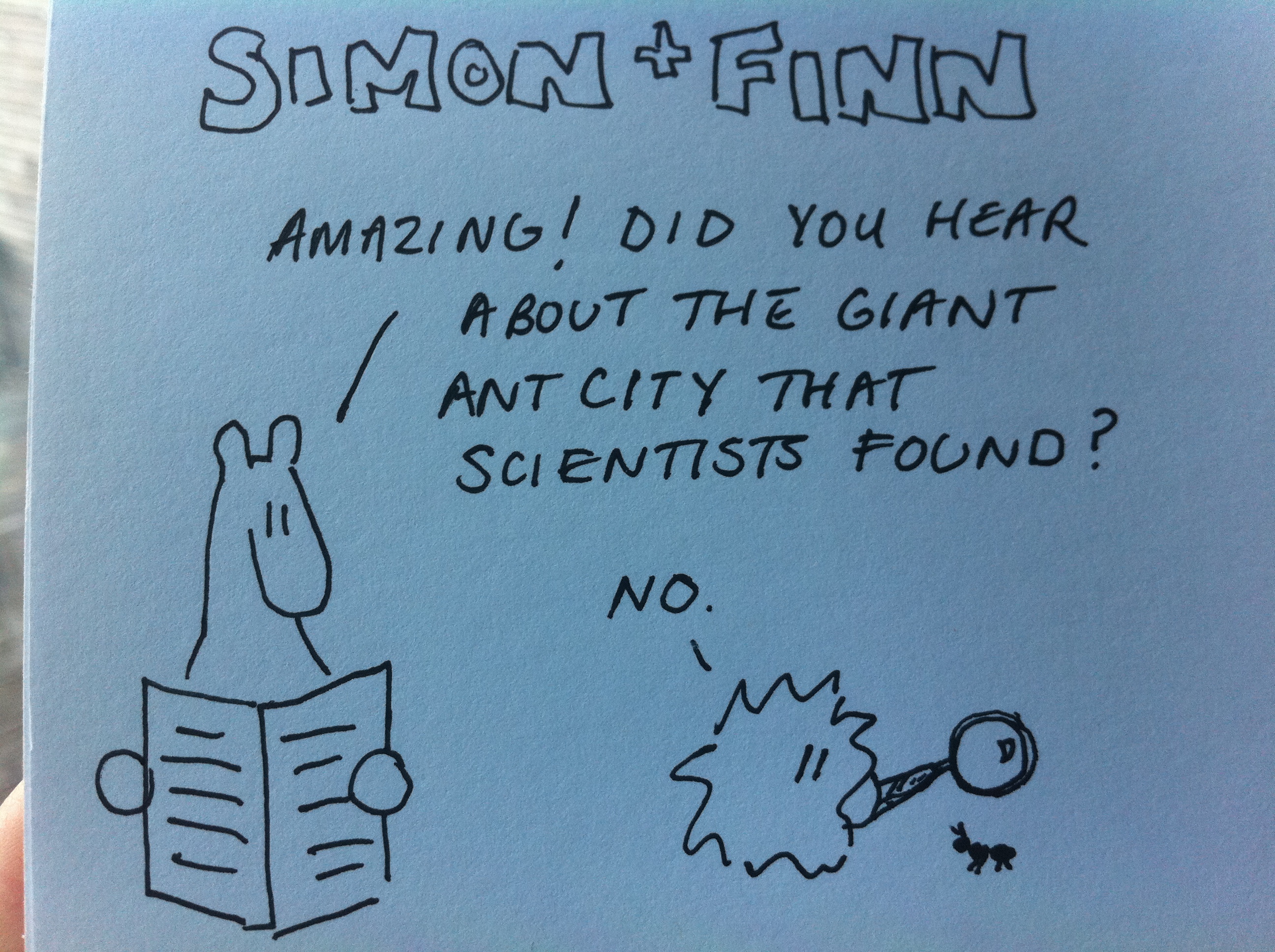
You’ve likely already heard of the giant ant super-city found in Brazil.  If not, it’s pretty incredible looking and fantastically huge – check out this DailyMail link to see images of the structure.  This eerie and highly alien city includes agricultural gardens, highways, waste disposal areas, and organized ventilation shafts –  all distributed in a labyrinthine order of pods and stalks.

Leafcutter ants, the original colony, are food cultivators par excellence – you can see them beavering away in the short clip above (sorry about my unsteady hand – mucho coffee that morning). Basically they’re collecting leaves that are brought back to the colony and cultivated to grow fungus in the garden areas.

Sounds a little like organized agriculture to me.

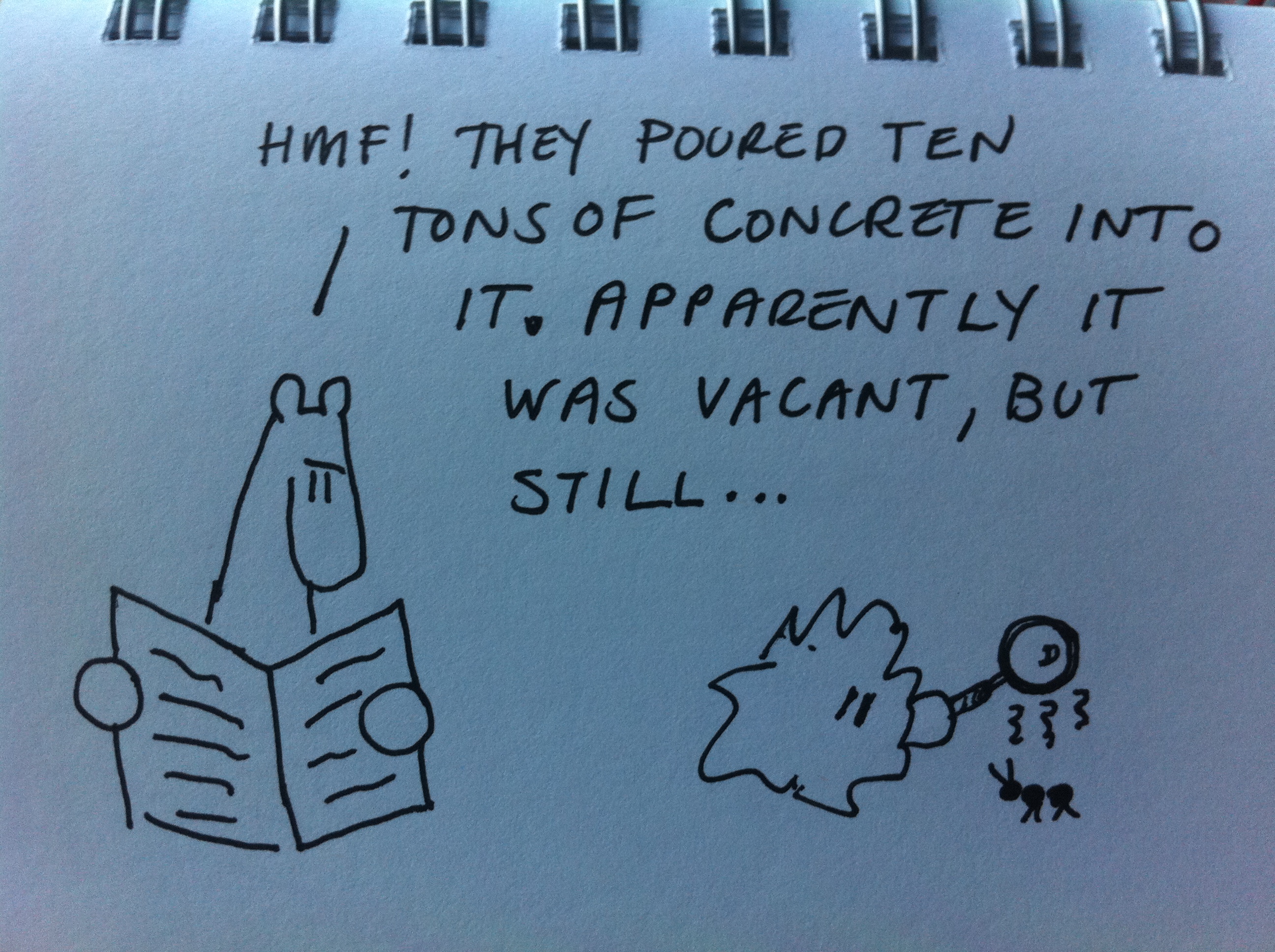
To see the final structure, scientists poured ten tonnes of concrete into the ant city which then solidified.  Although the colony was apparently abandoned, one has to wonder what the ants think about their very own Pompeii for posterity.

At the quiet centre of crisis

Don't even mention a point to this guy

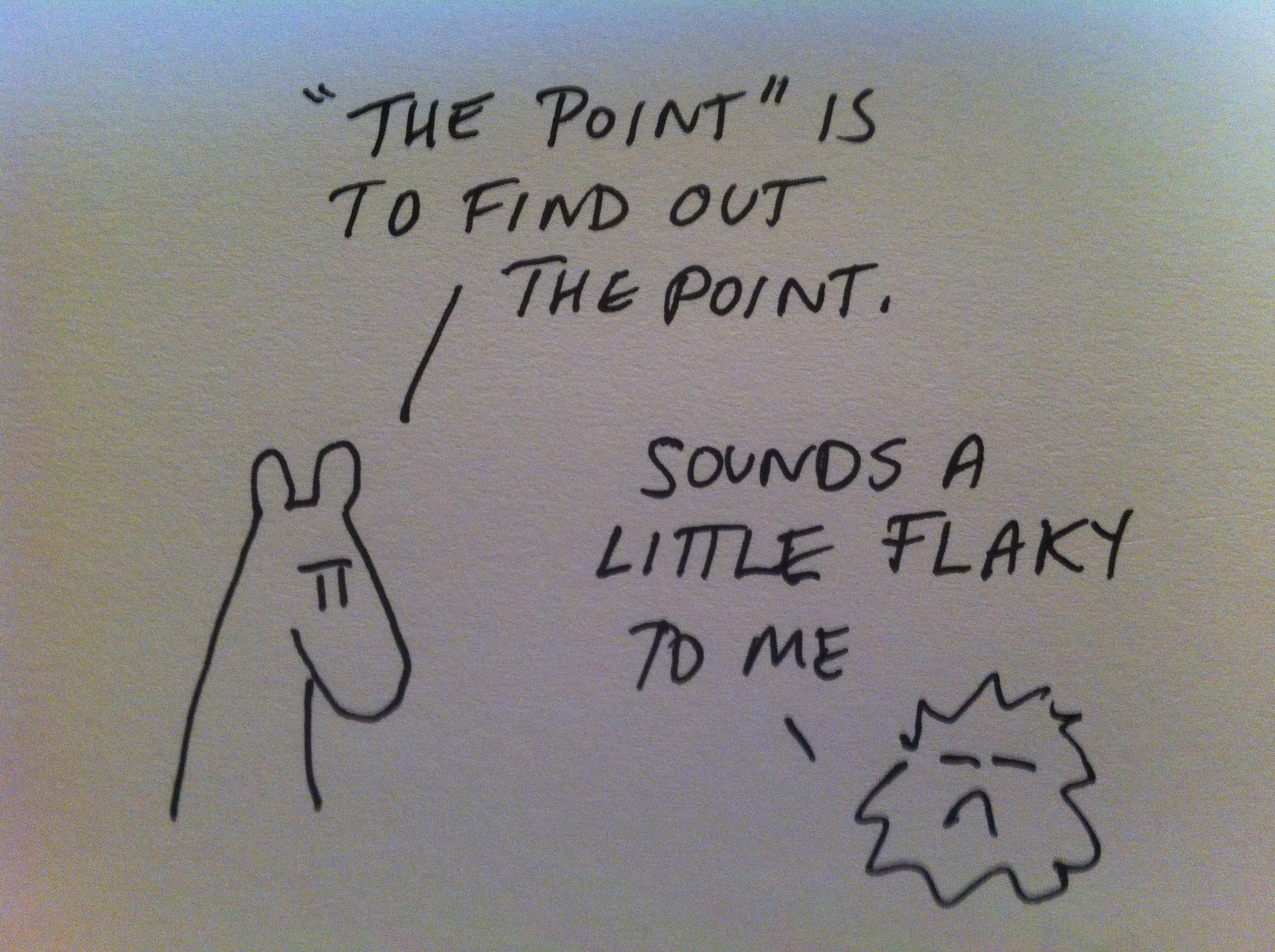
There are some that say that in average, everyday situations man takes his existence for granted – he does not question it because “it is unproblematic and as tasteless as the ever present saliva in our mouths”.  That is to say in the course of an average, take-out-the -recycling-and-pay-the-bills, day of life the real heart and plume of our existence is largely unexamined (i.e., it’s a bit tricky to be deep, all the time).

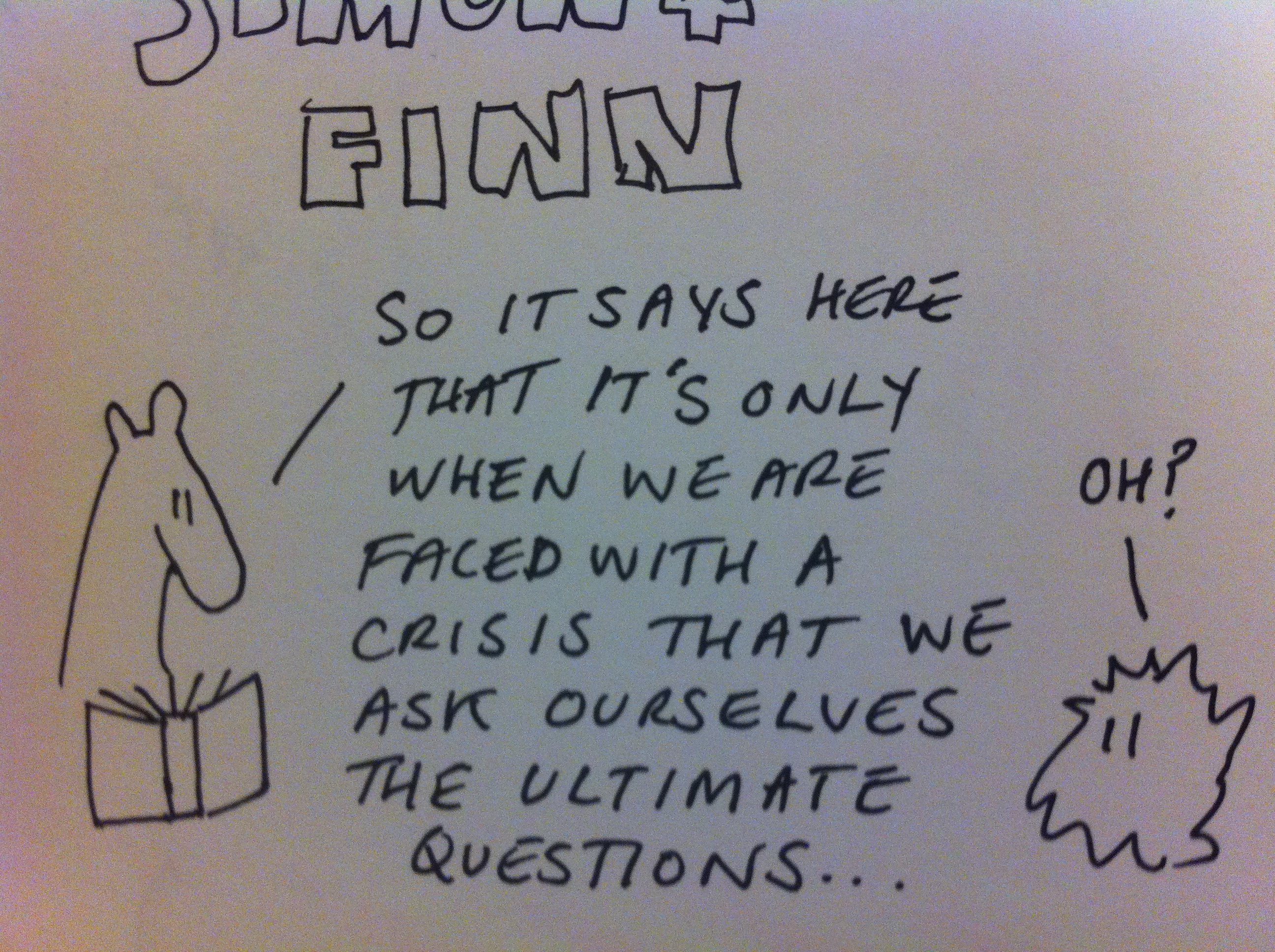
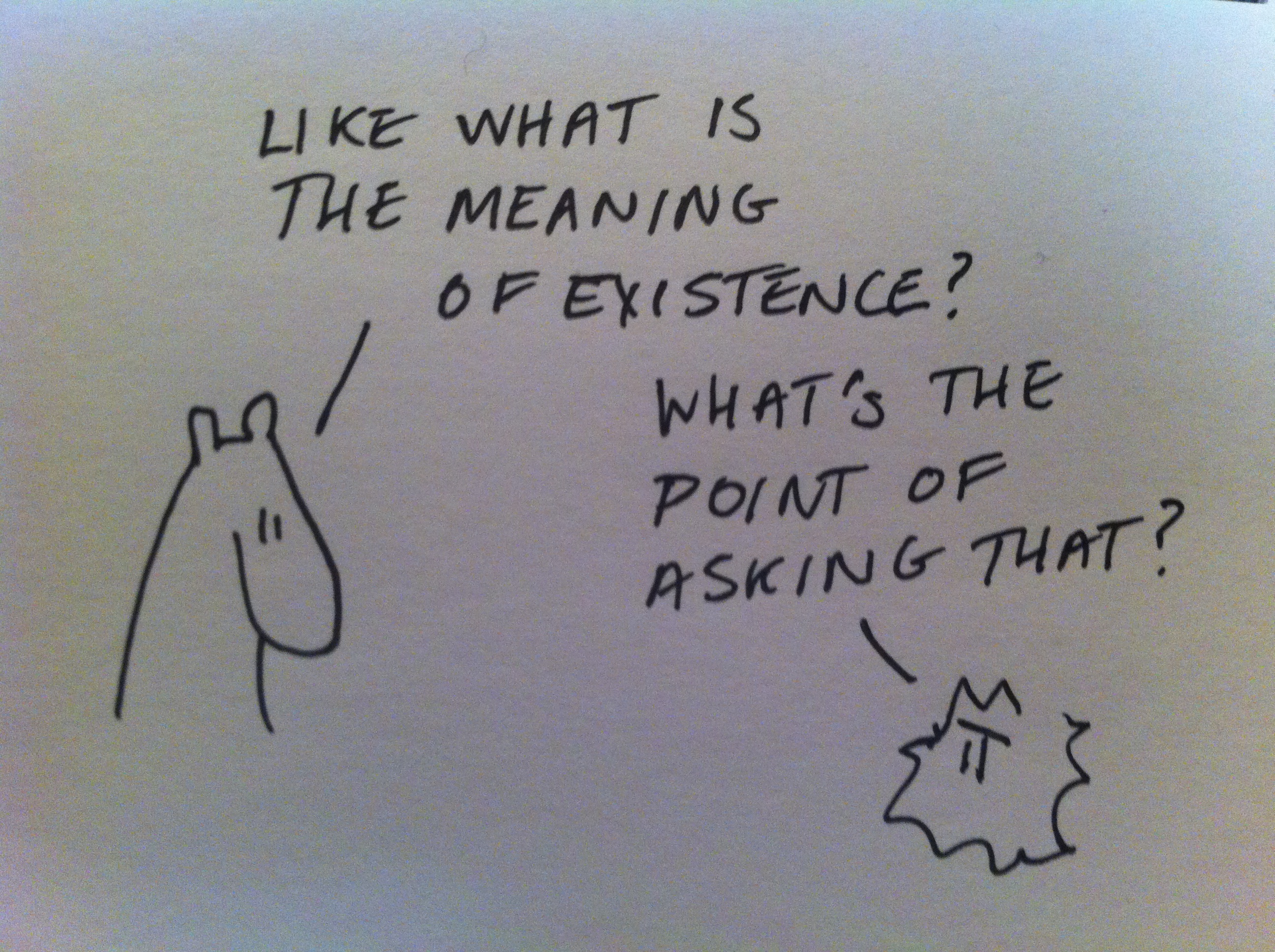
However, in extreme situations the whole trend of our consciousness changes.  As per Stern (1967), it is in those extreme situations that we call crisis that man asks himself the ultimate questions of the meaning, the essence, and the value of human existence.  The birth of existentialism for example occurred during the ebb and flow of two world wars, when crisis existed on an unprecedented global level – now, if that isn’t inwardly directed inquiry I’m not sure what it is!