Ernie and the Conquest of Happiness

A long time ago in a galaxy very very near, there lived a small rotund creature named Ernie.

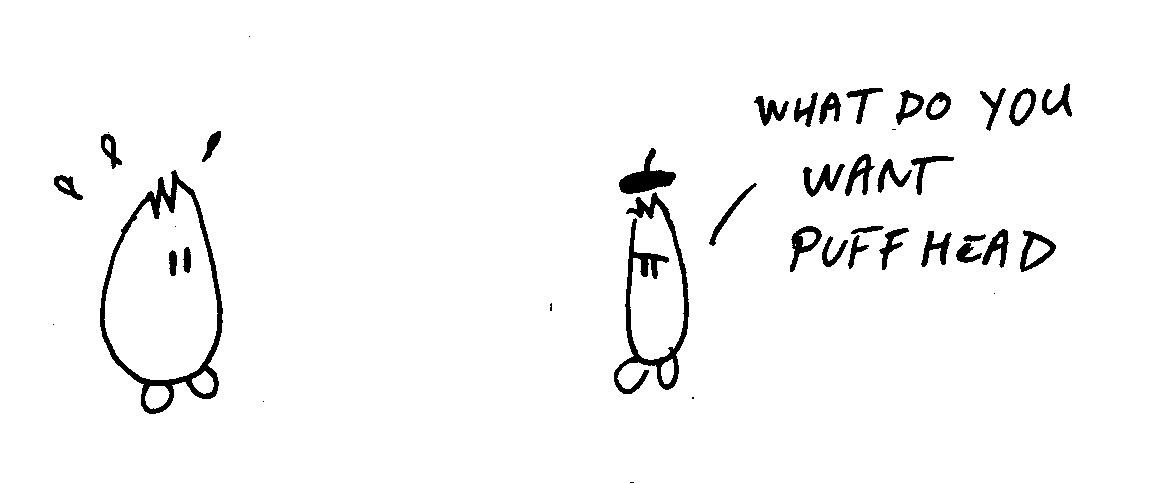
As you can see, Ernie was a saccharine mix of innocent, playful, and roundly cute. Ernie loved to frolic in the woods with all the birds and the bees (not in that way) and in general his days were full of joy and slightly annoying laughter.

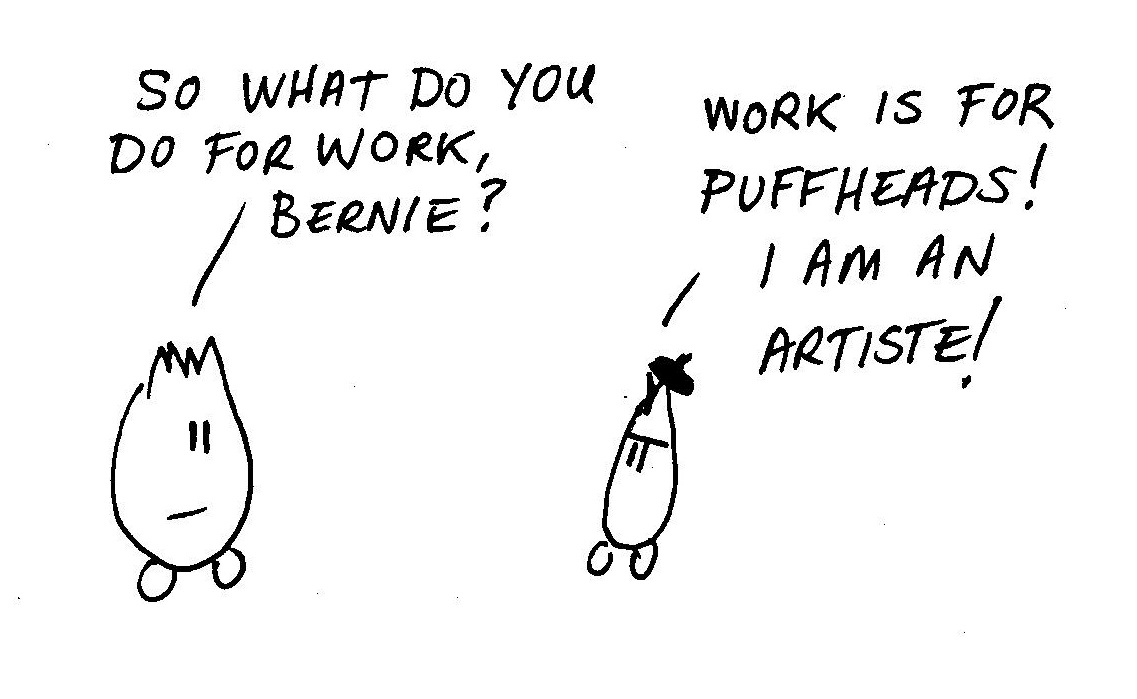
One dark day though, Ernie came across a puzzling creature in the forest: “Bernie”.

Ernie was at a bit of a loss at this odd treatment but chose to interpret it as one would the darker passages of Wagner’s Ring Cycle (which on his planet was known as the Rinse Cycle).  Being a creature of perpetual sweetness and light, Ernie decided to overlook this omen and engage Bernie in friendship.

Despite Bernie’s strange social skills and beanie, Ernie was intrigued by his new friend and sought to cultivate the relationship.

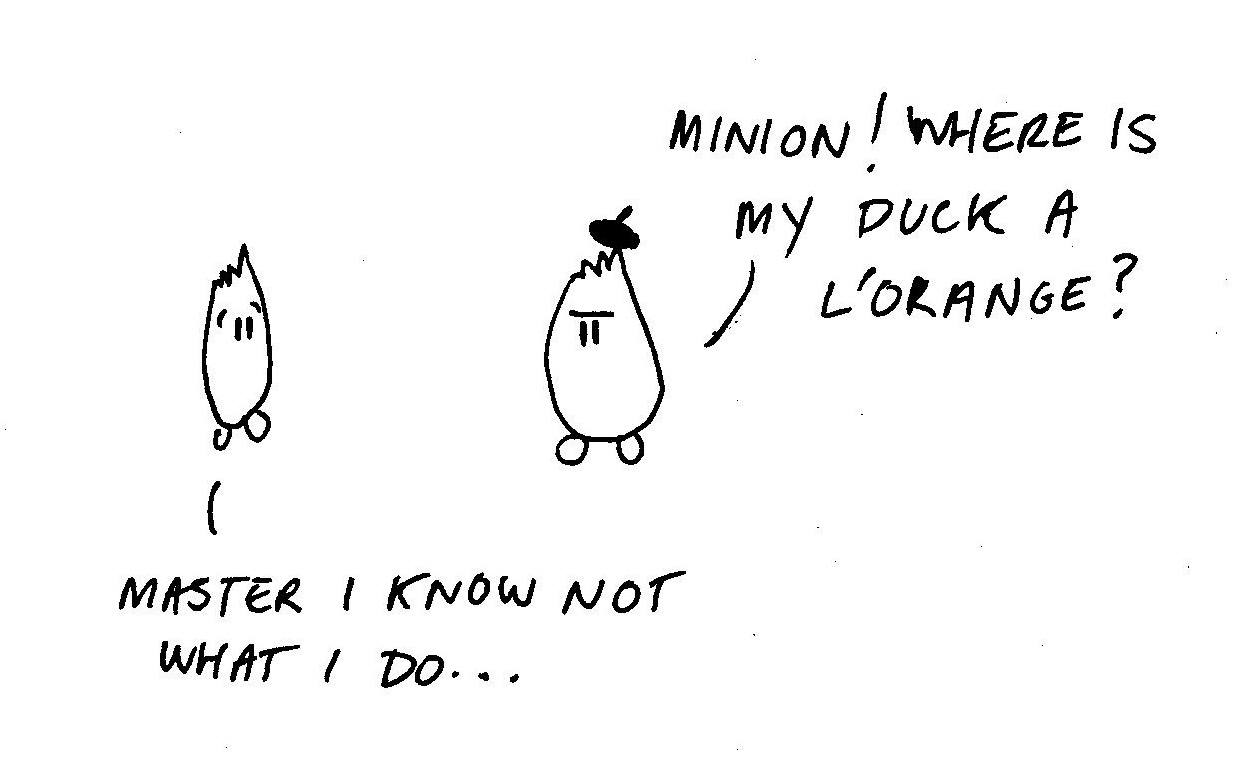
He offered strolls…

He tried shows…

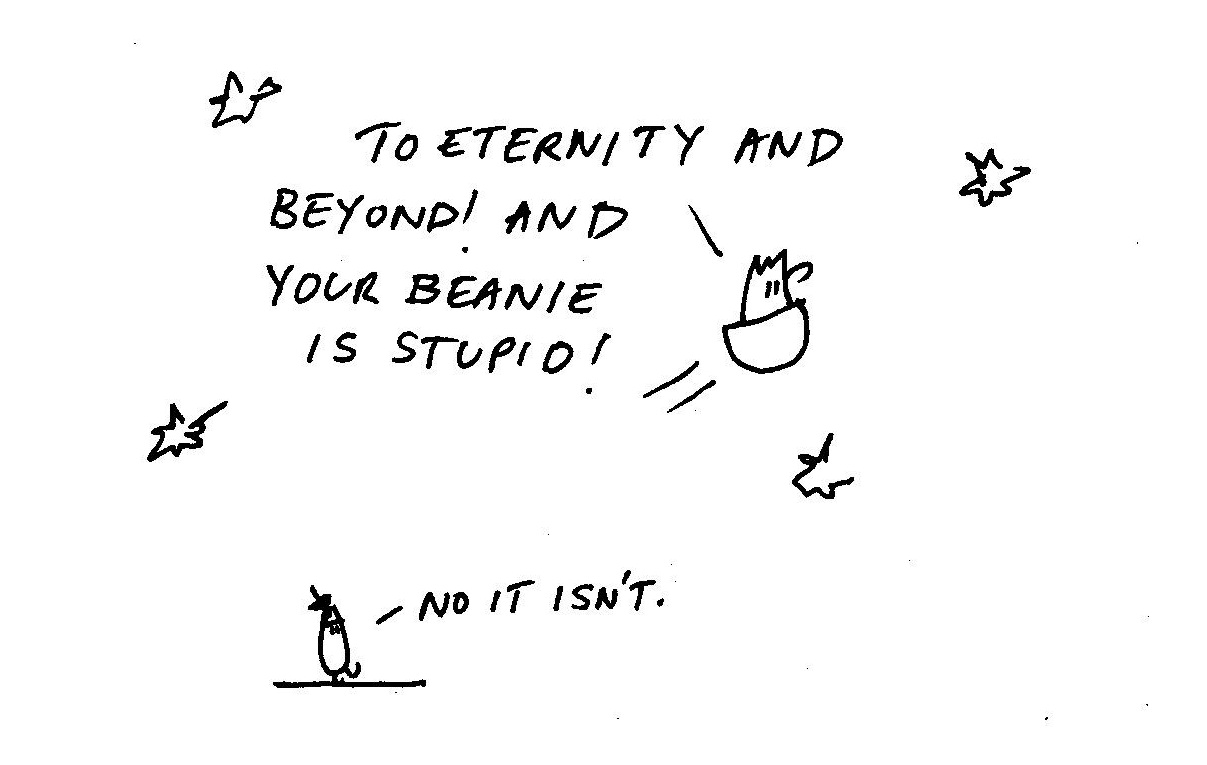
Even the building blocks of life were met with derision.

Anyway, this went on for a while.  As he continued to spend time with Bernie, Ernie noticed something strange was happening.  He started to find himself a little less full of sweetness and light.

In fact, Ernie was also becoming noticeably less rotund, while Bernie, conversely, seemed overly inflated..

He couldn’t quite put his paw on it, but Ernie knew that something was amiss.

One memorable day though, Ernie had a lot of coffee and wine at the same time and experienced an epiphany!

At this very moment, Ernie realized that he had let Bernie become the authoritative downer on how his time should be experienced.  With that realization, Ernie’s joie de vivre instantly expanded to its former rotund proportions – he was free of the tyranny!

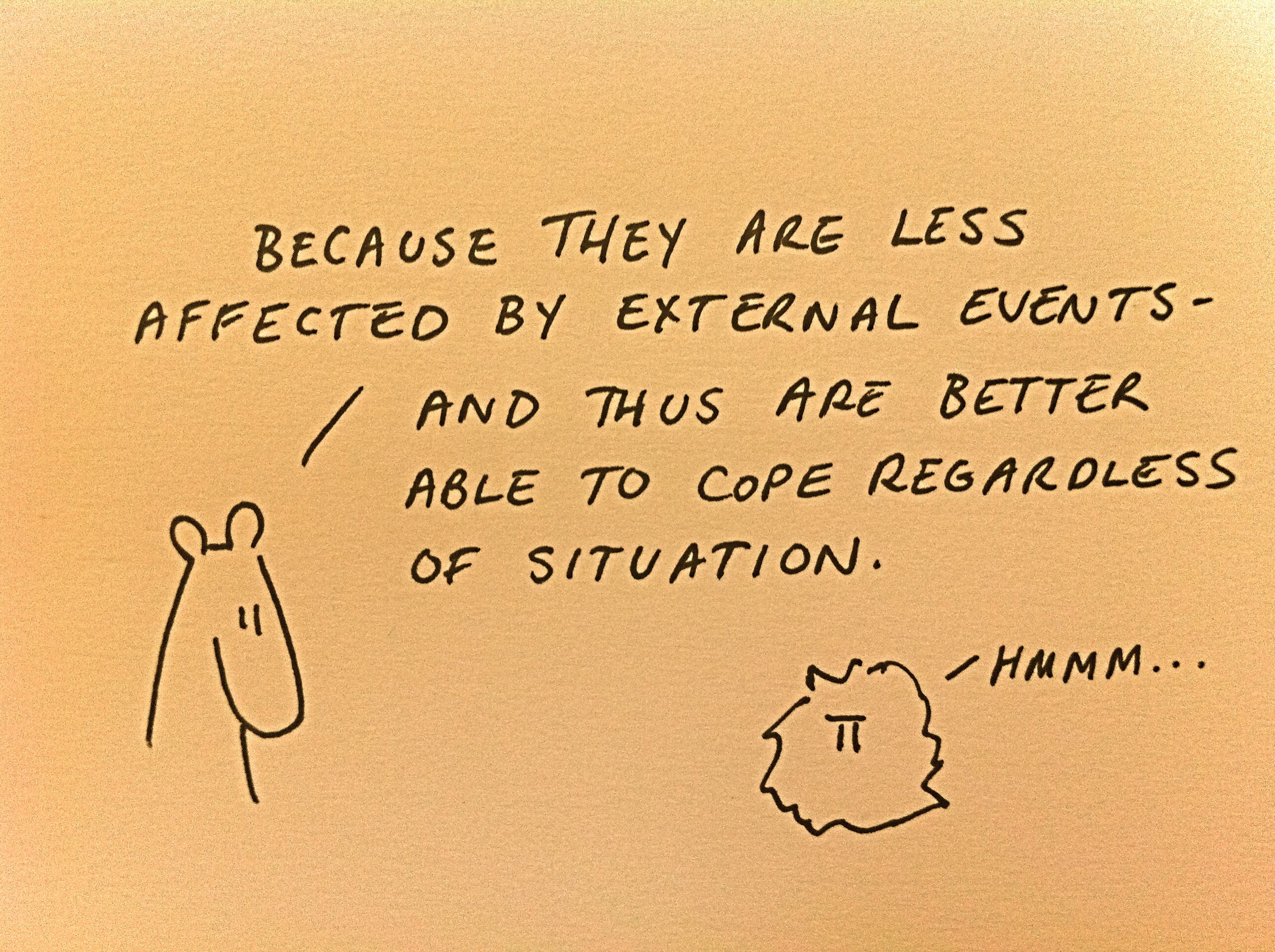
Years later, when Ernie was asked about this dark period in his life, he was fond of paraphrasing Bertrand Russell. With a knowing air, Ernie would straighten up and proudly pronounce:

“The person who says he has many dislikes and is disinterested in so many things has given themselves less opportunity to enjoy life.  Conversely, those with many interests have given themselves just that many more opportunities for joy”.

And he lived happily ever after.

For more Ernie stories click here!

The mostly harmless Higgs boson (or so long, and thanks for all the fonts)

“Ah I love this time of day, when the particles and waves hit me just right…”

It’s been an electrifying week for particle physics, what with the seeming discovery of the Higgs boson, otherwise known as the “God particle”.  The existence of this unassuming little sub-atomic particle was first conceived of in the 1970s, but only very recently have physicists found tangible evidence that it exists through the use of the gigantic CERN Large Hadron Collider.

Now, there’s lots of information out there clarifying what the Higgs boson is all about, and why it matters, but suffice it to say (for this light-hearted post) that H-B and its mechanisms is believed responsible for conferring mass to all matter, which equates to all the mass in the universe.  At 1052 to 1053 kg, that’s heavy stuff for a little boson!

Also trending though, is the fact that the physicists announced the discovery of the God particle using Comic Sans font in their Powerpoint presentation, to the chagrin and ridicule of aesthetes the world over and causing a cosmic firestorm on Twitter (i.e. “few people know that the original set of tablets were smashed not because of the golden calf, but because they were in Comic Sans” @spiritofMoses).

It’s a pretty quarky – yet funny – world when one of the biggest scientific discoveries in the last fifty years is vying with font type for attention.  Sigh… if only Douglas Adams were still around, he would have had a field day with this one!

P.S. Why is Higgs boson called the God particle you ask?  This title was apparently popularized by a book on particle physics: The God Particle: If the Universe Is the Answer, What Is the Question?.  The author indicated he chose the name because “the publisher wouldn’t let us call it the Goddamn Particle, though that might be a more appropriate title, given its villainous nature and the expense it is causing”.

Part II: Flow, meaning, and a state of grace

Woah!! Whaddaya mean you’re not clear on the plot line?

Earlier this month, this blog posted on the idea of optimal experience in life, a state of mind that some have referred to as flow. The concept refers to those times when one is completely absorbed in the moment, whether that occurs when scaling a mountain, drawing a picture, or figuring out an Excel formula (=SUM(no_way!)).

Now, probably the most comprehensive and shared flow experiences occur during childhood, as during play we are completely immersed in the moment and that moment becomes our whole reality.  I mean, what kid is thinking about past or future homework when being chased by a rabid sibling channeling Cujo?

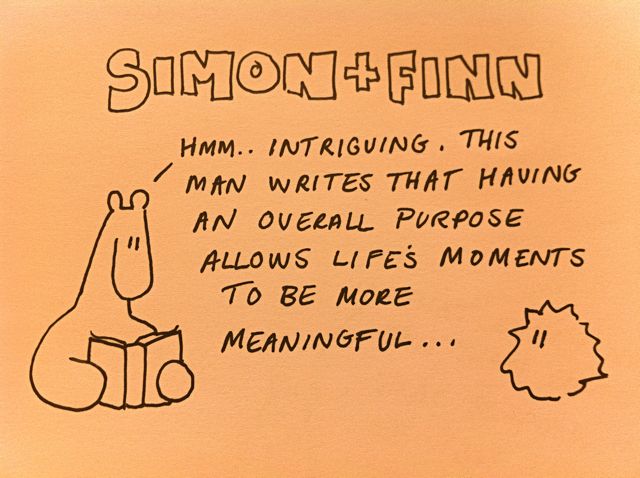
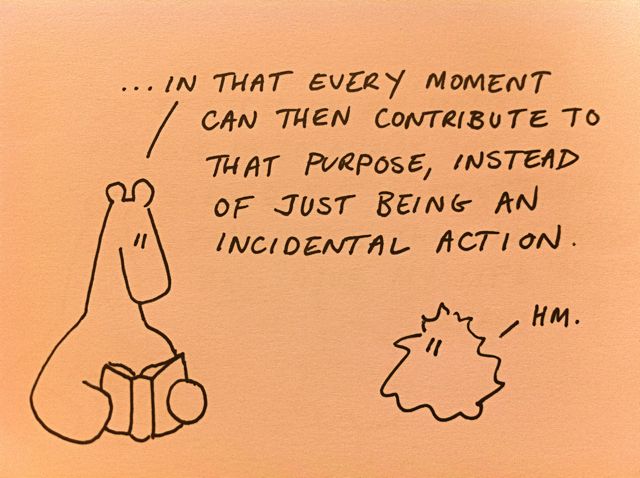
The researcher Mihály Csíkszentmihályi has taken quite an interest in this subject, and his book Flow: The Psychology of Optimal Experience is a fine read for those wanting to know more.  This post however, concerns itself less with the entirety of the book as opposed to the ending sections, where Csíkszentmihályi touches on the intriguing thought of having an overall architecture or purpose that extends over one’s lifetime.  He argues that the potential for quality moments expand when we identify a consistent purpose to our time here, whatever that purpose may be.

To give a tangible example, in 2005 a documentary was released called “The Real Dirt on Farmer John“.  The great thing about this doc was that the filmmaker (at first by accident and increasingly on purpose) had captured nearly thirty years of footage on his friend John Peterson, an eccentric individual with a single-minded conviction to be a successful farmer.  The film – shot in formats ranging from home video to Super 8 – thus affords a rare vantage point of seeing a story arc unfold over the course of one lifetime.  And because this particular person had a particular purpose he kept coming back to, we could see in technicolour hindsight the multitude of actions, good and bad, light and dark, that contributed to his overall life’s meaning (whether he realized it at the time or not).  And thus, through the highs and lows and the wins and the losses, Farmer John’s life was rich in quality and he lived in a greater state of flow.

In the longer term, defining purpose, whether it’s for part of one’s life or the whole of it, in essence allows us to bootstrap many of our supposed incidental moments.  And these moments, given enough time and knit into a coherent whole, can thereby make up much more than the sum of their parts… much like the coloured bits of glass that, stepping back, make up the stained glass window of our lives.

P.S.  Another take on this phenomena was recently covered by Colby Cosh in his sophisticated piece Artisan chocolate and social revolution, where he muses on the future of work in the context of hipster chocolate and strangely long beards.  Although Cosh’s piece is primarily focused on the revival of artisan goods and craftsmanship as a counter to mass mechanization, i.e. “You had better be prepared to be a distinct individual, to treat your particular line of work as a craft rather than a job, to seek out the style or the method or the niche that no one else is in; nobody’s going to need you to knock out pyramid-style copy on deadline or take trite photos from accident scenes…“, one could argue a byproduct of mastering a craft is actually increased opportunities for a flow state.  Why?  Because mastery of anything fulfills several preconditions for flow (i.e. energized focus, deep involvement, clear goals, etc.).  Given that craftsmanship can take a lifetime to master, this sets up a solid framework for a richly fulfilling occupation… gathering Paradise, so to speak.

Flow, meaning, and a state of grace

In life there are select moments when external and internal reality syncs perfectly, when ticking time shuts down and one is completely present.  For some, this state of grace may unfold when scaling a mountain (understandable, given that continued existence is delicately tied to that monumental rock!).  For others, these moments might be associated with the creation of music or the joy of painting, or for still others sifting rich loam while planting a garden…  Basically such moments can occur whenever the boundary between you and “not you” dissolves and you find (or lose) yourself in deep involvement with life.

These perfect, engrossing moments are the focus of the book Flow: The Psychology of Optimal Experience, an interesting read by researcher Mihaly Csikszentmihalyi.  In this treatment, Mihaly C. outlines research on the state of grace he calls “flow” and resulting thoughts on how being in flow profoundly affects the degree of enjoyment and satisfaction with one’s life experiences.  Mihaly C. argues that this flow state is the warp and woof of a rich existence; as individuals that seek and experience flow states create more opportunity for fulfillment regardless of circumstance or the experience in question.

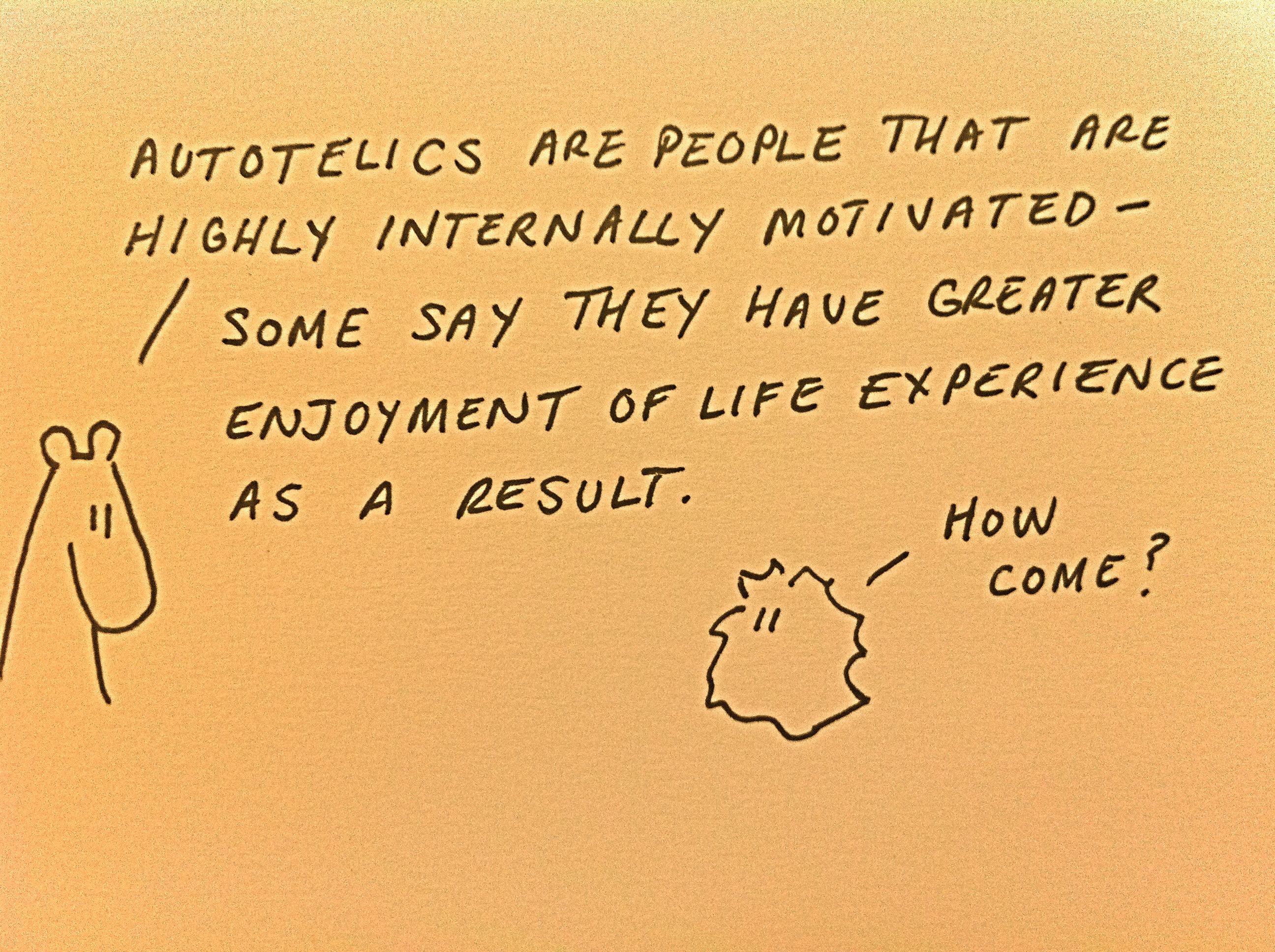
Interestingly, a large section of Mihaly C.’s work focuses on the importance of the autotelic personality as a factor in frequent flow experiences. An autotelic personality is one that is strongly motivated by internal benefit as opposed to external reward, for example, a person that has an internal sense of purpose that is not as influenced by external conditions (i.e. those that happily make lemonade martinis when life gives them lemons).  Probably one of the better known examples of an autotelic personality is Viktor Frankl, the author of Man’s Search for Meaning, and a Dachau concentration camp survivor.  Viktor Frankl’s strong internal drive – or autotelic personality – was a large factor in his survival and triumph over his external environment and offers profound lessons on finding meaning in the darkest of places.

On a more contemporary basis, the recent documentary Jiro Dreams of Sushi is a beautiful description of one man’s lifetime dedication to mastering his craft: sushi-making.  It also offers a subtly wrought treatment of another formidable autotelic personality and illuminates a critical aspect to sustaining flow experiences.  As the flow state can be precipitated by taking on tasks that we find challenging, this means that it is important to increase the complexity of these tasks over time as our skills improve (as otherwise the activity becomes meaningless and boring).  In the film, we see Jiro’s passionate yet methodical dedication to elevating the art of sushi-making to new heights over his lifetime, where he dreams day and night of how to improve, how to better, how to create anew…

Essentially, where one man would find drudgery in placing bits of raw fish on rice for 70-some years, another has created an eternally challenging and deeply satisfying flow experience. The film ultimately provides a thoughtful reflection on the art, beauty, and pleasure of mastering a craft to increasing levels of perfection in keeping with the precepts of Mihaly Csikszentmihalyi and Viktor Frankl.  Similarly, by looking upon our myriad actions as potential flow experiences – no matter how pedestrian or mundane they may seem – we all have the profound opportunity to infuse meaning, purpose, and growth into every moment.

P.S.  Mihaly C. suggests that societies can also influence the opportunity for frequent flow activities, citing examples as in the BaMbuti pygmies.  When not otherwise occupied with hunting or improving their villages, every adult in this society “is expected to be a bit of an actor, singer, artist and historian as well as a skilled worker” which leads Mihaly C. to suggest that “their culture would not be given a high rating in terms of material achievement, but in terms of providing optimal experiences their way of life seems to be extremely successful.”

In a related vein, the New York Times recently published a piece on the merits of being less productive, making the case that our chase after prosperity, productivity, and growth is at the expense of an economy of care, craft and culture. The author posits that far greater well-being and fulfillment would arise from more focus on aspects like craftsmanship and culture, i.e.: “It is the accuracy and detail inherent in crafted goods that endows them with lasting value. It is the time and attention paid by the carpenter, the seamstress and the tailor that makes this detail possible. The same is true of the cultural sector: it is the time spent practicing, rehearsing and performing that gives music, for instance, its enduring appeal. What — aside from meaningless noise — would be gained by asking the New York Philharmonic to play Beethoven’s Ninth Symphony faster and faster each year? “

A sweet little creature

The problem with traveling is sometimes you fall in love, and that love is usually intense and ephemeral, because someone – eventually – will depart. This time, I fell in love unexpectedly… with a mouse deer.

It all started when I was out in the ancient ruined city of Polonnurawa, Sri Lanka. It was about 7am, sweltering hot, and the BBC documentary film crew was in action trying to incite a confrontation between two toque macaque monkey troops. I was milling about uncertainly at the periphery, feeling a little useless, when I noticed the project lead and a field assistant looking intently at something on the ground. I wandered up, and saw that they were looking at this incredible little creature that was nestled underneath a shrub: a baby mouse deer.

I immediately thought it the cutest animal I had ever seen, and judging by the smiling faces all around, I wasn’t the only one. When it was suggested that I keep an eye on it for a few hours I happily agreed. I was ready to do my part and guard this little guy from danger! As well as see if the mother would return, or if he was well and truly alone in this big world.

I spent the morning sitting on the grass near the mouse deer, gently corralling him when he strayed too far. He was a pretty plucky little guy, not even a half hour had passed when he ventured unsteadily on his tiny legs to see what I was all about before nestling back into the security of his shrub. At one point, a bunch of toque monkeys came close, curious to see what I was looking at.  I instantly picked him up and shielded him – he didn’t struggle or protest and seemed quite content to sit with me afterward. I knew right then that this encounter was something special.

As the mother was still nowhere in sight and the mouse deer was very weak, we decided to bring it to the research camp and see if we could help it live. And that was the beginning of a wonderful relationship.  It took to infant formula after some coaxing, and after a day or two it was starting to nibble on figs, and banana, and even leaves.  What was really amazing was how instantly he connected with people.  Curious, I read up on the mouse deer, discovering it was part of the family chevrotain – well and truly a deer as opposed to mouse, and one of the most ancient mammal species.  Finding a baby is also a rare occurrence, the project lead here hadn’t ever had a mouse deer baby in camp in over 40 years of field work.  In fact, scour the Internet and you’ll find precious little on raising a baby mouse deer.

Despite his rarity, day by day he got stronger and our hopes grew that he would become a wonderful addition to the camp – maybe even a film star for the next BBC shoot! He would take to following me, bouncing around at my feet and coming when called, running across the camp floor and sliding all over the place on his tiny hooves.  As the days passed, I would spend hours watching him, petting him, feeding him, walking with him…  It was a source of – I fully admit – continual joy to open the box every morning and see these bright eyes looking up at me, followed by a tiny u-shaped stretch as I’d bend down to take him out of the box.

Unfortunately, the time we had was cut short.  I had to leave camp for a few days, planning to be back on my birthday.  While I was gone I thought of the mouse deer daily, worrying and hoping that he would be ok during my absence.  Things got complicated when I was gone, and I was asked to delay my return by a day.  I wish so much now that I hadn’t, as my return one day later was to the news that the little mouse deer had died that morning.  He had lived until my birthday like I had hoped for… but like the story of the monkey’s paw, the wish had a flip side, as the day after he tried to jump out of his box and I guess the fall was too much for his delicate body.

When I returned to camp I went to his box sadly and said goodbye, stroking his broken little body.  His spirit was already gone, and there was no trace of the life that had animated such a wonderful creature. I moved his small hooves in the air a bit, and brushed his tail, but under my hands there was only stillness.

Looking back, I had been given the indisputable gift of spending time with an unusual and brave little animal.  Although I’m profoundly grateful for the time I had with him, I wish those bright eyes would have shined on just a little longer.

Jumping the Gun on the Wipeout Gene

Hold still there, buddy… else you’re apt to go off half-cocked

This week’s Simon & Finn post on a crazy genetic experiment plotline is provided courtesy of Greener Ideal  – please visit the following link for the article and cartoon!!

http://www.greenerideal.com/science/0508-jumping-the-gun-on-the-wipeout-gene/

The last of those summer hooves

Infinity, you say? Right this way please.

You probably all remember those glorious two months of summer when you were a kid, when school was out for the best time of the year and the next hazy cricket-hum days were spent running around like wild, swimming, playing, exploring, until the sun went down and your parents called you home.  I can always distinctly remember that the end of summer – and going back to school – meant putting on my socks.  The socks would feel real funny, as it was the softest thing my callused feet (a.k.a. “summer hooves”) experienced in what was like, forever.

This memory always gets me to thinking.  If only I had known the very last time my little summer hooves experienced that soft velvety sockness I would have KNOWN that was the last time that we ever had a full two months of the best times of our lives to run around carefree like the wind…

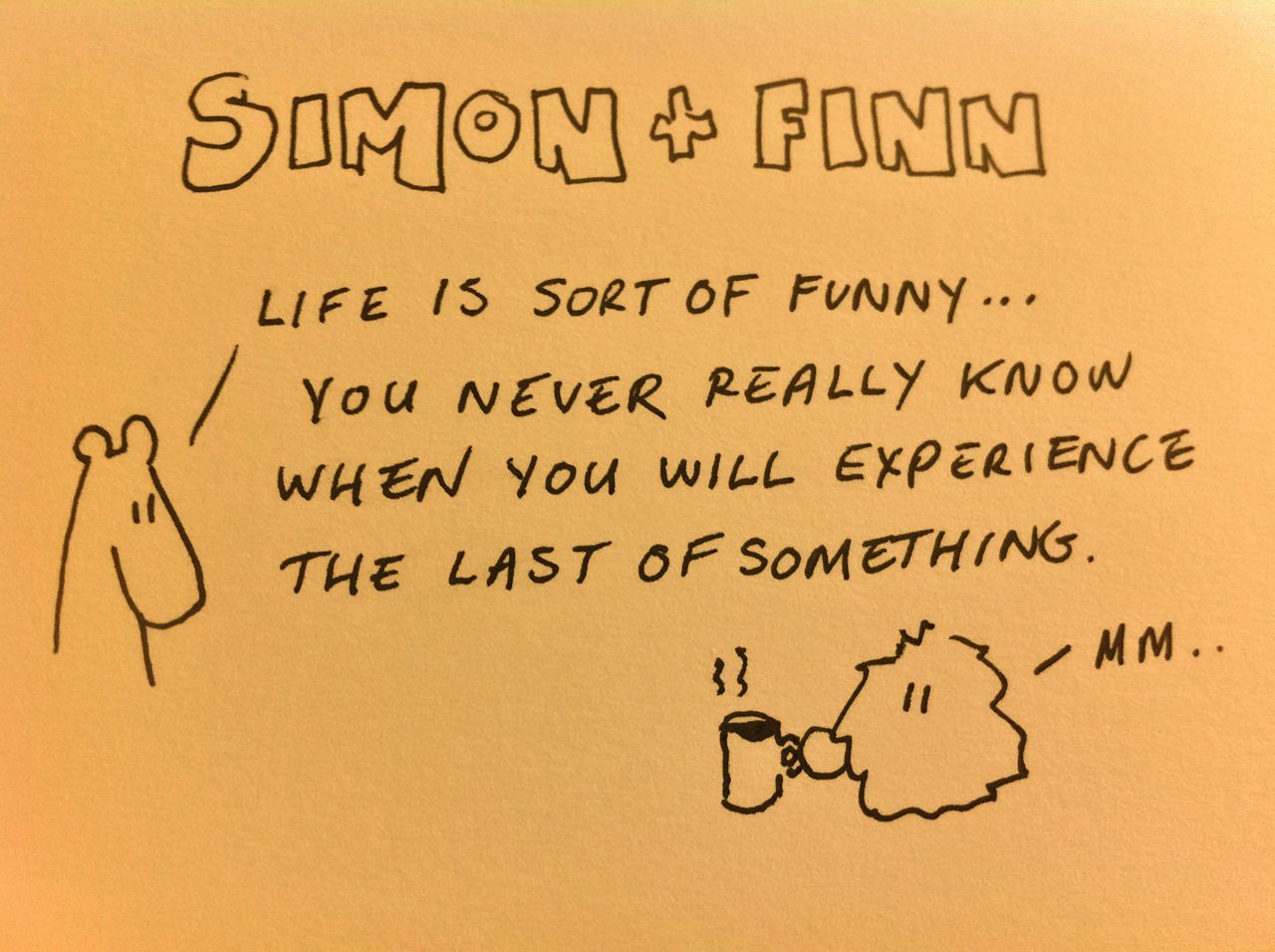
I read somewhere once that we humans are eternal optimists, that we live our lives as though the moments ahead are infinite, and that at any time we choose, we could experience any one moment again.  The reality is that these experience possibilities are not infinite, they are finite, and when it comes to the sum total of our lives we never really know when we’ve experienced the last of something.

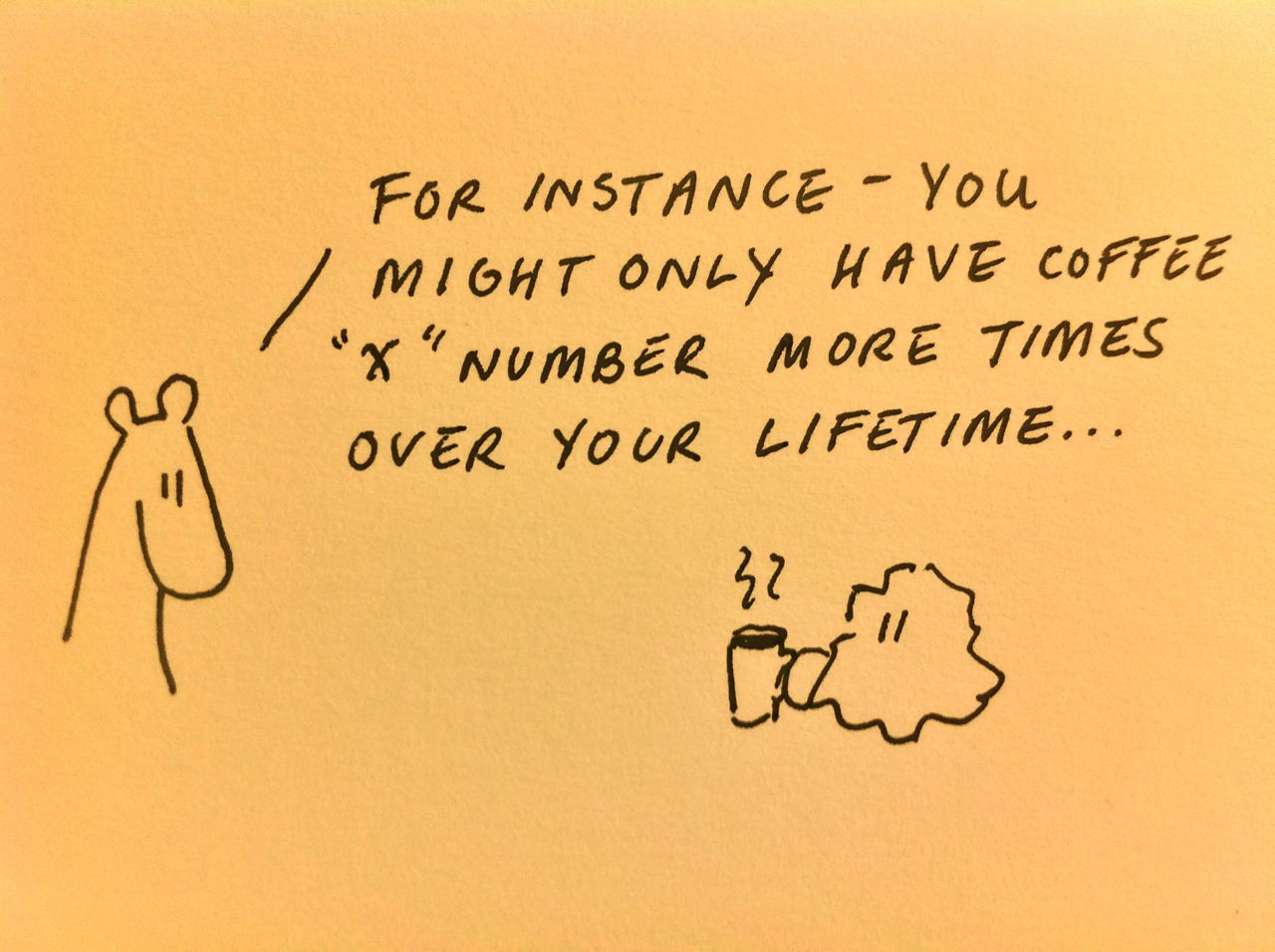
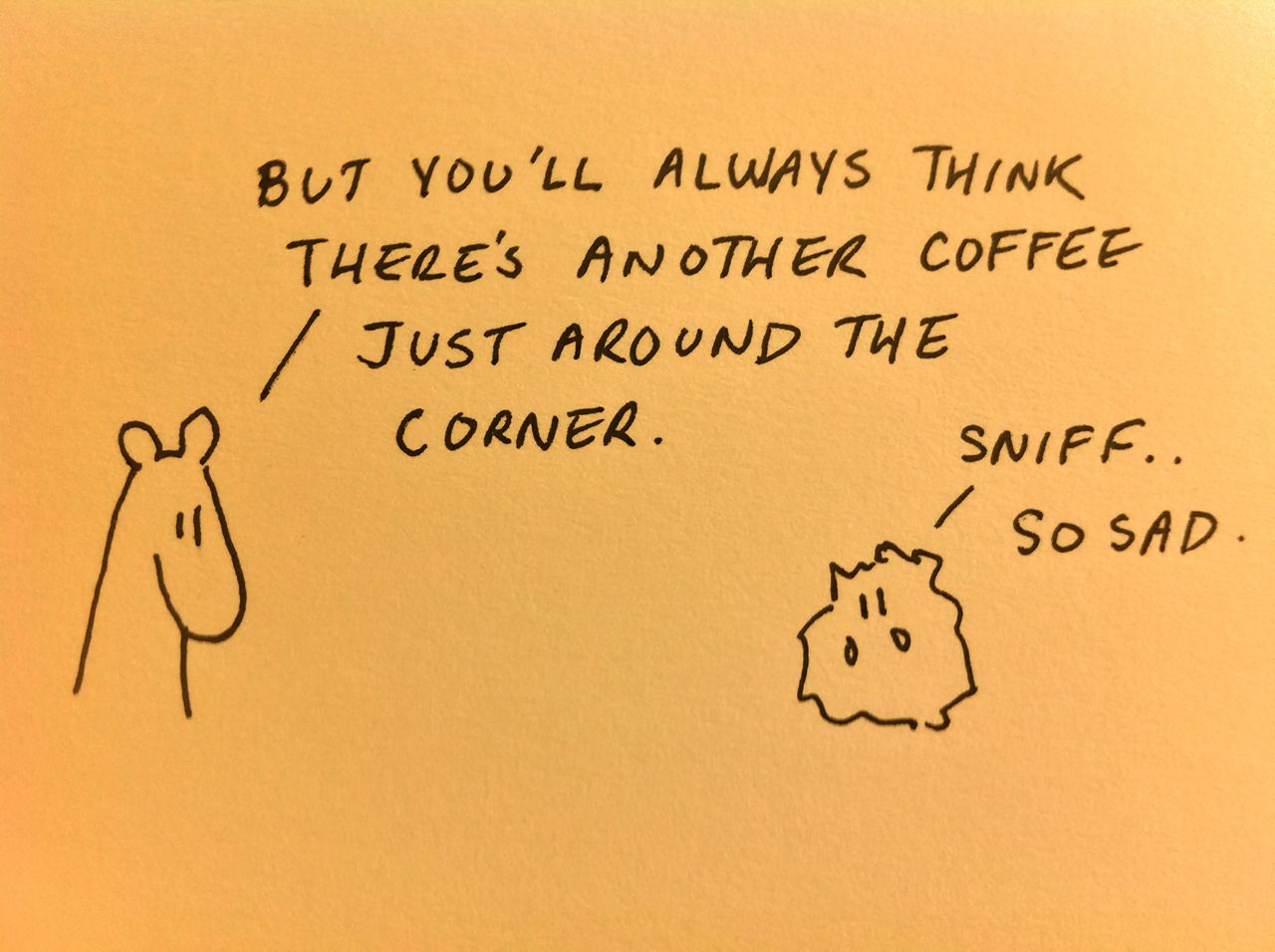
For example, over your lifetime you may only fully watch 134 sunsets, you might only ever have (gasp!) 57 perfect cappuccinos, or 78 swims in the ocean… but the possibility of the 135th sunset, the 79th swim, and the 58th perfect cappuccino, is always there.  It seems that for us, Pandora’s Box rings eternal and it’s a blessing, as we think that there will always be another sunset to fully appreciate, never really knowing that the one we watched way back when was actually our last.

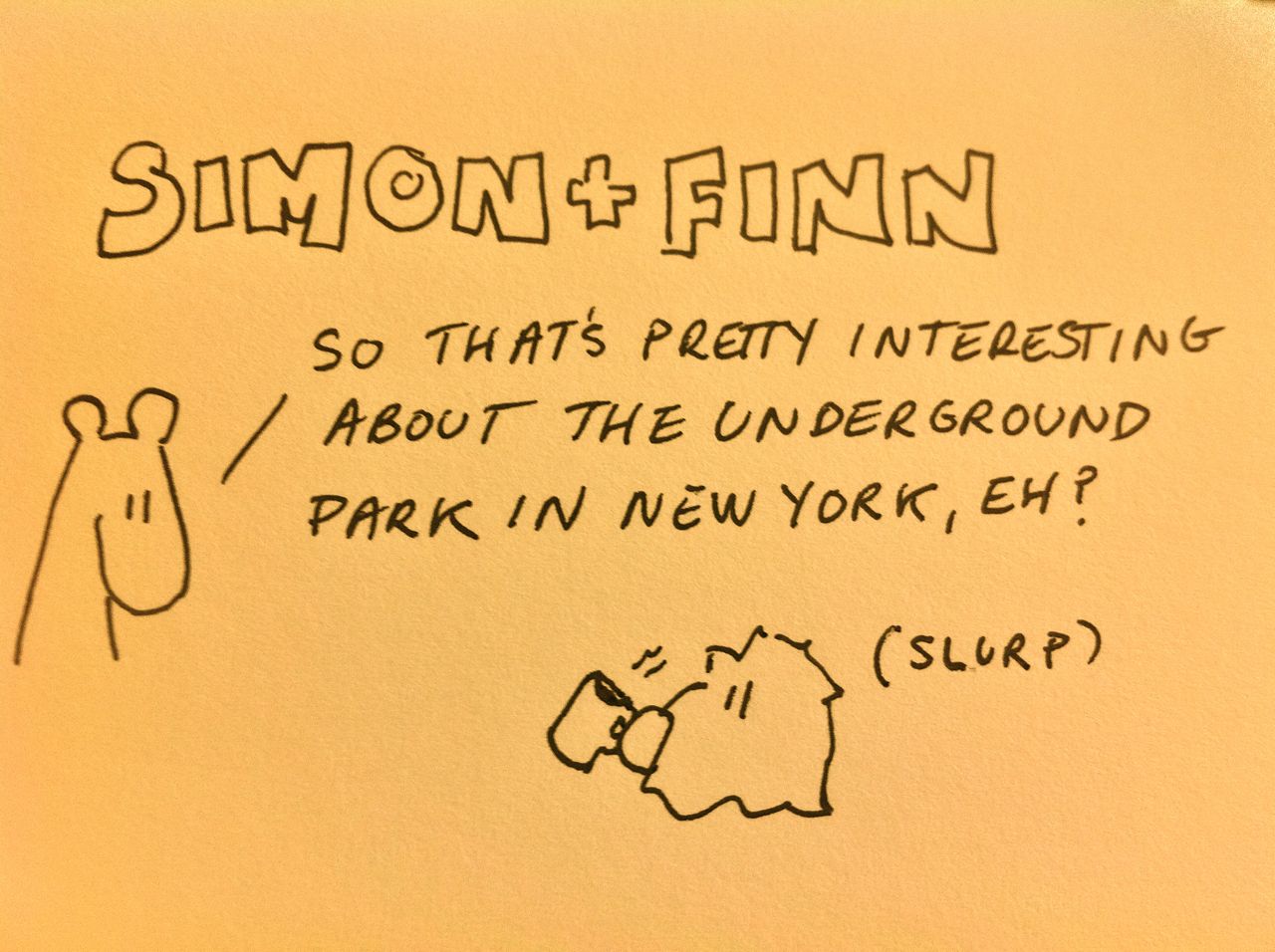
NYC’s Lowline Underground: The Future of Parks?

Just another sunny day in the hood..

You may have heard of that unusual new idea to create an underground park in NYC.  Nicknamed the LowLine (formally Delancey Underground), the project was trending on kickstarter.com (155K raised) to create a full-scale demo this spring.  The thinking is to transform a 1.5 acre abandoned trolley terminal into the world’s first underground park.

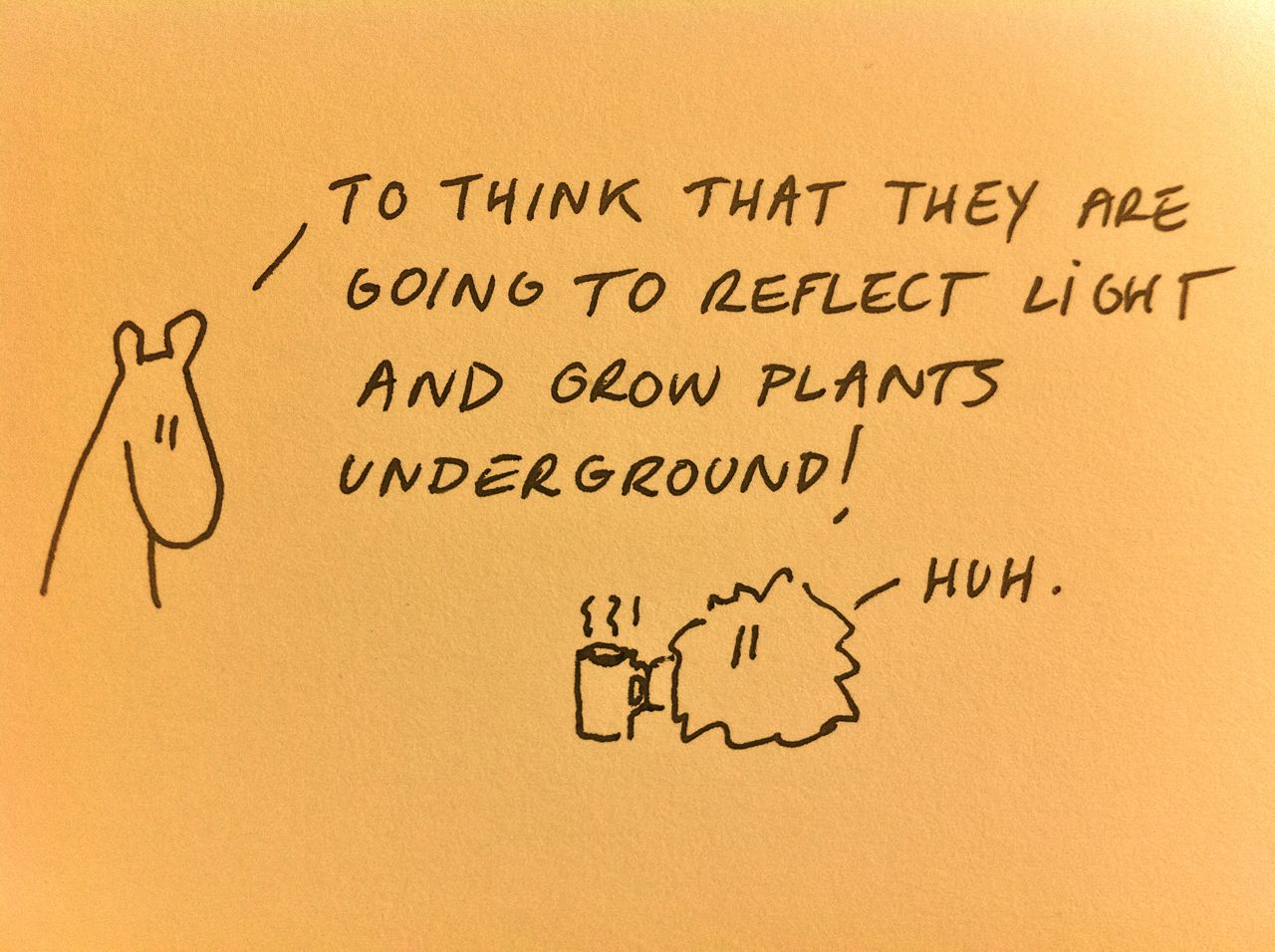
It’s a nifty idea, replete with the requisite tech-fixes, i.e. gathering sunlight via fibre optic cables to reflect light and enable photosynthesis underground.  The community component is also pretty cool, as you can imagine what opens up to people when you have a year-round green public space available in the hood.  Re-purposing derelict urban areas to augment green space and amp up community vibrancy is a pretty fantastic thing to do in general.

When you step back a bit though, an underground park is bit of a curious idea. It kind of flies in the face of getting fresh air, feeling the sun on your face, and squishing the grass between your toes.  For those old enough to remember, the concept echoes The Secret World of Og, a fantastic underground place populated by green men and um.. mushrooms.

Now, one can definitely argue that the creators of the Delancey Project are prescient, thinking ahead and planning for how the future of how urban design will play out as the human population expands and resources shrink.   In fact, one phrase on the DU website speaks to this very idea, which states that the LowLine is “essentially part of the next phase in urban design, in which human scale and increasing resource scarcity force us to imagine smarter, more creative use of public spaces.”

That’s kind of a scary statement.  Not the LowLine project per se, but the presupposition that the future of urban design is one that “forces us to imagine smarter and more creative use of public space”.  Surely there exist immediately available opportunities for public space that don’t require only a “technology as panacea” epiphany, or some other creatively convoluted approach.

Take High Park for example, Toronto’s little above ground gem.   What a lot of people don’t know is that this park is the result of one guy (John Colborne) thinking ahead, perhaps musing as follows: “Hmm… I wonder what happens if x city grows by y amount.. and if so, perhaps it would be good for the city to have z greenery”.  As High Park was a pretty hefty trip from downtown Toronto at the time, city planners thought his suggestions unnecessary and Colborne had to do a lot of convincing to get the City onboard.  The happy result was that Colborne bequeathed the Park to the City in 1873, and now we have this great green space that over a million people a year visit.

(When you really stop to think about it, Colborne’s legacy is pretty amazing. The foresight of one man way back in the 1800s created a place that so many people enjoy in different ways, and also one that hosts a number of native species.  If you’ve ever spent a few hours in the park, and many of us have, we all recognize how rejunevating it is to spend a few hours au plein air.)

Now, there’s some differences between the context for High Park as it was created then, and NYC LowLine as it’s being envisioned now (i.e. massive growth in population, transportation, urbanization, densification, etc.). And it stands to reason that LowLine may be an indicator species for a new conceptualization of green space that can flourish underground, which would be pretty great.  This said though, it would be a shame if the only solutions available to the future of urban planning – as implied by the Delancey project – were seen as those involving some kind of cool new high tech approach instead of boring old low tech conservation – especially given that it’s these latter projects that tend to stay the course over the longer haul.

Just look what Colborne did over 100 years ago.  Thank you Mister Colborne, you rock!

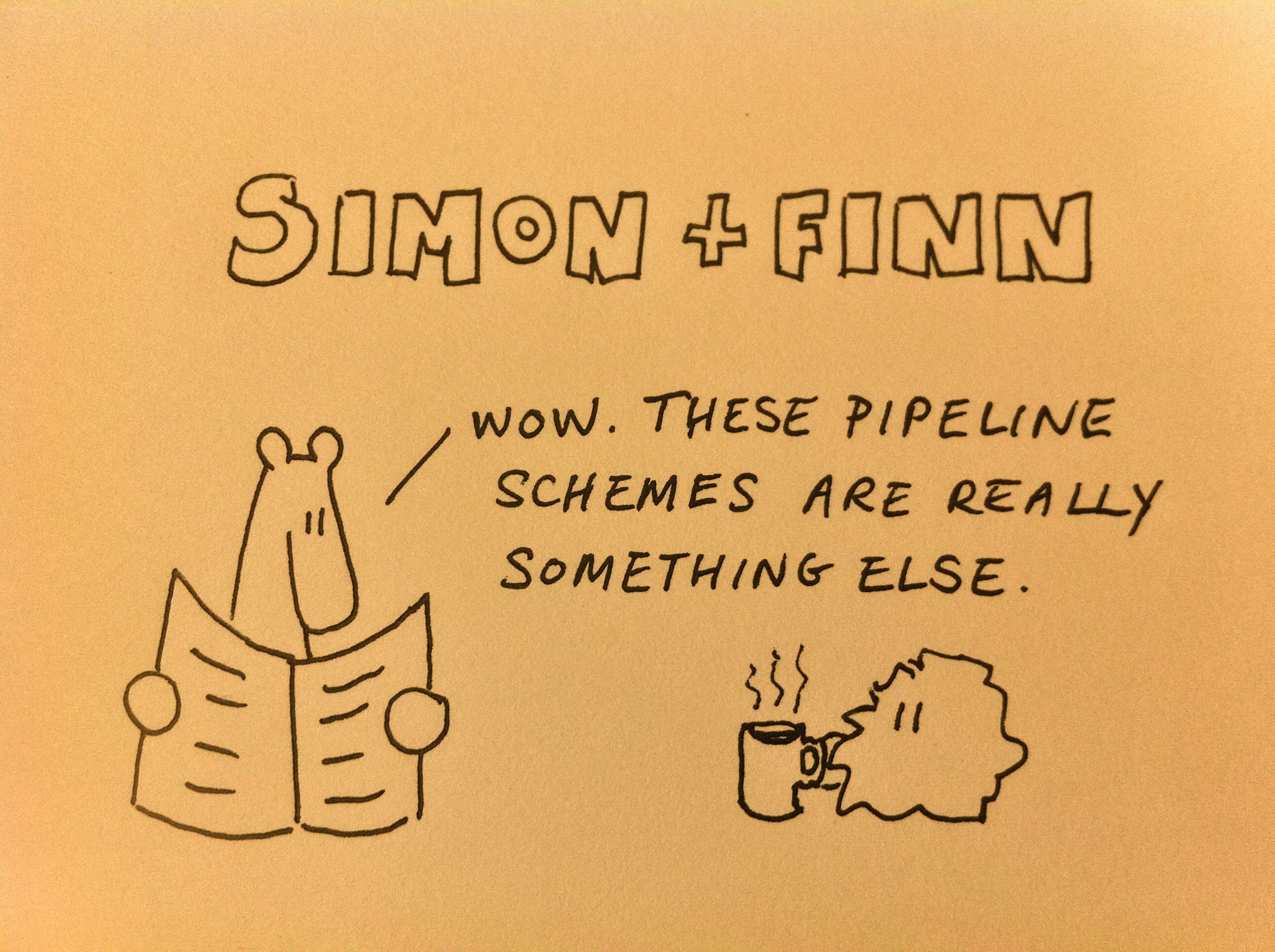
What Dilbert has in common with oil pipelines

About time we oil got serious around here

You have all heard of Dilbert right?  Yes, that Dilbert, the cute, muzzy-headed engineer king of the nerdworld.  What you might not have heard of though is his free-flowing hydrocarbon sidekick: “DilBit”.  Yep, you read that right.  There is a character called DilBit living large on the world stage out there, and he’s worth noticing.

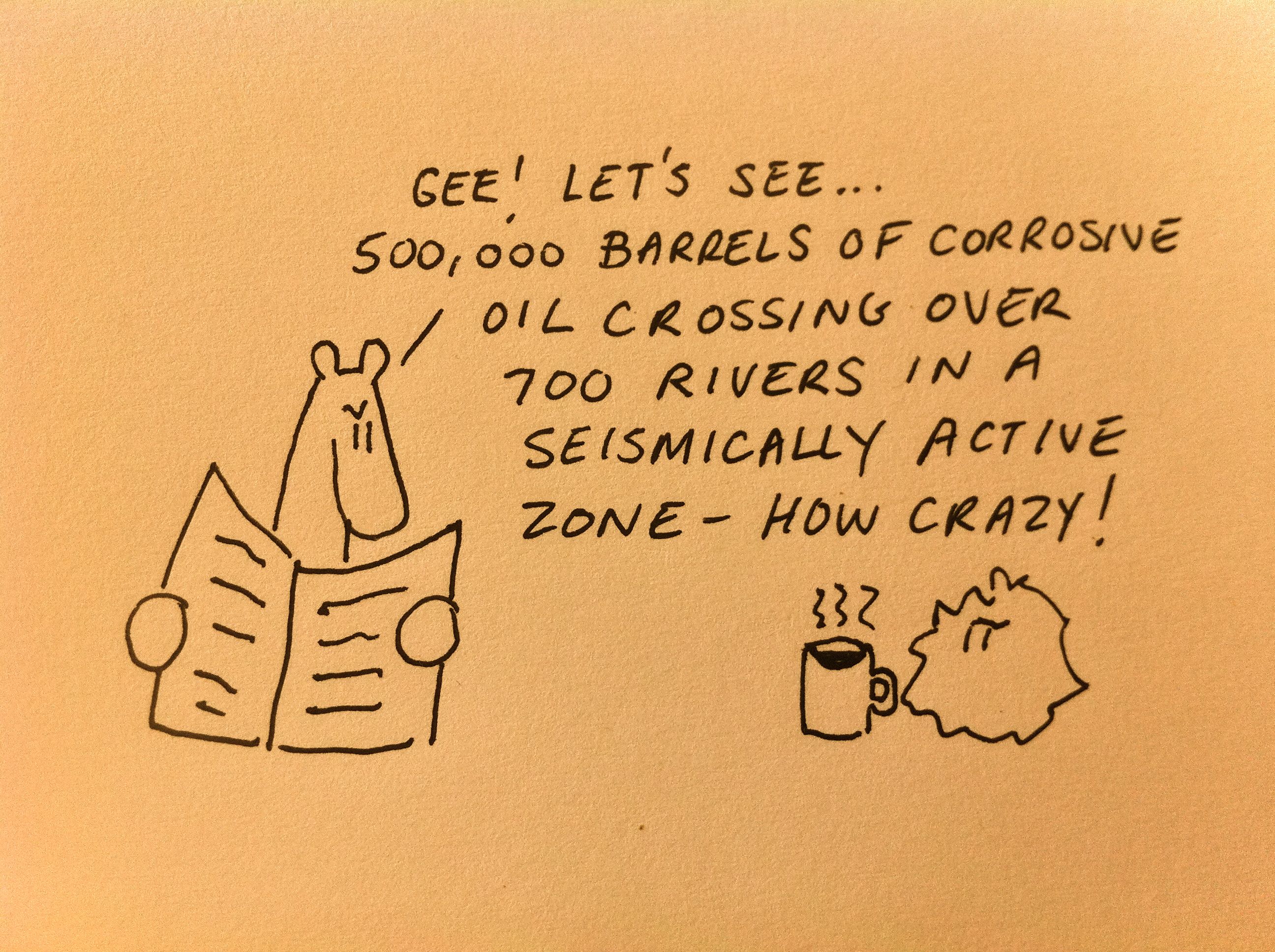
Who, or what, is Dilbit?  Basically DilBit is short for Diluted Bitumen, a relatively new arrival on the Alberta tar sands scheme. DilBit was created in order to get thick viscous oil like bitumen to flow through pipelines (by adding fun stuff like naptha). The problem with Mr. DilBit – aside from his suspect origins – is that he is even more toxic, explosive, and corrosive than previous generations of his oily brethren.  Wait a second, corrosive you say?  Yes, and unfortunately DilBit is the prime stuff planned for the two big pipelines making the headlines these days: TransCanada’s Keystone XL through Alberta and the Northern Gateway through British Columbia.

(As a brief backgrounder, the planned Keystone XL is expected to transport on order of 550,000 barrels of this DilBit per day over a 2,000 mile stretch.  Unfortunately much of this pipeline passes through sensitive areas in the US and in Canada, as in Nebraska’s Ogallala aquifer, the most heavily used aquifer in the US.  Similarly, Enbridge’s Northern Gateway project is expected to also carry 525,000 bbl per day.  This route crosses more than 785 rivers and streams and the headwaters of three of the continent’s most important watersheds – the Mackenzie, the Fraser, and the Skeena.  The route also traverses.. wait for it… a seismically active area).

Ok, so this is where it gets interesting. TransCanada estimates that the Keystone XL pipeline could see – hmm, maybe about 11 spills over the next half-century, with each spill releasing an average of 50 barrels of oil or so.  Doesn’t seem so bad right?  Keep in mind though, that TransCanada’s current Keystone pipeline had 35 leaks in its first year in operation – 21 in Canada and 14 in the US. Other precedents exist, including four large Enbridge spills just between 2009 to 2010, which ranged in scale from 3,000 barrels of syncrude up to 19,500 barrels of tar sand oil.  It doesn’t take a rocket surgeon to figure out that these are orders of magnitude and frequency higher than the projected “11 spills or so, 50 barrels of oil, next half century, tops.”

When you combine this context and history with Mr. DilBit’s little personality quirks, as he is rather a corrosive type with toxic tendencies, what could possibly go wrong?

P.S.  I decided a P.S. was warranted as the above only points out a problem.  Setting aside the bigger issue of tar sand oil extraction (as we are principally dealing with oil transportation here), other alternatives to pipelines exist. CN rail for example already ships oil and coal – did you know that 5 – 7 trains alone can match the daily capacity of the Keystone XL, and move five times faster?  Each railcar can carry ~ 660 barrels of bitumen.  What’s more, because the bitumen does not have to be diluted to be transported = no DilBit.

Lastly, because bitumen does not flow at ambient temperatures (unlike Dilbit, which does) – any sort of “spill” would be quickly contained, as opposed to the scenarios posited above.

Makes one wonder…

Why David Eddie’s cool

Where to, Your Highness?

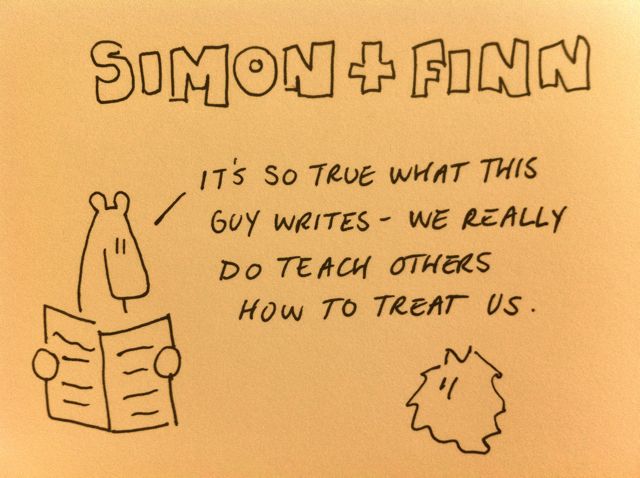
So, I happen to think that the advice columnist from the Globe & Mail – David Eddie – is a pretty top-notch writer (yes, I’m admitting I read advice columns, ok moving on!!).  Not only that though, he generally gives good advice – warmhearted, empathetic, yet also cuts to the chase when someone’s not being a class act.

For example, last week Mr. Eddie posted a little spiel by somebody who was upset their sister rudely canceled on attending a family dinner party.  The hostess was upset given the amount of work hosting can entail, yet was unsure of how (or if) to convey her displeasure.  Mr. Eddie’s response to this dire social conundrum?  “Well, you know, we advice columnists are always counselling people to take the calm, rational route, adopt the long view, be the better person, and la la la.  But in this case, I think you should let your sister have it, right between the eyes.”

Ha, ha!  Way to go, Mr. Eddie!

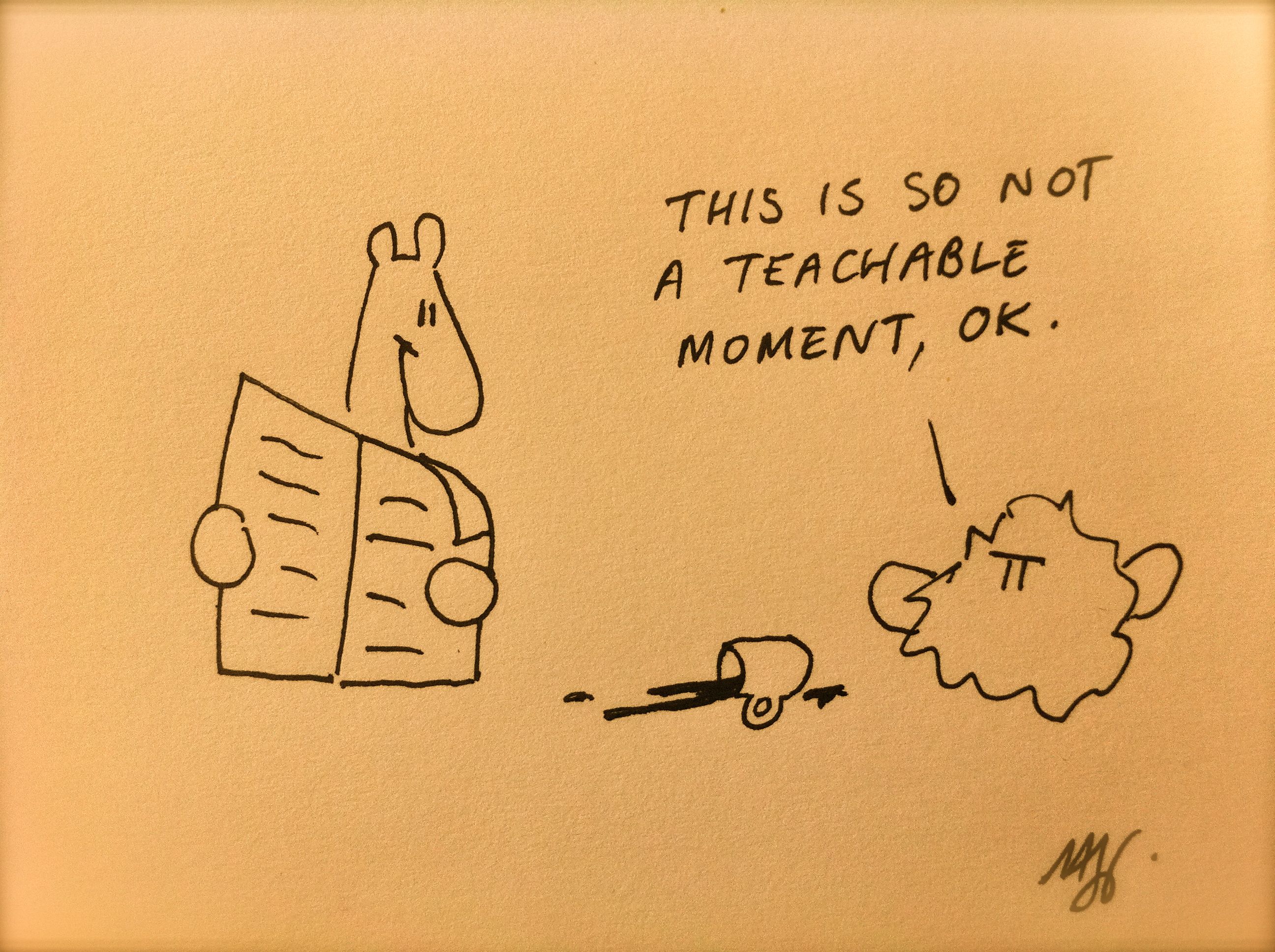
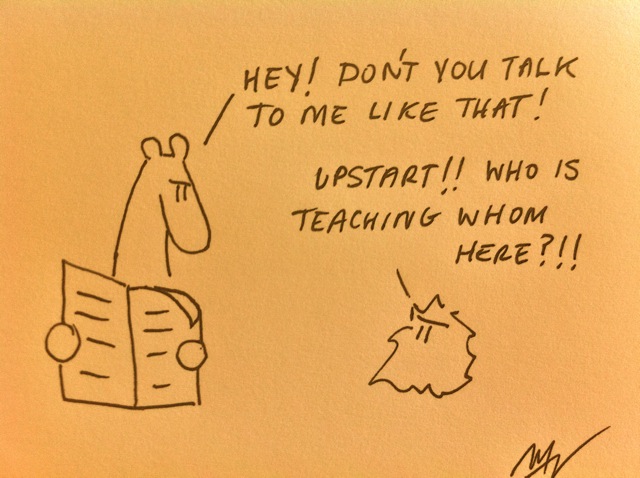
But then, he blew the whole kind of trite-advice-on-social-mores thing to a whole other philosophical ballpark by going on to quote: “We teach people how to treat us”.  That pulled me up short.  Now when it comes to small fry things like getting mad at dinner party cancellations and such, of course there are a lot of people that wouldn’t be fazed one whit and go on with their lives (as many of the G&M comments pointed out). However, to me anyway, the quote supersedes its arguably shallow origins because it’s one of those deeper truths – we do teach other people how to treat us.  And that’s the bigger lesson he’s delicately imparting, whether we’re talking about little things or far bigger ones..

So, next time I’m ranting about why so-and-so did or didn’t do x or y, I’m going to take a little look in the proverbial mirror first (but just a short one, as ranting is fun!)