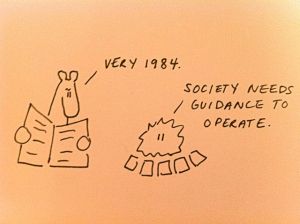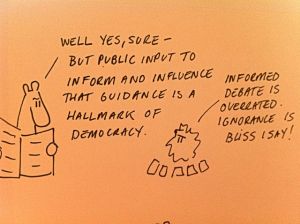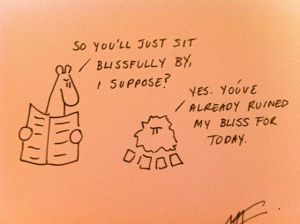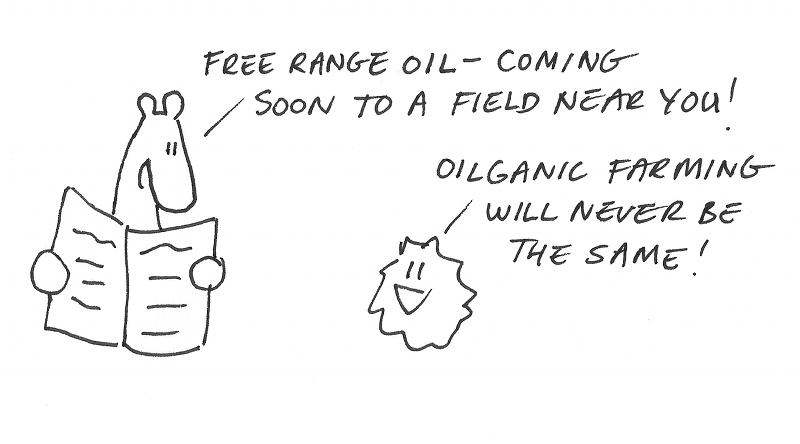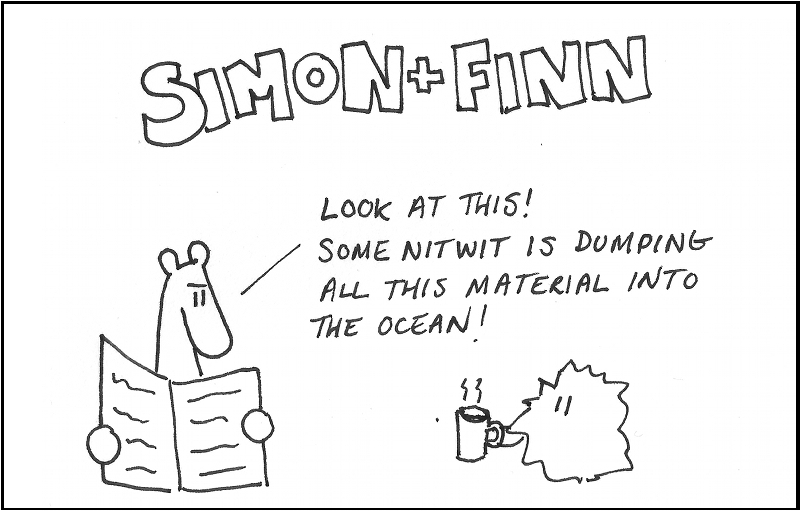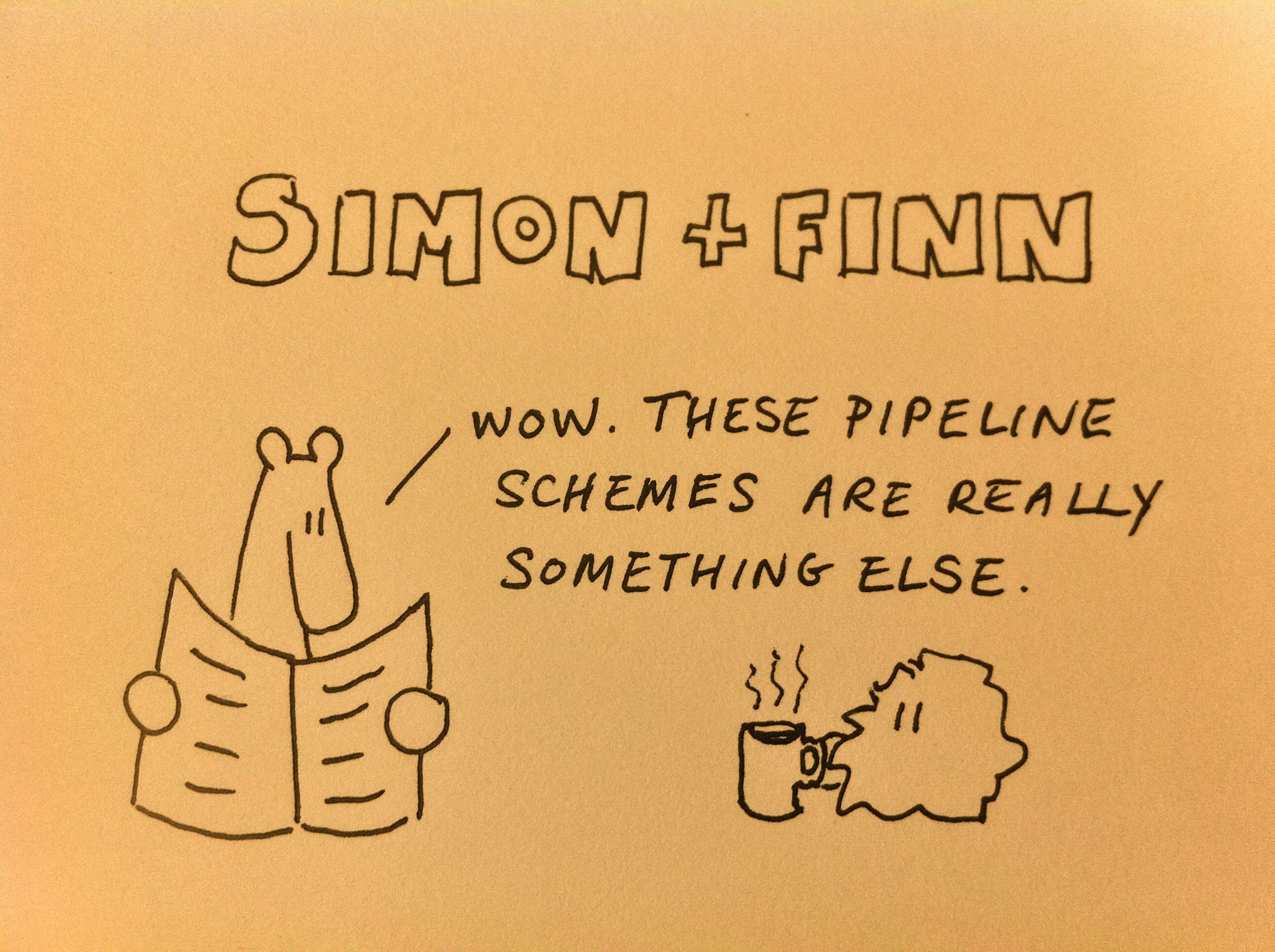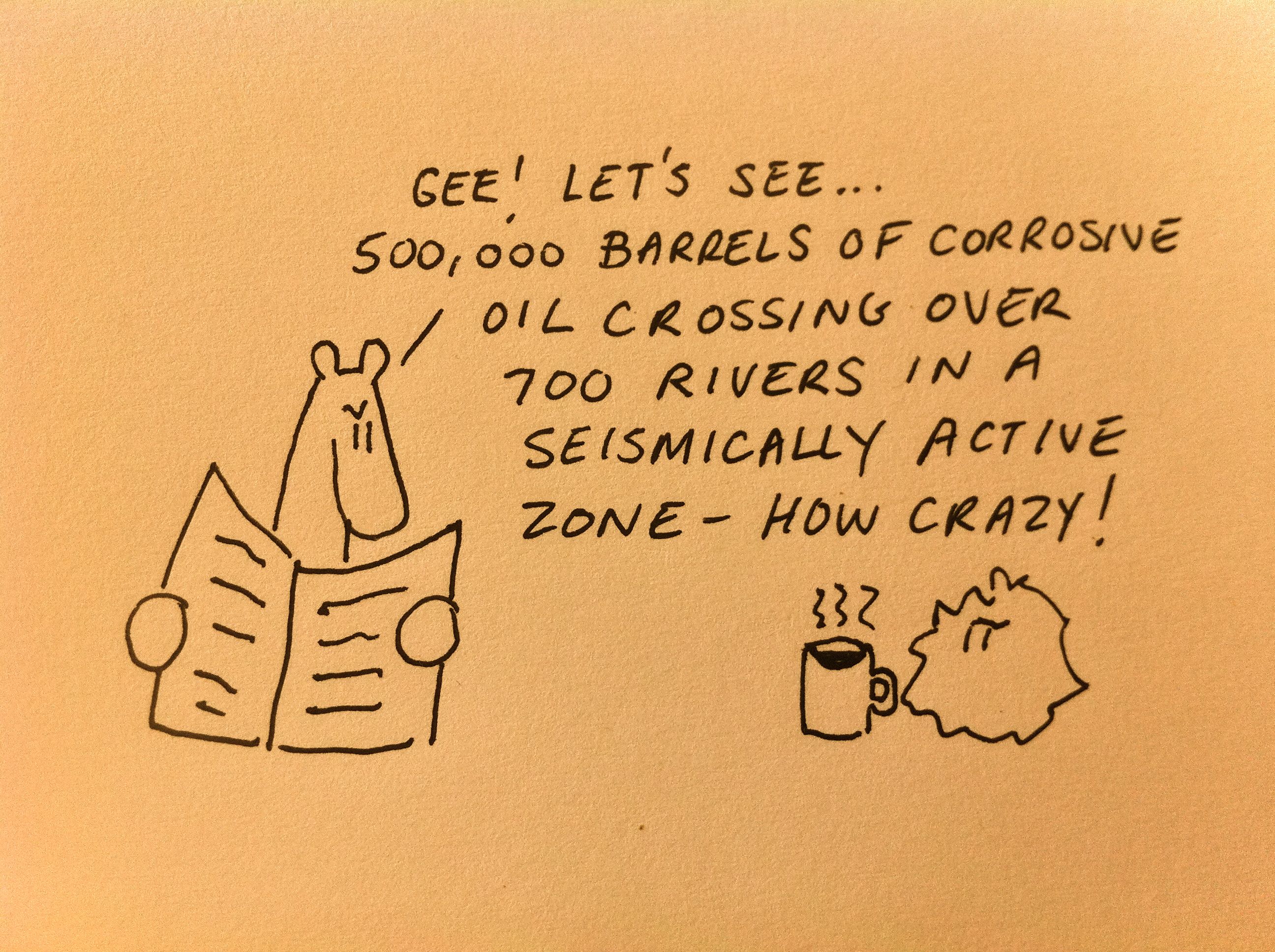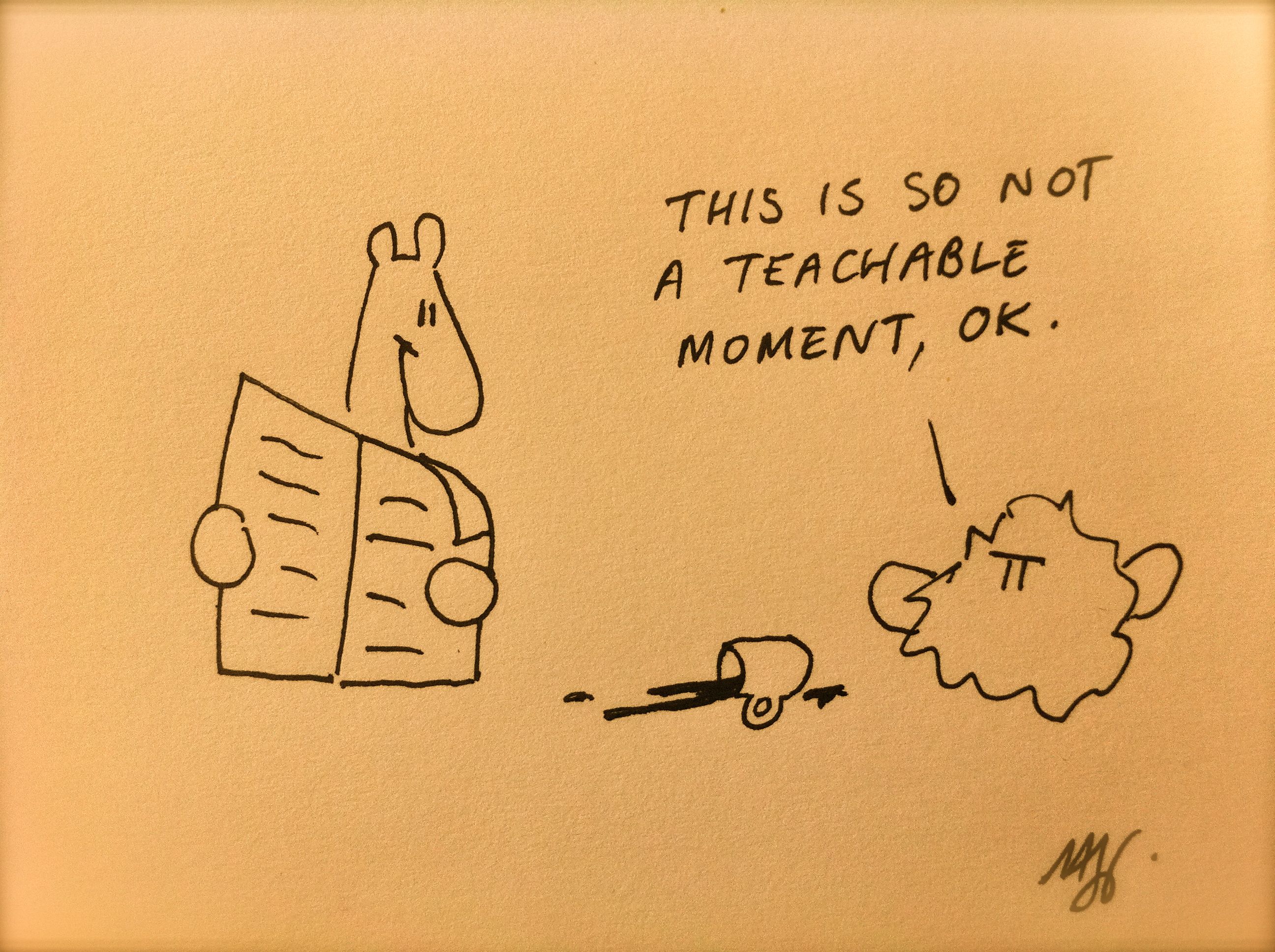
Ethical oil spills coming to a coast near you!

Today Stephen Hue’s blog from the Georgia Straight features Simon & Finn doing what they do best, ranting!

The cartoon is reproduced here, but you can check out the original cartoon at: http://www.straight.com/article-819871/vancouver/ethical-spills-coming-coast-near-you

Simon & Finn in The Georgia Straight!

This week’s Simon & Finn is brought to you courtesy of The Georgia Strait. The accompanying article focuses on a rogue geoengineering experiment on Canada’s west coast, as reported by the UK Guardian this week.

The original article and cartoon can be accessed here.

Oilin’ the machine: Pipelines, politics & 1984

Where there’s a will, there’s a way..

In recent Canadian environmental news, one can’t help but notice a slight thread of subversive strategy and a smattering of the authoritarianism so brilliantly parodied in Orwell’s dystopian book 1984.

Below are three brief parallels for your consideration:

1. Doppelgänger Ministries

1984:  In the book 1984, the totalitarian ministries which govern the fictional land of Oceania could be considered doppelgängers, as they are are paradoxically named and represent the dark double of their namesakes.  For example, the Ministry of Love is largely responsible for the practice and infliction of misery, fear, and torture.  The Ministry of Truth, similarly, is the ministry responsible for propaganda and rewriting history to this effect.

Canada: In January, Canada’s Natural Resources Minister Joe Oliver publicly equated Canadian environmental organizations to extreme radical groups, using further descriptive words as in “hijack”, “exploit”, “kill”, “undermine” in his open letter.  The letter’s main message is that processes that delay rapid resource development and exploitation (that is, the environmental assessment processes that would normally accompany oil pipeline development) are now an urgent matter of Canada’s national interest.

“National interest”…now there’s some fightin’ words.

Last I remember, Natural Resources Canada’s mandate included the words “enhance the responsible” development and use of Canada’s natural resources, but I must have been trumped up the verbs.  “Enforce the rapid” is more fitting.

2. The creative use of language to subvert public discourse

1984: In the book 1984, an individual’s use of doublethink is encouraged.  Doublethink enables one to believe that two contradictory ideas are both correct, i.e. to tell deliberate lies while genuinely believing in them, to forget any fact that has become inconvenient and yet to recall it again when required, etc.

Canada:  The platform Ethical Oil, brainchild of Ezra Levant, basically posits that Canadian tar sands oil – because it comes from a country that “respects the rights of women, workers, indigenous peoples and other minorities including gays and lesbians” – is more ethical than oil produced in conflict areas such as Nigeria, Iran, etc. and therefore should be considered a preferred energy source.  This bizarre platform has diverted debate about the environmental impacts of Canada’s oil sands extraction and transportation into a completely different arena, with “ethical oil” on one side and so-called “conflict oil” on the other.

But basically, as detractors say, this is a red herring as there is no such thing as ethical oil.  Like most fossil-based energy sources, all oil has its problems, and tar sands oil in particular.  By promulgating tar sands oil as ethical by nature of Canada’s human rights record, Ethical Oil is doing its very best to ensure we sidestep the real issue at hand, which is the significant environmental degradation associated with extracting and transporting tar sands oil.

Interestingly, it seems that Ethical Oil – while ostensibly a grassroots organization – has some convoluted ties that involve not only Sun Media but also the PMO, and moreover happily embarrasses itself on national television to avoid directly answering who funds its activities.

3.  Down with dissent

1984:  In this book, society is presided over by Big Brother who keeps a gimlet eye on all the doings and sayings of Orwellian society.  In such a land, talk is muted and dissent intolerated, to the point where ‘suspicious persons’ simply disappear into the bowels of the Ministry of Love, ne’er to be seen again.

Canada: Recently Canadian charities have come under increased scrutiny by the federal government to assess whether they are spending over 10% of their budget on advocacy based political activity.  Under Canadian law, organizations that exceed this allocation stand to lose their charitable status.

The possible result?  That charities run scared and pull back funding for research and other initiatives that might indicate dissenting viewpoint to government positions… for example, initiatives that would otherwise be exploring alternatives to the the rapid development of oil pipelines.

As charities are often major contributors to environmental organizations and initiatives, there are some that say this increased scrutiny is actually a strategic effort to muzzle the depth of environmental debate in Canada.

So there you have it.  A few ideas, for starters.  Agree?  Disagree?  Other ideas?

The immortal jellyfish, David Wilcox, and glow-in-the-dark cats

Source: BBC Nature

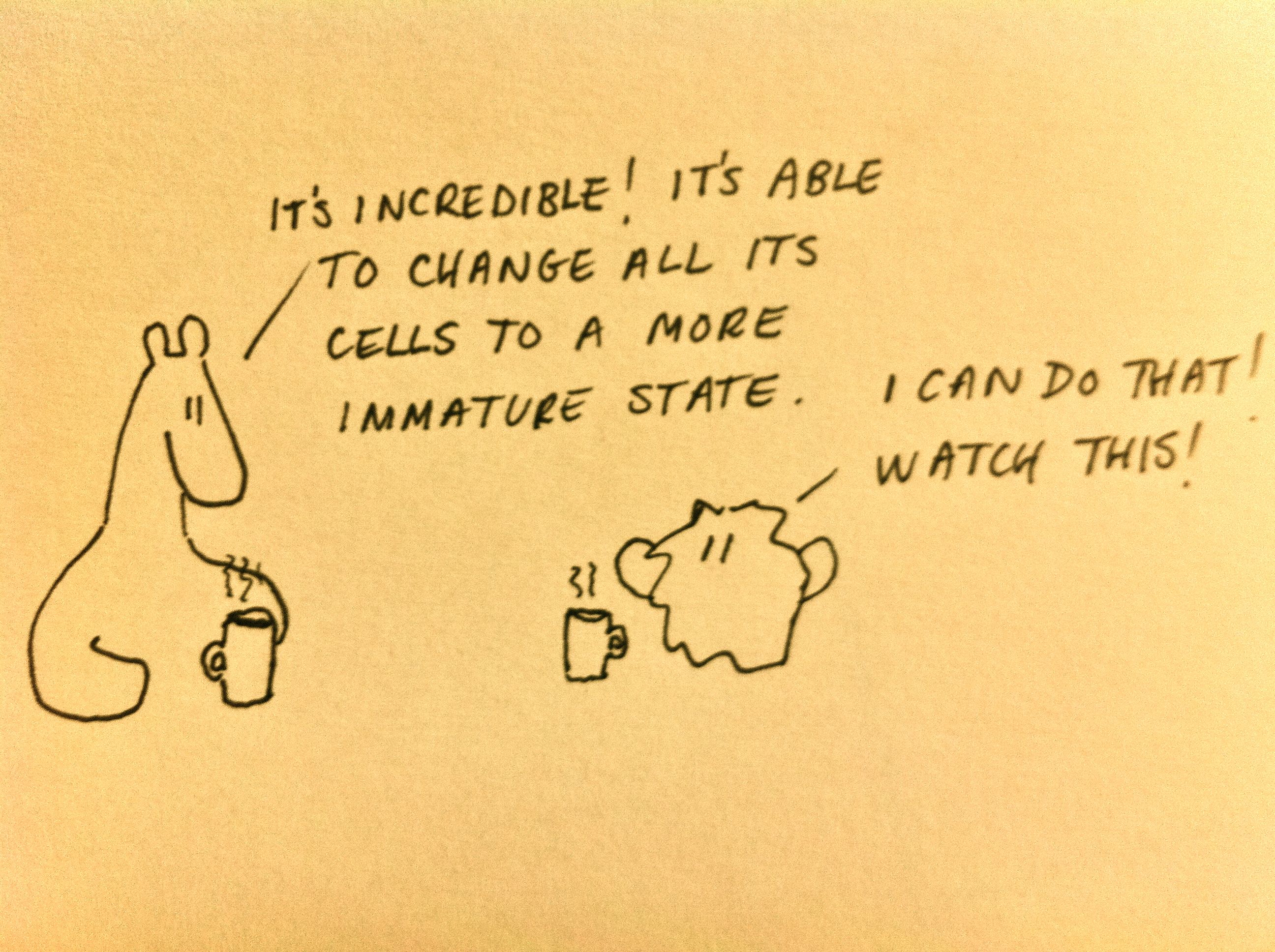
So there’s this jellyfish.  It’s tiny.  It’s global.  And it’s immortal.

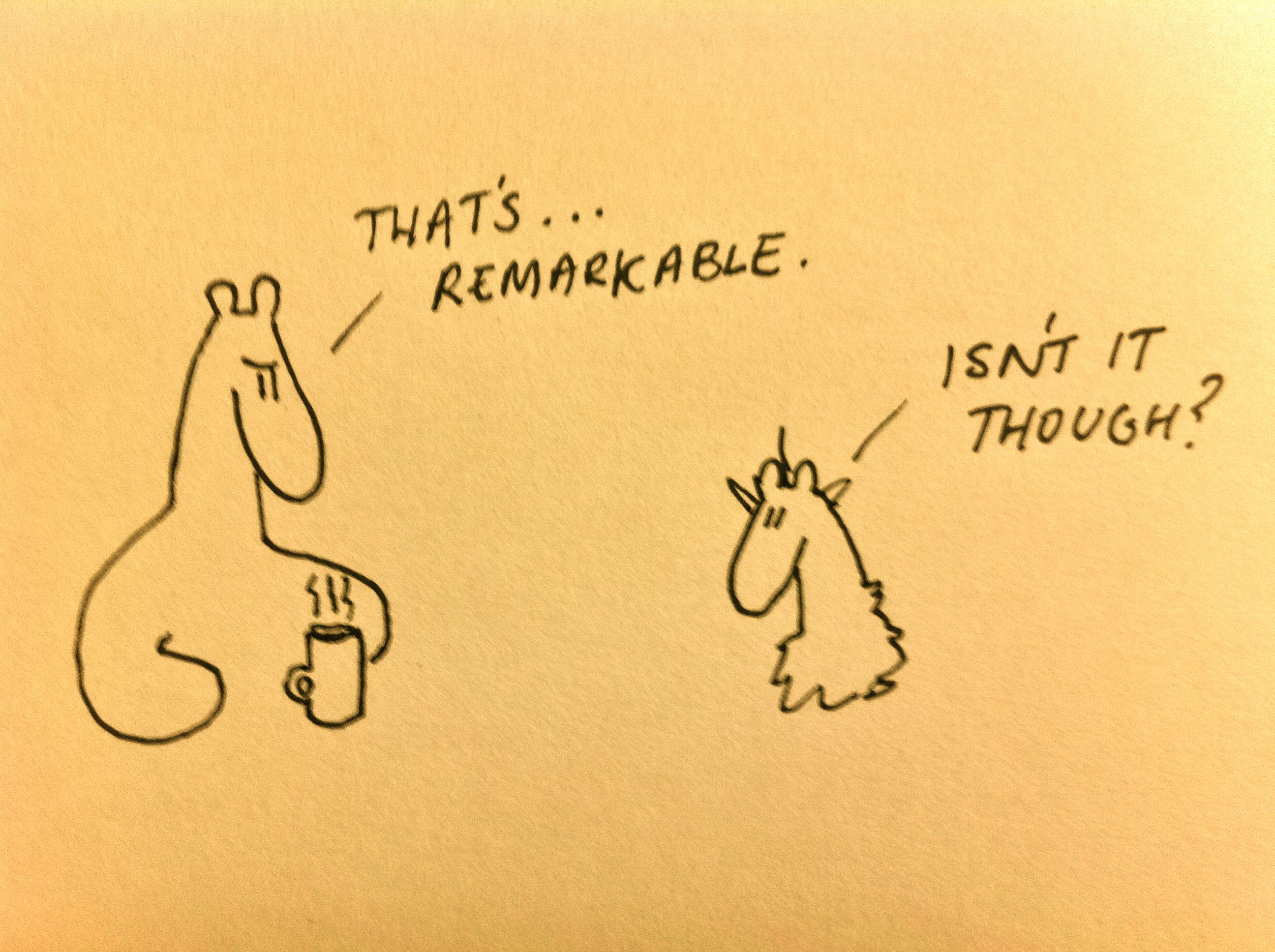
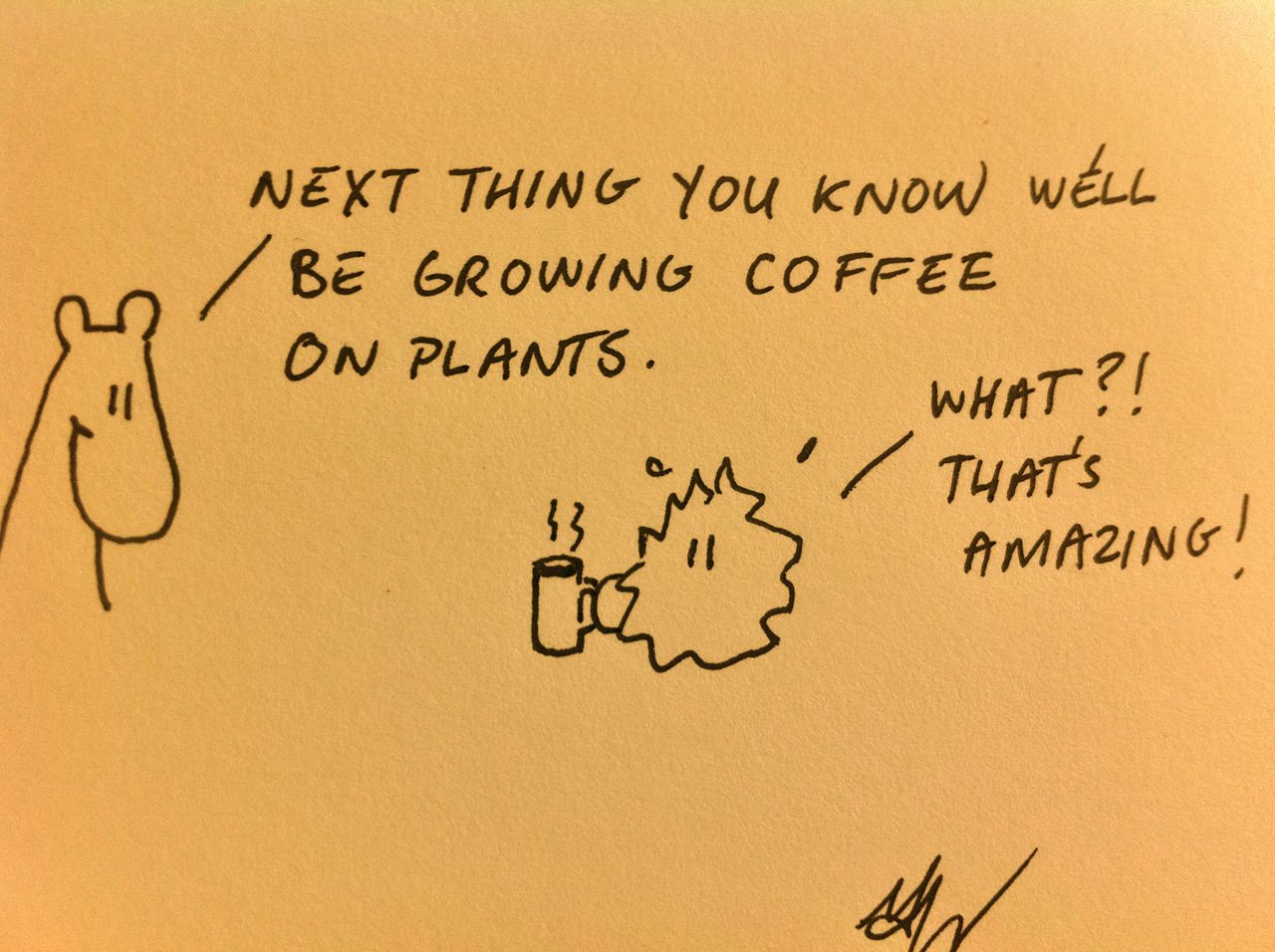
You scoff but it’s true!  There’s this miniscule jellyfish that has supped from the fountain of youth and mocks us with its knowledge with its beady little.. um.. tentacles.  This jellyfish – or Turritopsis nutricula in elite circles – essentially grows to adulthood, decides it’s time for a change, and then converts all its cells to become a little jellyfish baby again – or a “blob-like cyst”.  Discovering it doesn’t like being a blob, it grows back to an adult again, and, evidently not liking the responsibilities of that, shrinks back to a polyp, and so on and so forth (I’m sure the whole time humming along to this sweet tune).

For this species, the process of converting cells, or transdifferentiation, means that the cells can be converted from specialized muscle cells (for example) back to nerve cells or even to inaugural sperm and eggs.  Essentially the jellyfish can convert its mature cells back into a younger state and vice-versa.  In theory this cycle can loop forever, which means that biological immortality does in fact exist here on Earth… as well as perpetual biological indecision.

And I thought I had trouble growing up.  🙂

P.S. On a tangential note, recently scientists have inserted jellyfish genes into cats as part of research into Feline Immunodeficiency Virus (and ultimately, HIV).  As these genes make fluorescent proteins, this has the effect of actually making the cats glow in the dark and the result is visible with the naked eye.

While the aims of the related research are incredibly promising, there’s something really strange about making green cats, don’t you think?

More God particle fun…

For more Higgs boson musings, visit: “The mostly harmless Higgs boson (aka So long, and thanks for all the fonts!”  🙂

The mostly harmless Higgs boson (or so long, and thanks for all the fonts)

“Ah I love this time of day, when the particles and waves hit me just right…”

It’s been an electrifying week for particle physics, what with the seeming discovery of the Higgs boson, otherwise known as the “God particle”.  The existence of this unassuming little sub-atomic particle was first conceived of in the 1970s, but only very recently have physicists found tangible evidence that it exists through the use of the gigantic CERN Large Hadron Collider.

Now, there’s lots of information out there clarifying what the Higgs boson is all about, and why it matters, but suffice it to say (for this light-hearted post) that H-B and its mechanisms is believed responsible for conferring mass to all matter, which equates to all the mass in the universe.  At 1052 to 1053 kg, that’s heavy stuff for a little boson!

Also trending though, is the fact that the physicists announced the discovery of the God particle using Comic Sans font in their Powerpoint presentation, to the chagrin and ridicule of aesthetes the world over and causing a cosmic firestorm on Twitter (i.e. “few people know that the original set of tablets were smashed not because of the golden calf, but because they were in Comic Sans” @spiritofMoses).

It’s a pretty quarky – yet funny – world when one of the biggest scientific discoveries in the last fifty years is vying with font type for attention.  Sigh… if only Douglas Adams were still around, he would have had a field day with this one!

P.S. Why is Higgs boson called the God particle you ask?  This title was apparently popularized by a book on particle physics: The God Particle: If the Universe Is the Answer, What Is the Question?.  The author indicated he chose the name because “the publisher wouldn’t let us call it the Goddamn Particle, though that might be a more appropriate title, given its villainous nature and the expense it is causing”.

A sweet little creature

The problem with traveling is sometimes you fall in love, and that love is usually intense and ephemeral, because someone – eventually – will depart. This time, I fell in love unexpectedly… with a mouse deer.

It all started when I was out in the ancient ruined city of Polonnurawa, Sri Lanka. It was about 7am, sweltering hot, and the BBC documentary film crew was in action trying to incite a confrontation between two toque macaque monkey troops. I was milling about uncertainly at the periphery, feeling a little useless, when I noticed the project lead and a field assistant looking intently at something on the ground. I wandered up, and saw that they were looking at this incredible little creature that was nestled underneath a shrub: a baby mouse deer.

I immediately thought it the cutest animal I had ever seen, and judging by the smiling faces all around, I wasn’t the only one. When it was suggested that I keep an eye on it for a few hours I happily agreed. I was ready to do my part and guard this little guy from danger! As well as see if the mother would return, or if he was well and truly alone in this big world.

I spent the morning sitting on the grass near the mouse deer, gently corralling him when he strayed too far. He was a pretty plucky little guy, not even a half hour had passed when he ventured unsteadily on his tiny legs to see what I was all about before nestling back into the security of his shrub. At one point, a bunch of toque monkeys came close, curious to see what I was looking at.  I instantly picked him up and shielded him – he didn’t struggle or protest and seemed quite content to sit with me afterward. I knew right then that this encounter was something special.

As the mother was still nowhere in sight and the mouse deer was very weak, we decided to bring it to the research camp and see if we could help it live. And that was the beginning of a wonderful relationship.  It took to infant formula after some coaxing, and after a day or two it was starting to nibble on figs, and banana, and even leaves.  What was really amazing was how instantly he connected with people.  Curious, I read up on the mouse deer, discovering it was part of the family chevrotain – well and truly a deer as opposed to mouse, and one of the most ancient mammal species.  Finding a baby is also a rare occurrence, the project lead here hadn’t ever had a mouse deer baby in camp in over 40 years of field work.  In fact, scour the Internet and you’ll find precious little on raising a baby mouse deer.

Despite his rarity, day by day he got stronger and our hopes grew that he would become a wonderful addition to the camp – maybe even a film star for the next BBC shoot! He would take to following me, bouncing around at my feet and coming when called, running across the camp floor and sliding all over the place on his tiny hooves.  As the days passed, I would spend hours watching him, petting him, feeding him, walking with him…  It was a source of – I fully admit – continual joy to open the box every morning and see these bright eyes looking up at me, followed by a tiny u-shaped stretch as I’d bend down to take him out of the box.

Unfortunately, the time we had was cut short.  I had to leave camp for a few days, planning to be back on my birthday.  While I was gone I thought of the mouse deer daily, worrying and hoping that he would be ok during my absence.  Things got complicated when I was gone, and I was asked to delay my return by a day.  I wish so much now that I hadn’t, as my return one day later was to the news that the little mouse deer had died that morning.  He had lived until my birthday like I had hoped for… but like the story of the monkey’s paw, the wish had a flip side, as the day after he tried to jump out of his box and I guess the fall was too much for his delicate body.

When I returned to camp I went to his box sadly and said goodbye, stroking his broken little body.  His spirit was already gone, and there was no trace of the life that had animated such a wonderful creature. I moved his small hooves in the air a bit, and brushed his tail, but under my hands there was only stillness.

Looking back, I had been given the indisputable gift of spending time with an unusual and brave little animal.  Although I’m profoundly grateful for the time I had with him, I wish those bright eyes would have shined on just a little longer.

Jumping the Gun on the Wipeout Gene

Hold still there, buddy… else you’re apt to go off half-cocked

This week’s Simon & Finn post on a crazy genetic experiment plotline is provided courtesy of Greener Ideal  – please visit the following link for the article and cartoon!!

http://www.greenerideal.com/science/0508-jumping-the-gun-on-the-wipeout-gene/

NYC’s Lowline Underground: The Future of Parks?
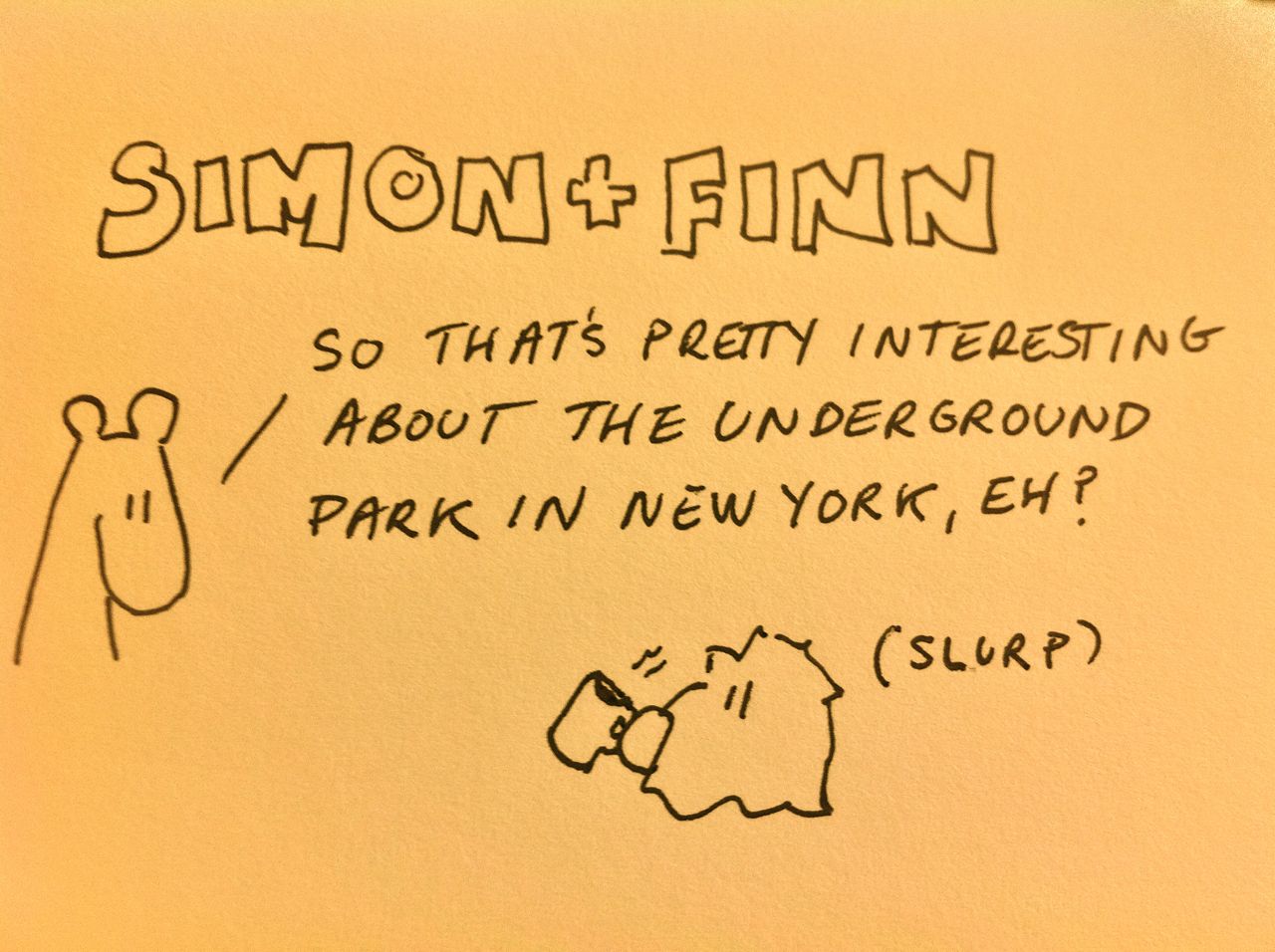
Just another sunny day in the hood..

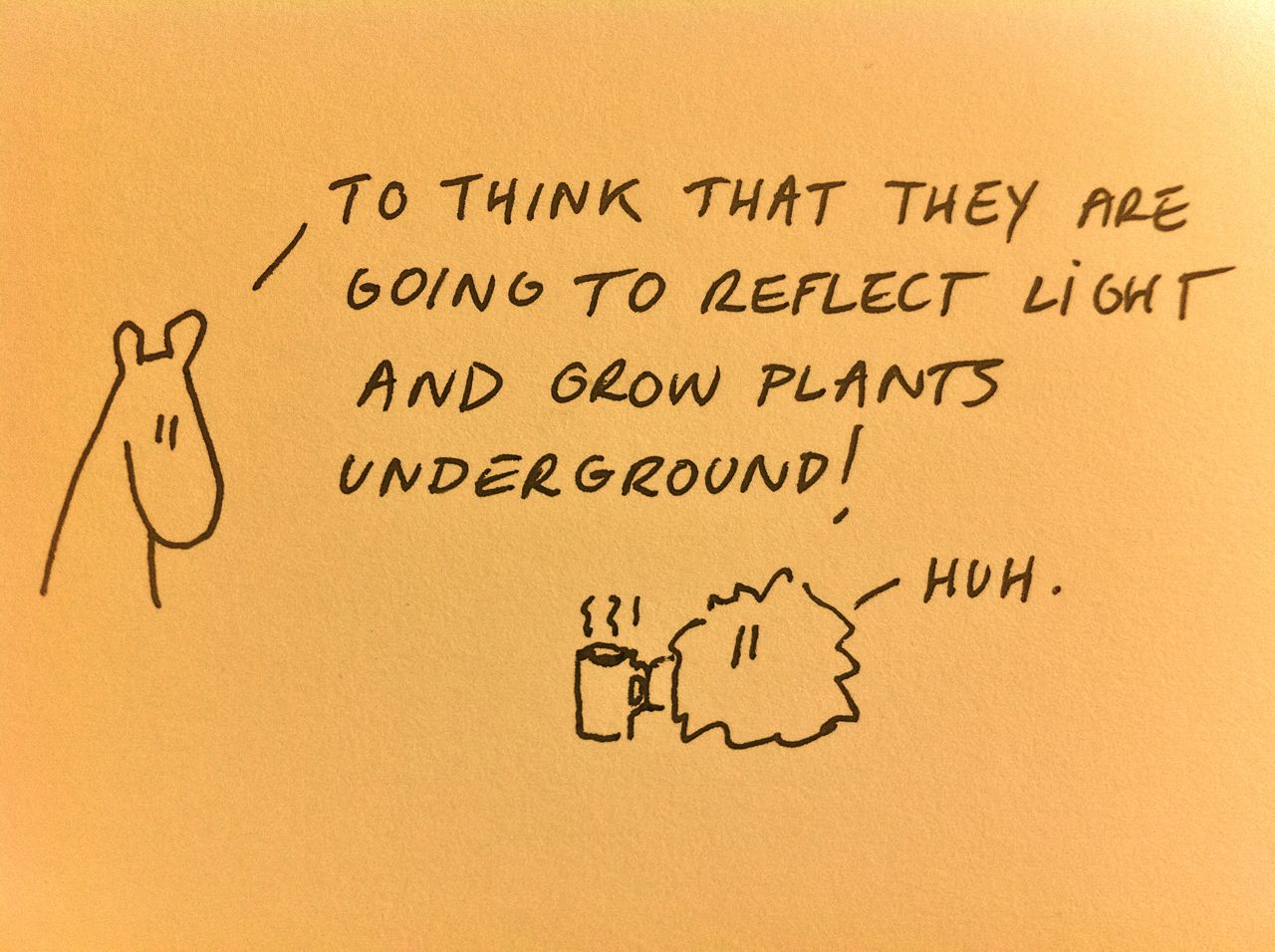
You may have heard of that unusual new idea to create an underground park in NYC.  Nicknamed the LowLine (formally Delancey Underground), the project was trending on kickstarter.com (155K raised) to create a full-scale demo this spring.  The thinking is to transform a 1.5 acre abandoned trolley terminal into the world’s first underground park.

It’s a nifty idea, replete with the requisite tech-fixes, i.e. gathering sunlight via fibre optic cables to reflect light and enable photosynthesis underground.  The community component is also pretty cool, as you can imagine what opens up to people when you have a year-round green public space available in the hood.  Re-purposing derelict urban areas to augment green space and amp up community vibrancy is a pretty fantastic thing to do in general.

When you step back a bit though, an underground park is bit of a curious idea. It kind of flies in the face of getting fresh air, feeling the sun on your face, and squishing the grass between your toes.  For those old enough to remember, the concept echoes The Secret World of Og, a fantastic underground place populated by green men and um.. mushrooms.

Now, one can definitely argue that the creators of the Delancey Project are prescient, thinking ahead and planning for how the future of how urban design will play out as the human population expands and resources shrink.   In fact, one phrase on the DU website speaks to this very idea, which states that the LowLine is “essentially part of the next phase in urban design, in which human scale and increasing resource scarcity force us to imagine smarter, more creative use of public spaces.”

That’s kind of a scary statement.  Not the LowLine project per se, but the presupposition that the future of urban design is one that “forces us to imagine smarter and more creative use of public space”.  Surely there exist immediately available opportunities for public space that don’t require only a “technology as panacea” epiphany, or some other creatively convoluted approach.

Take High Park for example, Toronto’s little above ground gem.   What a lot of people don’t know is that this park is the result of one guy (John Colborne) thinking ahead, perhaps musing as follows: “Hmm… I wonder what happens if x city grows by y amount.. and if so, perhaps it would be good for the city to have z greenery”.  As High Park was a pretty hefty trip from downtown Toronto at the time, city planners thought his suggestions unnecessary and Colborne had to do a lot of convincing to get the City onboard.  The happy result was that Colborne bequeathed the Park to the City in 1873, and now we have this great green space that over a million people a year visit.

(When you really stop to think about it, Colborne’s legacy is pretty amazing. The foresight of one man way back in the 1800s created a place that so many people enjoy in different ways, and also one that hosts a number of native species.  If you’ve ever spent a few hours in the park, and many of us have, we all recognize how rejunevating it is to spend a few hours au plein air.)

Now, there’s some differences between the context for High Park as it was created then, and NYC LowLine as it’s being envisioned now (i.e. massive growth in population, transportation, urbanization, densification, etc.). And it stands to reason that LowLine may be an indicator species for a new conceptualization of green space that can flourish underground, which would be pretty great.  This said though, it would be a shame if the only solutions available to the future of urban planning – as implied by the Delancey project – were seen as those involving some kind of cool new high tech approach instead of boring old low tech conservation – especially given that it’s these latter projects that tend to stay the course over the longer haul.

Just look what Colborne did over 100 years ago.  Thank you Mister Colborne, you rock!

What Dilbert has in common with oil pipelines

About time we oil got serious around here

You have all heard of Dilbert right?  Yes, that Dilbert, the cute, muzzy-headed engineer king of the nerdworld.  What you might not have heard of though is his free-flowing hydrocarbon sidekick: “DilBit”.  Yep, you read that right.  There is a character called DilBit living large on the world stage out there, and he’s worth noticing.
Who, or what, is Dilbit?  Basically DilBit is short for Diluted Bitumen, a relatively new arrival on the Alberta tar sands scheme. DilBit was created in order to get thick viscous oil like bitumen to flow through pipelines (by adding fun stuff like naptha). The problem with Mr. DilBit – aside from his suspect origins – is that he is even more toxic, explosive, and corrosive than previous generations of his oily brethren.  Wait a second, corrosive you say?  Yes, and unfortunately DilBit is the prime stuff planned for the two big pipelines making the headlines these days: TransCanada’s Keystone XL through Alberta and the Northern Gateway through British Columbia.

(As a brief backgrounder, the planned Keystone XL is expected to transport on order of 550,000 barrels of this DilBit per day over a 2,000 mile stretch.  Unfortunately much of this pipeline passes through sensitive areas in the US and in Canada, as in Nebraska’s Ogallala aquifer, the most heavily used aquifer in the US.  Similarly, Enbridge’s Northern Gateway project is expected to also carry 525,000 bbl per day.  This route crosses more than 785 rivers and streams and the headwaters of three of the continent’s most important watersheds – the Mackenzie, the Fraser, and the Skeena.  The route also traverses.. wait for it… a seismically active area).

Ok, so this is where it gets interesting. TransCanada estimates that the Keystone XL pipeline could see – hmm, maybe about 11 spills over the next half-century, with each spill releasing an average of 50 barrels of oil or so.  Doesn’t seem so bad right?  Keep in mind though, that TransCanada’s current Keystone pipeline had 35 leaks in its first year in operation – 21 in Canada and 14 in the US. Other precedents exist, including four large Enbridge spills just between 2009 to 2010, which ranged in scale from 3,000 barrels of syncrude up to 19,500 barrels of tar sand oil.  It doesn’t take a rocket surgeon to figure out that these are orders of magnitude and frequency higher than the projected “11 spills or so, 50 barrels of oil, next half century, tops.”

When you combine this context and history with Mr. DilBit’s little personality quirks, as he is rather a corrosive type with toxic tendencies, what could possibly go wrong?

P.S.  I decided a P.S. was warranted as the above only points out a problem.  Setting aside the bigger issue of tar sand oil extraction (as we are principally dealing with oil transportation here), other alternatives to pipelines exist. CN rail for example already ships oil and coal – did you know that 5 – 7 trains alone can match the daily capacity of the Keystone XL, and move five times faster?  Each railcar can carry ~ 660 barrels of bitumen.  What’s more, because the bitumen does not have to be diluted to be transported = no DilBit.

Lastly, because bitumen does not flow at ambient temperatures (unlike Dilbit, which does) – any sort of “spill” would be quickly contained, as opposed to the scenarios posited above.

Makes one wonder…